Tuesday, June 16, 2020

Old Man River


The Mississippi River gnaws its way through the Twin Cities like a dull knife on bark. Sediment and ever-changing currents have maligned its banks for centuries. Yet, much like my fascination with Lake Nokomis, I’ve always harbored a deep affection for the better sister of ‘the Old Muddy.’


The river is one of those icons that I can leave for a long time and yet return to with the same affection and emotions that it draws out of me every time I return to its sandy banks. The river has been with me my entire life. Just as I have grown and changed and meandered in different life directions, so too has this mighty river.

It played a subtle yet important role during my ‘lost years’ when I found solace, comfort, and companionship along its ever-changing shoreline. It was, at once, a place to go to get lost, to engage in worldly conversations, life-changing decisions and distractions from the reality of the moment.

One day, a visit to the river might mean a winter hike exploring its rocks and crevices with a friend, coffee thermos close at hand. The conversation has long since been forgotten; the cold not so much.


The next time, it could be offering up my car hood as a solar blanket to keep my girlfriend warm.
It was a moment in time for silly things like that.


Other times, it meant slipping down its rocky embankment for a solitary walk along its shores.


While I was working at Twin Cities Public Television, the station produced a documentary on the river and its special draw to Minnesotans.


It highlighted the river’s long and storied history as a landing spot for fur traders and steamboats. The film chronicled its importance to the commerce and industry that fed both cities, but especially the small hamlet of Saint Paul.


It’s been labeled the Port of Saint Paul and has long been a harbor for small boats on Harriett Island.


All through high school, I would hitchhike everywhere I went. One familiar route was down along Sheppard Road; a route that bordered the Mississippi River all the way to downtown Saint Paul. There, along the banks of the old river, sat the shacks, hovels, and homes of generation upon generation of immigrants who worked the river and factories in the city. Those immigrants who collected along its shoreline below the High Bridge finally evolved into St. Paul’s own Little Italy before its demise after the floods of 1965.


Anyplace along the river was always a great place to go on a date. Not just to make-out if that was on the agenda but also to wander and wonder and philosophize about anything under the moon.


The monument was just such a collective spot.


Once known as Shadow Falls, the monument was erected to honor the soldiers of World War I. Over the years, its surrounding landscape and accouterments have changed and evolved with the times but its overlook never fails to impress even the most familiar of visitors.


When I was living in near-squalor by the University of Minnesota, I would sometimes wander down to the riverbank across from downtown Minneapolis with Susan in hand to look and imagine where we might be in the future.


Susan and I would map out our lives, talk about our careers respectively in television and nursing, our dysfunctional families and everything we had in common. We would wax and wane philosophically about where we might be in ten years. Those salons of hopeful dreams were exciting, fruitful, and fulfilling for the moment, even though at least one of us knew, quite unspoken, that our future of pastel colors and soothing flavors probably wouldn’t include the other person.


Now fast forward almost fifty years and I’m once again wandering those Mississippi shores. When Sharon goes to her art class in Norde East Minneapolis, I find myself, once again, drawn to the river.


The times have changed, old friends come and gone, but the river remains constant. Old and sometimes slow like me, it continues its meandering down toward the gulf of Mexico but leaving behind all those wonderful old memories just piling up along its translucent transparent shores. It speaks to me of youth and inexperience, love, loss, success, failure, and most of all, longevity.

Nothing remains the same, they say.

Yes, I reply, but some things never change.

Tuesday, June 9, 2020

A Changing Landscape


After a six-month absence, I’m back in the Twin Cities. Even in that short period of time, more changes have crept into my old hometown and its surroundings. Nothing seems to stay the same anymore; ever. As that old worn cliché goes: ‘The only constant here and elsewhere seems to be change.’ As a veteran of the ages, it can be a sometimes sober and intimidating thing to ponder as the decades roll by.


Once again, I’m reminded that it’s not my world anymore. That world of years gone by has evolved, marched ahead and stumbled backwards, recognized past sins and repeated the favorite ones again and again. A re-clothing of past blogs on this subject matter highlighted my own awareness of these changes creeping into my life.


The impressionable clay that was to become my life formed over three decades; the forties, the fifties and the sixties. After 1971, my life took on more semblances of structure and order. I became less aware of the changes swirling around me since I was running the rapids of jobs, kids, changing careers and evolving lifestyles. My focus on the ever-present usurped any awareness of my past life that was slowly slipping away. Changes were going on all around me whether I was aware of it or not…usually not.

Over the past sixty years, just about every neighborhood and building that was a part of my past life has disappeared. I talked about these phenomena in another blog last year. It just pricked my consciousness again recently when I read about the changes to the neighborhoods of Haight Ashbury, Greenwich Village, and the Presidio of San Francisco.


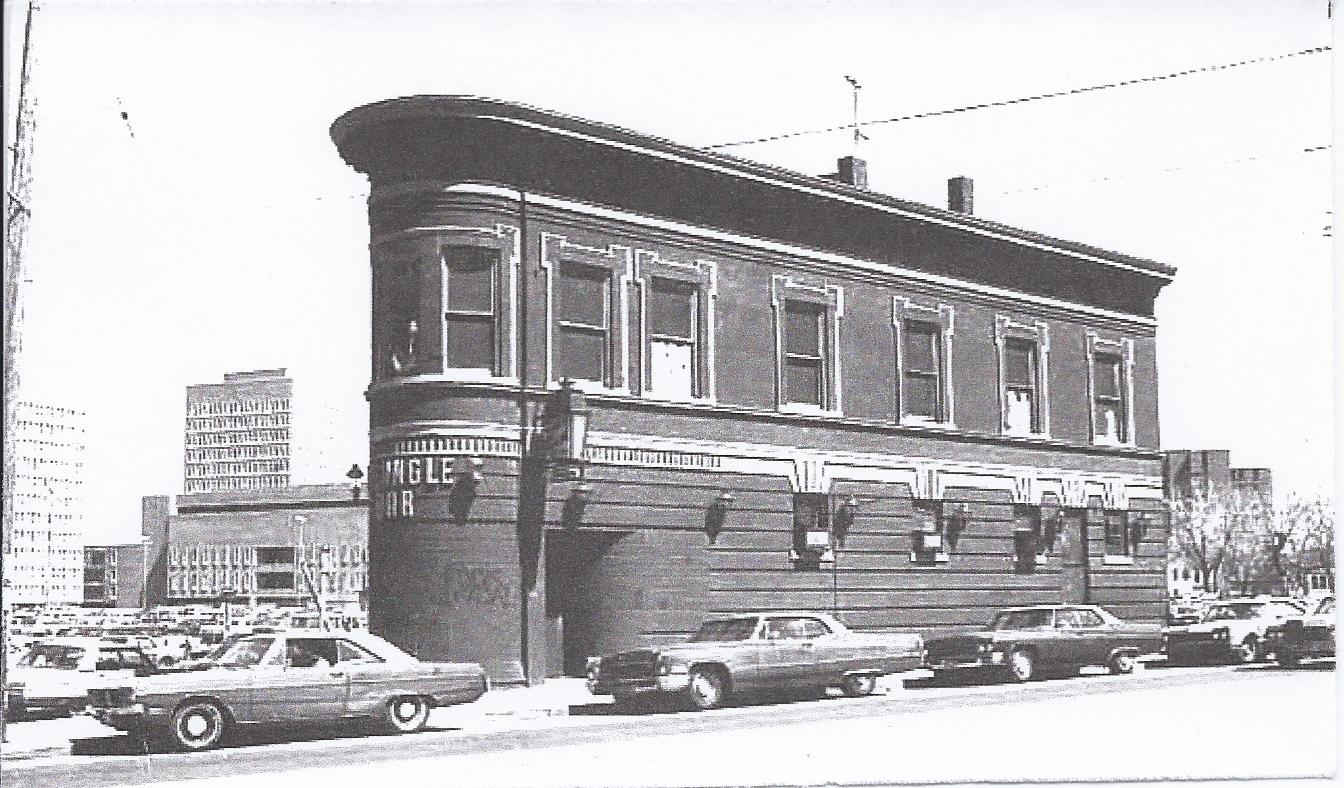
Those places now only exist in old black and white photos, color slides, documentaries, and textbook illustrations. Most of the physical evidence that were those places has been altered, adjusted, remodeled and removed. In short, just about every landmark that I encountered growing up in the Twin Cities now ceases to exist. I’m guessing it’s not just me but most of us from my generation have experienced the same thing.


Urban evolution and development has erased any and all vestiges of those times past. It’s almost as if they never existed in the first place. You can call it progress but a part of my history (and thus my memories) disappeared in the dust and rubble of those buildings footprint.


West Seventh Street meant eight years riding a city bus to grade school in downtown St. Paul. Now old Fort Road is slowly being gentrified and its old landmarks are taking on a new meaning. Keg and Case (food court and mall) has morphed out of the old Schmitt Brewery.


KTCA, the old public television station on Como Avenue, moved downtown. The Neumann Center moved off campus and the West Bank has changed colors and flavors since I hung out there in my pseudo-hippie years. My favorite bar of years past is now an off-site treatment center.


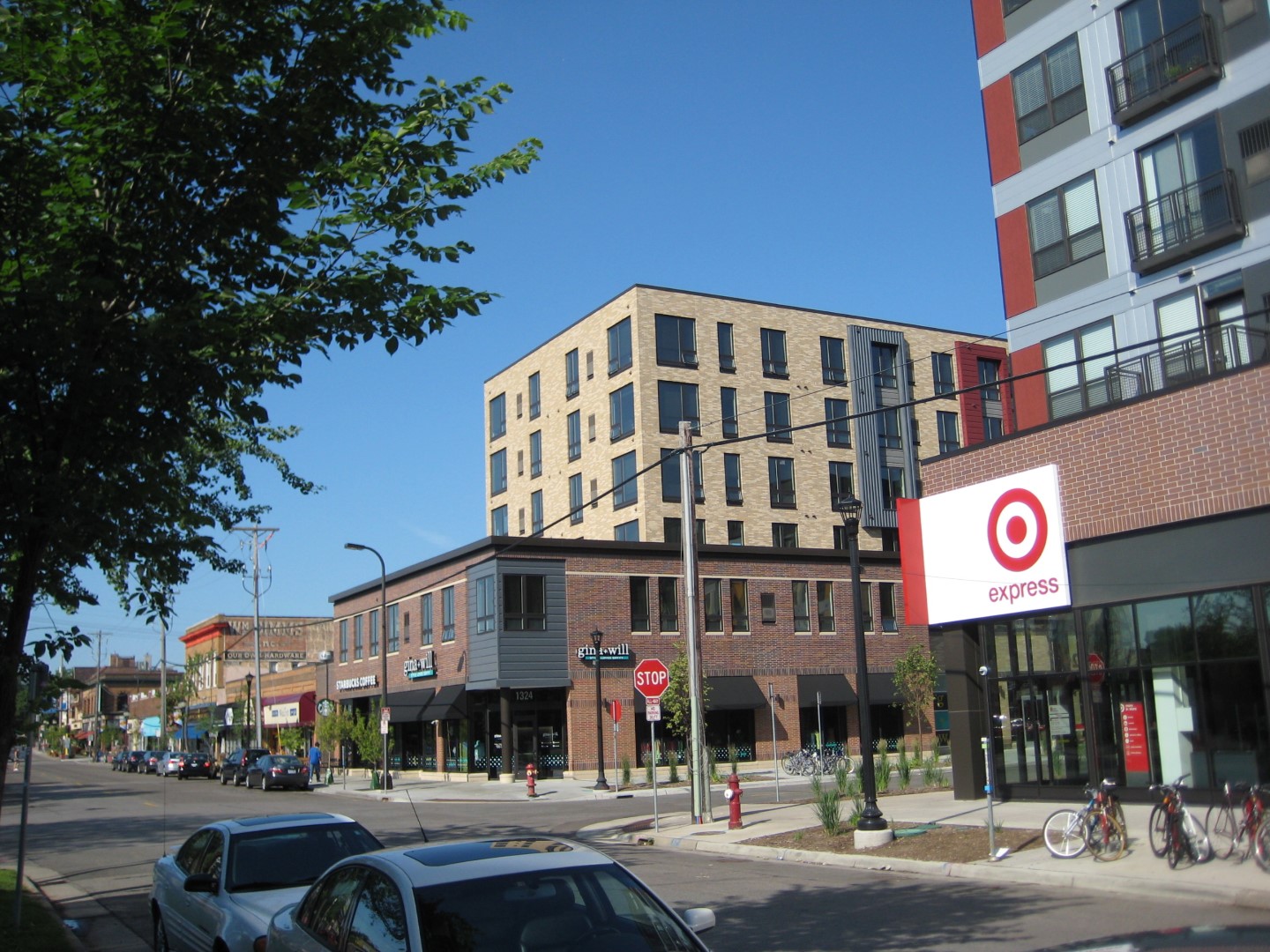
The Minnesota Department of Health tore down its old building on campus and moved off campus years ago. My hippie hangout in Dinky Town has been replaced with student apartments and a ‘tiny Target.’


MCPB, Maryland Public Television, has evolved over time and now my timeframe there is considered their ‘Camelot years.’

Each new generation has created, found, and/or changed any semblance of what used to be. My old hangouts, dens of iniquity, lodging, lovemaking, entertainment, and employment are but dust in that memory bank called my past life.

These changes go far beyond old buildings and neighborhoods. When I was pondering my future and what I wanted to do when I grew up, advertising seemed romantic, exciting and a place where I could write to my heart’s content. I never made the grade and now when I go back over my collection of ‘Mad Men’ videos, I shudder at the thought of me among those wolves, drunks and womanizers. Talk about a lamb going to slaughter.

If you think about it, the areas in which major development has changed the face, structure, and organic workings of a discipline are truly remarkable. Those disciplines include but are not limited to:

Advertising
Marketing
Design-build
Architecture
Technology
Computer technology
Careers – longevity of any of them
Education
Food processing
Manufacturing
Medicine
Transportation
Publishing
Music industry
Immigration
Retirement

It’s a whole new world out there, Mr. Jones.


Now when my grandchildren ask me about the fabulous fifties, the turbulent sixties, the seventies and beyond, I can only smile. It’s all there (or some of it) in my mind. But I don’t have any landmarks we can visit together. There are only old photos, sketchy memories and true embellishments that only a Papa can spin to the delight of eager and receptive young ears.

It was the best of times and…it had a few lumps too.


But the basic rules of life still apply and the fundamentals haven’t changed. When they get older, each of my grandchildren will have their own ‘old place’ to fill their collective memory banks. They’ll be able to regale their own children with tall tales and (some) true about what it was to grow up ‘back in the day.’

I love it.

Tuesday, June 2, 2020

Old Havana


I normally don’t believe in time travel but I wish there were such a thing because it would be fascinating to go back in time and see a world long since removed from our planet. Oh wait; come to think of it, I did just that when Sharon and I meandered the cobblestone sidewalks of old Havana a couple of years ago. It was another side of Cuba and Havana and the Cuban people I had never experienced before. Their history (as told directly from the source) is a good example of that.


Their version of the Spanish American War is radically different from ours. Our history books show Rough Rider Teddy Roosevelt leading a charge up Santiago de Cuba’s San Juan Hill in the only major battle of the war. The truth, I found out, is that the Cuban Nationalists had been fighting the Spanish for years. They had been winning that war but American business interests were worried about their investments in sugar cane and wanted assurances the Spanish wouldn’t win the war.


In 1895, Cuban poet and independence leader Jose Marti was killed by Spanish troops during the Battle of Dos Rios, becoming the country’s most revered martyr and a symbol of Cuban patriotism to this day. The United States, egged on by private interests, sent their battleship, the Maine, to Havana Harbor. After the Maine was mysteriously destroyed in Havana Harbor, the United States moved against the Spanish and hence the war.


After the war, Cuba went through a series of corrupt political leaders and dictators. The people remained poor and the economy was propped up mainly by rum, sugar cane and tourism. American business interests continued to play a major role in Cuba’s political intrigue and self-serving interests. Most Americans knew little about this poor country just eighty miles south of Florida. Their only impressions of Cuba came from slick Madison Avenue hucksters.


Following on the huge success of image-making first created by Hawaii and then California in the 20s and 30s, the Cuban powers-to-be painted a romantic picture of their country as a refuge for the rich and famous. Novels by Gramme Green helped the image along.


The 1940’s curtailed much of the tourism trade but Cuba still created its own mystic with old Havana and stalwarts like Earnest Hemmingway who haunted its bars and nightclubs during the war years. Frequent layovers by U.S. Navy ships only helped to advance the image of old Cuba as exciting, morally dangerous and a world apart from prudish America just eighty miles north.


After the war, Cuba remained a poor country still ruled by dictators, the worst of whom was Fulgencio Batista. To prop up the economy and his own bank account, the dictator courted East Coast gangsters to run the casinos and nightclubs in Havana. Never one to miss an opportunity to turn a quick buck, the con men and criminals swept through the business, eliminating the honest businessmen with their own cronies. Gambling flourished and tourism soared.


There was some trickle down benefit for a small but growing middle class. White-collar professionals and businessmen prospered while the poor languished. East coast promoters sensed an opportunity in the growing affluence of America and tried to package Cuban music scene as new, exotic and romantic. The movie ‘Our Man in Havana’ starring Alec Guinness and Maureen O’Hara perpetuated the myth of old Havana as a mysterious and romantic Caribbean hideaway.


Nightclubs, hotels, resorts and casinos were packaged along with ship cruises and a new and novel form of travel; airline travel for the average person. Tourism began to grow by leaps and bounds.


Then it all came to a screeching halt in January of 1959 when Fidel Castro, after a series of battles along the length of the island, finally arrived in Havana. He was first welcomed as a savor and hero of the Cuban people. But very quickly his true intent as a socialist and communist came to the forefront. That is when the time warp began.


It can literally and figurative be said that Cuba stopped growing as a country on that date.  What Sharon and I experienced as we traveled from one city to the next and finally through Havana was a country locked in a time warp. There are generations of Cuban people who have missed the social, cultural, artistic, and political changes other countries have come to expect over time.

There is nothing romantic about a people and a country stuck in limbo with little hope for change on the horizon. The Obama administration tried to open relations with Cuba. The Trump administration slammed that door shut just as quickly.


So I’m sitting in the Hotel Ambos Mundos where Hemingway hung out when he was in Havana. The tourists are all here along with some locals, all soaking up the ambiance and fading memories that match the framed pictures of the old man on the walls. I’m imaging what it was like back then for him; heavy drinking, womanizing, political intrigue and pressing demands from New York publishers.


I’m wondering how it got to be this crazy for this poor Caribbean country. A country literally and figurative stuck in time. Horse and carriage competing for space with cars and trucks.


For those in the know and with the cash, there are amenities galore. There are charming restaurants tucked away in narrow back streets that open up to wonderful courtyards. The people there are very friendly. The food is great and relatively cheap...if you can afford it.


The Cuban children are beautiful, energetic, and alive with life. This is the only life they know and their parents must dread the time they will begin to realize what the real world outside of their shores is really like. The internet is closely monitored and regulated.


The music of Cuba is alive with African drum beats, gyrating sweating bodies and an energy that is almost palatable. It hasn’t changed for hundreds of years. It’s just been in remission since the fifties.


At the Hotel Ambos Mundos, pictures of the old man are everywhere. This is supposed to be Cuba’s version of ‘Sloppy Joe’s’ straight out of Key West. In reality, it is a tourist trap that has managed to keep a little of the original ambiance of the times. They’re charging five dollars American to go upstairs and wander around the hotel room where Hemingway supposedly drank and slept and misbehaved when he was in town.


Now I’m standing outside, watching it all go down. Cuba has done a good job of retaining its past, reclaiming its history and pretending it has a future. Some things haven’t changed for over fifty years. I’m trying to take in the sounds and smells and sights from a writer’s perspective. There are a hundred million stories here. I just have to find them and see if they translate into something my audience might find interesting.

In the meantime, the beer is cold, the air is warm and the girls are all pretty. What more could Ernest and I wish for.