Showing posts with label old st. paul. Show all posts

Tuesday, May 11, 2021

Frenchy's Eats

My latest play project is going to be one of the hardest I’ve ever attempted to write. If properly constructed with love and backed by historical facts, it might be a semi-autobiographical story of my parents, grandparents and me. On the other hand, it could also end up a confusing juxtaposition of parenting errors, misinformation, historical fiction and confusing storytelling. Right now, I’d give it a fifty-fifty chance of going in either direction.


It’s safe to say it will be different from any other play I’ve written. Right now, I’d describe it ‘experimental theater.’ That phrase rushed into my head about 3:00 am one morning as I tossed and turned and wondered out loud what the hell I was attempting to do with the confusing array of photos, phrases and jumbled stories that I’d been fed over the latter part of my mother’s life.


It began, innocently enough, with several old photographs my mother passed down to me years ago at a time and place long since forgotten. She had kept them in an old shoebox and wanted to give them to my sister and me so that we might have some pictures of her family farm and other images of her youth.


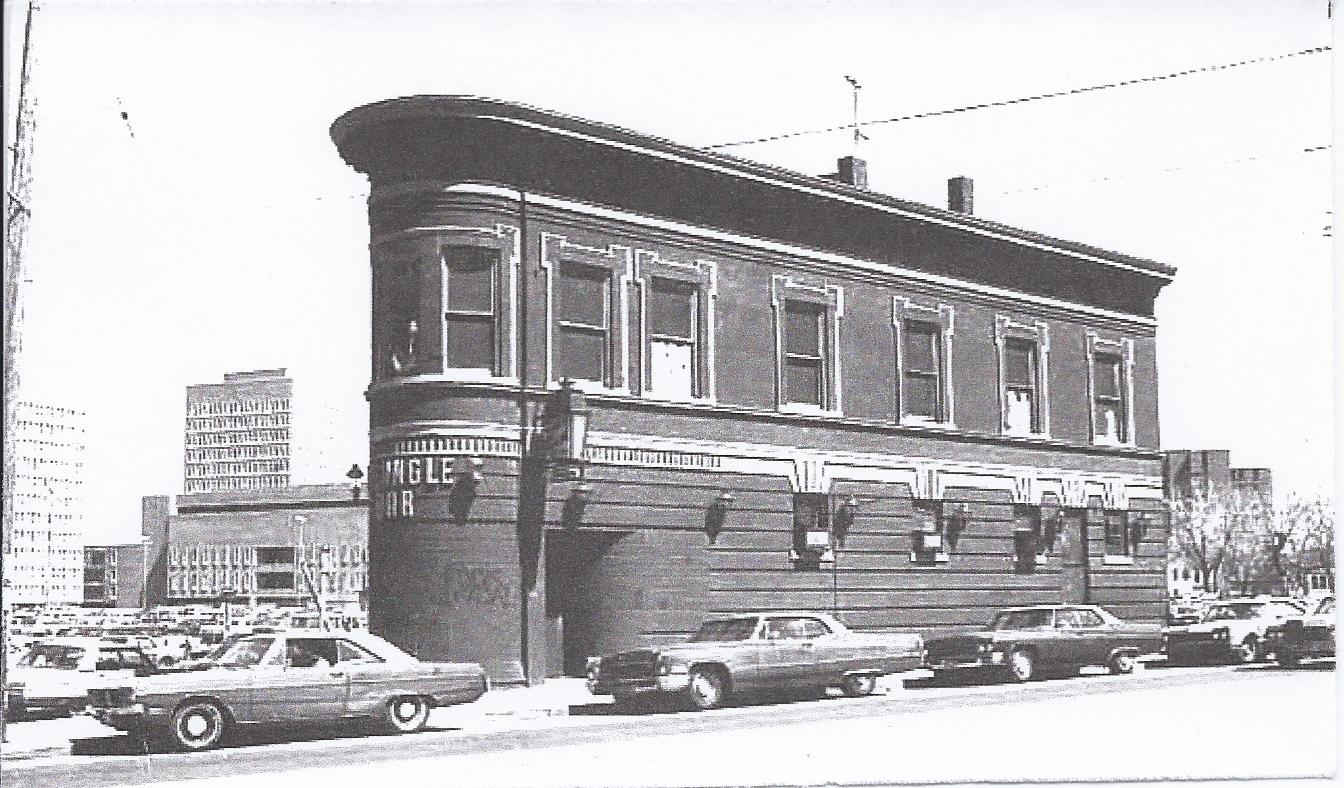
The photograph that grabbed my immediate attention was one of a small café on West Seventh Street leading into downtown Saint Paul. At the time, around 1944, it was a lower class, semi-rundown section of town that had long since seen its better days.

The story of ‘Frenchy’s Eats’ as it was passed down by my Mother to Marlene and me came out in drips and drabs, casual comments, thoughtful reflection and confusing contradictory stories. As best I can recollect the story it went something like this.


Arthur was a short order cook, just arrived in town, and working at the New Brighton Ammunitions plant. My mother had been a domestic worker who found the wages much better at the munitions factory. They met, they married and shortly afterwards, I was born. My sister was on the way when they decided to sub-lease the space of a closed café. It would be called ‘Frenchy’s Eats’ in honor of my father’s French Canadian heritage.

It was intended that my father would cook, my mother would bake and they might etch out a living even though they had two small children, me at two and Marlene at one, and a cheap apartment around (literally) the corner.


It only lasted six months. My mother’s best (vague) description was that my dad drank a lot of the profits away, the help was stealing food from under their noses and the hours were killing them both. So after six months they gave up and quit. Two years later, my father left town and we became homeless.


Now that photograph of ‘Frenchy’s Eats’ carries a whole new meaning to me.

So the play, as it is roughly outlined thus far, has a concurrent three-themed storyline in which the lives of my parents, my father’s parents and myself all intersect, cross over one another, and indirectly affect one other.

There are sub-themes of abandonment, spiritual devotion, loss of affection, careless love, and fierce determination to ‘rise above the raisin.’ It is raw, revealing and exposes many family sins and secrets that their keepers all thought they’d taken with them to their graves. Ancestry.com and my own research (Sharon’s really!) proved them wrong.

I have to see if I can fashion a story that tells a story, my story, in a manner that evokes compassion, understanding, and acceptance for what was.

Tuesday, June 16, 2020

Old Man River


The Mississippi River gnaws its way through the Twin Cities like a dull knife on bark. Sediment and ever-changing currents have maligned its banks for centuries. Yet, much like my fascination with Lake Nokomis, I’ve always harbored a deep affection for the better sister of ‘the Old Muddy.’


The river is one of those icons that I can leave for a long time and yet return to with the same affection and emotions that it draws out of me every time I return to its sandy banks. The river has been with me my entire life. Just as I have grown and changed and meandered in different life directions, so too has this mighty river.

It played a subtle yet important role during my ‘lost years’ when I found solace, comfort, and companionship along its ever-changing shoreline. It was, at once, a place to go to get lost, to engage in worldly conversations, life-changing decisions and distractions from the reality of the moment.

One day, a visit to the river might mean a winter hike exploring its rocks and crevices with a friend, coffee thermos close at hand. The conversation has long since been forgotten; the cold not so much.


The next time, it could be offering up my car hood as a solar blanket to keep my girlfriend warm.
It was a moment in time for silly things like that.


Other times, it meant slipping down its rocky embankment for a solitary walk along its shores.


While I was working at Twin Cities Public Television, the station produced a documentary on the river and its special draw to Minnesotans.


It highlighted the river’s long and storied history as a landing spot for fur traders and steamboats. The film chronicled its importance to the commerce and industry that fed both cities, but especially the small hamlet of Saint Paul.


It’s been labeled the Port of Saint Paul and has long been a harbor for small boats on Harriett Island.


All through high school, I would hitchhike everywhere I went. One familiar route was down along Sheppard Road; a route that bordered the Mississippi River all the way to downtown Saint Paul. There, along the banks of the old river, sat the shacks, hovels, and homes of generation upon generation of immigrants who worked the river and factories in the city. Those immigrants who collected along its shoreline below the High Bridge finally evolved into St. Paul’s own Little Italy before its demise after the floods of 1965.


Anyplace along the river was always a great place to go on a date. Not just to make-out if that was on the agenda but also to wander and wonder and philosophize about anything under the moon.


The monument was just such a collective spot.


Once known as Shadow Falls, the monument was erected to honor the soldiers of World War I. Over the years, its surrounding landscape and accouterments have changed and evolved with the times but its overlook never fails to impress even the most familiar of visitors.


When I was living in near-squalor by the University of Minnesota, I would sometimes wander down to the riverbank across from downtown Minneapolis with Susan in hand to look and imagine where we might be in the future.


Susan and I would map out our lives, talk about our careers respectively in television and nursing, our dysfunctional families and everything we had in common. We would wax and wane philosophically about where we might be in ten years. Those salons of hopeful dreams were exciting, fruitful, and fulfilling for the moment, even though at least one of us knew, quite unspoken, that our future of pastel colors and soothing flavors probably wouldn’t include the other person.


Now fast forward almost fifty years and I’m once again wandering those Mississippi shores. When Sharon goes to her art class in Norde East Minneapolis, I find myself, once again, drawn to the river.


The times have changed, old friends come and gone, but the river remains constant. Old and sometimes slow like me, it continues its meandering down toward the gulf of Mexico but leaving behind all those wonderful old memories just piling up along its translucent transparent shores. It speaks to me of youth and inexperience, love, loss, success, failure, and most of all, longevity.

Nothing remains the same, they say.

Yes, I reply, but some things never change.

Tuesday, June 9, 2020

A Changing Landscape


After a six-month absence, I’m back in the Twin Cities. Even in that short period of time, more changes have crept into my old hometown and its surroundings. Nothing seems to stay the same anymore; ever. As that old worn cliché goes: ‘The only constant here and elsewhere seems to be change.’ As a veteran of the ages, it can be a sometimes sober and intimidating thing to ponder as the decades roll by.


Once again, I’m reminded that it’s not my world anymore. That world of years gone by has evolved, marched ahead and stumbled backwards, recognized past sins and repeated the favorite ones again and again. A re-clothing of past blogs on this subject matter highlighted my own awareness of these changes creeping into my life.


The impressionable clay that was to become my life formed over three decades; the forties, the fifties and the sixties. After 1971, my life took on more semblances of structure and order. I became less aware of the changes swirling around me since I was running the rapids of jobs, kids, changing careers and evolving lifestyles. My focus on the ever-present usurped any awareness of my past life that was slowly slipping away. Changes were going on all around me whether I was aware of it or not…usually not.

Over the past sixty years, just about every neighborhood and building that was a part of my past life has disappeared. I talked about these phenomena in another blog last year. It just pricked my consciousness again recently when I read about the changes to the neighborhoods of Haight Ashbury, Greenwich Village, and the Presidio of San Francisco.


Those places now only exist in old black and white photos, color slides, documentaries, and textbook illustrations. Most of the physical evidence that were those places has been altered, adjusted, remodeled and removed. In short, just about every landmark that I encountered growing up in the Twin Cities now ceases to exist. I’m guessing it’s not just me but most of us from my generation have experienced the same thing.


Urban evolution and development has erased any and all vestiges of those times past. It’s almost as if they never existed in the first place. You can call it progress but a part of my history (and thus my memories) disappeared in the dust and rubble of those buildings footprint.


West Seventh Street meant eight years riding a city bus to grade school in downtown St. Paul. Now old Fort Road is slowly being gentrified and its old landmarks are taking on a new meaning. Keg and Case (food court and mall) has morphed out of the old Schmitt Brewery.


KTCA, the old public television station on Como Avenue, moved downtown. The Neumann Center moved off campus and the West Bank has changed colors and flavors since I hung out there in my pseudo-hippie years. My favorite bar of years past is now an off-site treatment center.


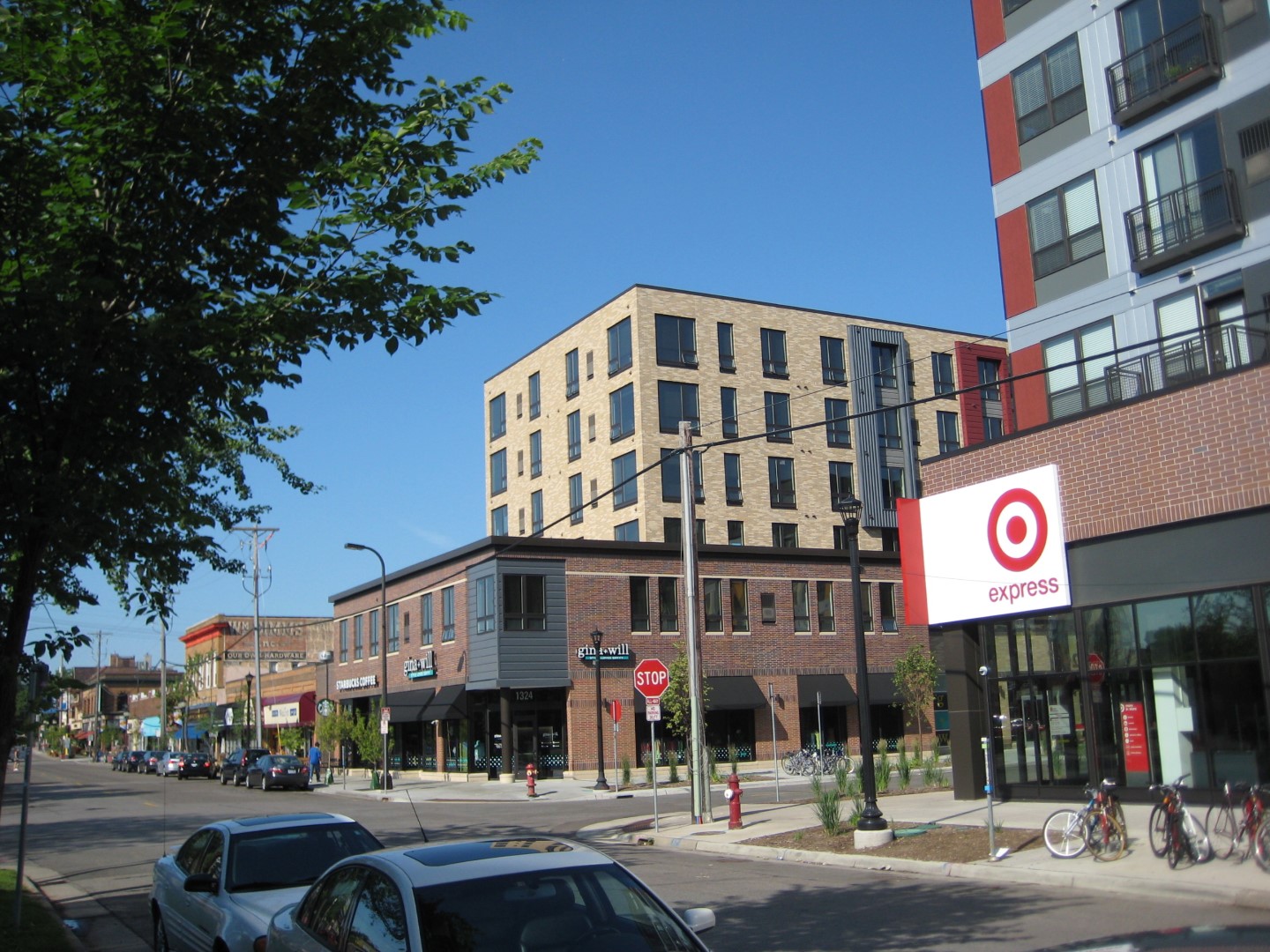
The Minnesota Department of Health tore down its old building on campus and moved off campus years ago. My hippie hangout in Dinky Town has been replaced with student apartments and a ‘tiny Target.’


MCPB, Maryland Public Television, has evolved over time and now my timeframe there is considered their ‘Camelot years.’

Each new generation has created, found, and/or changed any semblance of what used to be. My old hangouts, dens of iniquity, lodging, lovemaking, entertainment, and employment are but dust in that memory bank called my past life.

These changes go far beyond old buildings and neighborhoods. When I was pondering my future and what I wanted to do when I grew up, advertising seemed romantic, exciting and a place where I could write to my heart’s content. I never made the grade and now when I go back over my collection of ‘Mad Men’ videos, I shudder at the thought of me among those wolves, drunks and womanizers. Talk about a lamb going to slaughter.

If you think about it, the areas in which major development has changed the face, structure, and organic workings of a discipline are truly remarkable. Those disciplines include but are not limited to:

Advertising
Marketing
Design-build
Architecture
Technology
Computer technology
Careers – longevity of any of them
Education
Food processing
Manufacturing
Medicine
Transportation
Publishing
Music industry
Immigration
Retirement

It’s a whole new world out there, Mr. Jones.


Now when my grandchildren ask me about the fabulous fifties, the turbulent sixties, the seventies and beyond, I can only smile. It’s all there (or some of it) in my mind. But I don’t have any landmarks we can visit together. There are only old photos, sketchy memories and true embellishments that only a Papa can spin to the delight of eager and receptive young ears.

It was the best of times and…it had a few lumps too.


But the basic rules of life still apply and the fundamentals haven’t changed. When they get older, each of my grandchildren will have their own ‘old place’ to fill their collective memory banks. They’ll be able to regale their own children with tall tales and (some) true about what it was to grow up ‘back in the day.’

I love it.

Tuesday, August 21, 2018

Retracing Cobblestone Steps


Many of the streets in downtown Saint Paul were made of cobblestone pavers long before the turn of the twentieth century. Gradually as the streetcars were discontinued and replaced by buses in the early 1950s, the streets were paved over and make smooth with asphalt.

This little known and totally inconsequential fact pricked a memory bubble in my mind not long ago. Those cobblestone pavers were some of the first that I stepped on as an infant. I was born and raised in Saint Paul and even though I now find myself in a third tier suburb out of the city, the memories are still there. I can go back and find connections all over the city. I’ve watched the curious and sometimes neglectful changes the city has gone through in mostly subtle but profound ways. Twin Cities Public Television captured it best in their ‘Lost Twin Cities’ documentary series.

I think where you grew up to a certain extent defines who you are and what you’ve become. It can be a reflection of your values, interests and affiliations. I have no problem being defined by my mid-western roots. And old Saint Paul isn’t a bad place to be from. While you can’t go back home again figuratively speaking you can revisit those times and places that impacted your life in many unnoticed and yet profound ways.


The first home I don’t remember was on Smith Avenue. It was a tired old duplex that never survived the demise of the Smith Avenue Playground and creation of United Hospital. Then there was a six-plex apartment near Irving Park. That structure also succumbed to the realignment of the neighborhood. Finally we created a real home on Randolph Avenue where I grew up.


For eight years, St. Louis Catholic grade school was a streetcar then bus ride to downtown Saint Paul. In the afternoon, my sister and I would park ourselves outside the the W.T. Grant Department store and wait for the Highland Park bus with ten cents in our pockets.

Our gang in the photo booth (photo by Jerry Hoffman)

Cretin Track & Field (photo by Jerry Hoffman)


Randolph & Hamline (photo by Jerry Hoffman)

Cretin High School was six blocks away from our home and a world apart from what I knew growing up. A paper route during those formative years got me up at 4:30 each morning and taught me the value of real work. Then the John Wood Steel factory just off of Como Avenue reinforced the need for more education to keep me out of that factory setting.


The College of St. Thomas was yet another world apart from the middle class world I grew up in. It was a hint of the future for those with a college education.


KTCA Television on Como Avenue wasn’t my first job. That first exposure to the work force was with the Minnesota Department of Public Health on the University of Minnesota Minneapolis campus. Run down housing on University Avenue just south of Dinkytown was my first foray into independent living and away from the security of home.


The Annual Catholic Appeal in the Hill House on Summit Avenue was the draw that got me back from the east coast. Telstar Educational Corporation on Prior Avenue was the next step along the way. Then back to KTCA Television on Como Avenue and finally TPT relocated to Lowertown in St. Paul.


Then it was working in public television, running my own business and managing two apartment buildings on Portland Avenue that kept me in St. Paul for many more years to come. It finally culminated with my running the Twin Cities Marathon with my daughter and a move back to my home office in Apple Valley.

Now my daughter and her family have moved to Highland Park, just two blocks away from my old paper route. Funny how some things change and yet others remain the same.