Showing posts with label old west. Show all posts

Tuesday, April 1, 2014

Finger Dancing with Spurs On


I’m not sure how she could say it so pointedly when her nose was that far up in the stratosphere.
                                                           
“I don’t read westerns” she announced with her usual flare for the dramatic. And she wasn’t the least bit apologetic about it. She informed me that, of course, she read the classics. She read popular new releases. She read what all of her gal-pals were reading. She read what she thought she should be reading…based on popular culture and what she might be asked about at the country club. But she certainly wouldn’t lower her standards to read westerns; despite the fact that it’s a genre that’s been around for at least two hundred years.

I could have been offended by her comment but I simply looked at the source and brushed it off as just another inane comment from an uninformed soul in search of a reason to feel good about herself. She wasn’t the only one to make a negative remark about westerns. With labels such as ‘horse operas’ and ‘formula fiction,’ the genre has been the favorite whipping cowboy of the literacy elite for years.

I’m not here to defend the genre of westerns. I don’t have to. While it may never reach the hallowed status of classical literature, it still fulfills a need for good storytelling to people who appreciate a good yarn. It’s really as simple as that.

If there is a western formula, it’s really quite simple: believable colorful characters, compelling plots and intriguing dialogue all wrapped up in a vivid setting. Its audience is world-wide; ranging from the United States to the U.K. to Europe, from Australia to Asia, from South American and Africa to the Middle East. Westerns answer a universal thirst for homegrown heroic myths.
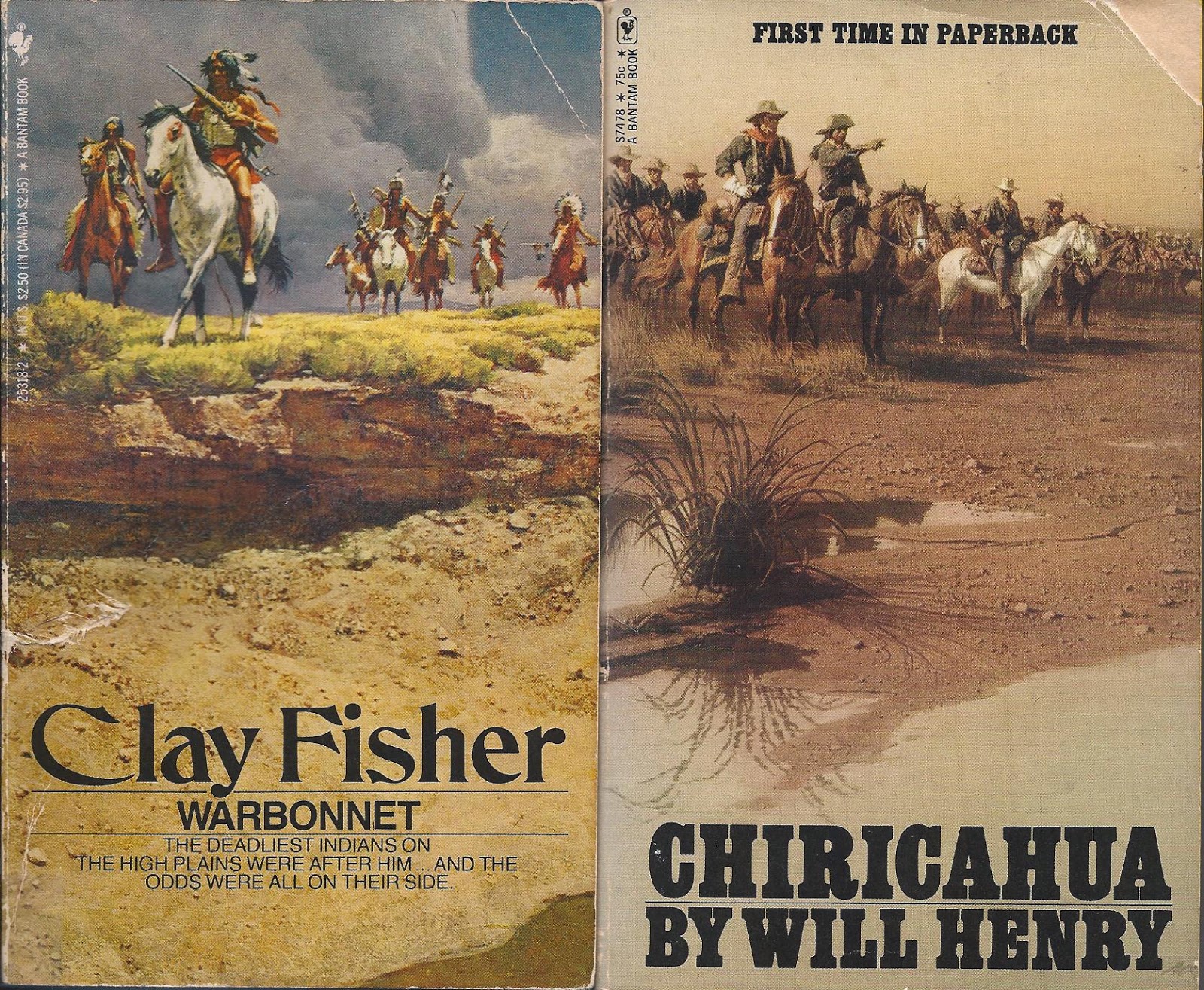


I never started out to be a writer of westerns. Back in the 70’s I was deeply enmeshed in that genre and enjoyed reading many different authors from Louie L’Amour to Clay Fisher. I even wrote two westerns myself to see if I could do it and that turned out to be a Near Death Experience.
 
But over the years, I’ve come to enjoy and respect good writing no matter what the genre. Westerns are no different. There are the classic western writers such as Jack Schaefer (Shane) and Louis L’Amour (Hondo) and the current ones such as Larry McMurtry (Lonesome Dove) and Cormac McCathy (Blood Meridian). Good writing…just like good story-telling doesn’t hold claim on any specific genre.


This prejudice against westerns has always been a cyclical thing. It seems to come and go every dozen years or so. Back in the 1940s director John Ford paid homage to the western frontier with a series of black and white classics such as ‘My Darling Clementine’ and the Fort Apache trilogy. In the late 50s and early 60s, there was a plethora of western television series. Then in the mid-to-late 60’s, the Italians got into the act with Clint Eastwood and their spaghetti westerns like ‘The Good, the bad, the ugly.’

By the mid-70’s, western paperback novels were on the dying cusp as a popular genre.  Bantam Books and other publishers continued to publish them for several more years but gradually they disappeared entirely from the book shelves. Reading tastes change. Nowadays publishers seem to celebrate some woman who has figured out how to get laid in fifty different positions or how to fall in love with a werewolf or how to play games with people’s lives.

But what goes around comes around. I assume that in x number of year’s westerns or some new variation of that theme will come back into popular culture…for the uninitiated. For the rest of us, the western has never really left our consciousness.

Presently I’m working on a sequel to my first western (Apache Death Wind) while I’m editing another book (Debris) and creating a non-fiction ‘single’ for distribution on Amazon. Writing is writing and each story takes me into a world I relish and truly enjoy getting lost in.

I am less interested in the historical aspects of the old west as I am in using it as a background for telling an interesting story with intriguing characters caught up in real-world (circ. 1800s) situations. I couldn’t ask for a better setting for my stories.

In both fiction and reality, most of these men out west lived by an unwritten code of honor. They respected ‘respectable’ women, kids and animals. Their word meant everything and “I can’t” wasn’t a part of their vocabulary. There was an appreciation for the land, honor in hard work and little expectation that government or someone else was going to do the work for them.

I find it ironic that in an age when so much of the public worships the Sunday afternoon man-boys who act like children on the playing field, when pre-adolescent children make millions by wailing about lost love and young adults who can’t act pretend to be movie-stars, we somehow scoff at the iconic image of the men and women of the old west.

Who is more real here?

I’ll go with the cowboy anytime.

Thursday, December 20, 2012

I Got to Play Cowboy Today


When I was growing up and we were very poor, my mother would give me the choice between a Saturday matinee western movie or a comic book. Both cost about ten cents each.

I went for the movie almost every time. The comic book would have lasted longer but it wasn’t as exciting as living out my fantasies for a couple of hours in some dark and cavernous theater with a lot of other overly imaginative youngsters. Nothing much has changed since then.

Aside from some of the classics by John Ford or Sam Peckinpah and a few other masters of their genre, most western movies back in the 50s and 60s didn’t really represent the true west. Even as a youngster back then, I think I could sense the Hollywood magic behind the war paint façade.

Later on, as I developed a fascination with the old west, I began to read some of the masters like Clay Fisher and Larry McMurty. I tried to understand what it was really like back then. I treasured movies such as Red River, The Searchers, the Fort Apache trilogy, Jeremiah Johnson and a few select classics. And I often wondered back then if I could ever tell such a tale.

Finally around 1973, in a spare bedroom in Reisterstown, Maryland, I began crafting a story of three individuals who find their lives inexplicably tied and twisted together, each dependent on the other for their survival and each deeply suspicious of the other two. It became more than just a story of white guys running from menacing Apaches. It was a story of people troubled by their past and uncertain of their future. It was a story of love between two individuals who hadn’t the right to wish for such a thing in their lives. It was a story of choices to be made and the consequences of those actions.

This western novel was my first attempt at recapturing that period in American history when there were no straight forward good guys and bad guys. When the Apaches weren’t mean or evil, just a small indigenous race trying to protect what had always been their way of living.

After struggling for over a year on that type-written, white-out manuscript, I finally finished my story and then promptly shelved it and began a second Western just to see if I could do it all over again. I completed the second novel a year later. That second Western was also shelved and, despite my wife’s urgings that I at least explore publication, I forgot about my venture out west and went back to my life on the east coast.

It was years later, thirty-nine to be exact, after I had phased out my video production business that I began looking for something else to do with the rest of my life. I thought about my first novel and pulled it out of a dusty desk drawer. I had my answer.

Without any real idea of what I’d do with that relic, I had those old tired pages transferred to a floppy disc and began my journey back in time to a place I had long since forgotten. It had taken me years to return out west but it was worth the wait.

Much to my chagrin, I found the story actually held its own and the characters still resonated with me after all those years. I rewrote the story, added a lot more period details, refined the characters personalities, cut out the well-written but unnecessary sequences and ended up with a story that remained true to my original vision.

My second (soon to be self-published) novel, Apache Death Wind, was first called Renegade Rider and then Apache Smoke before I found a name that hadn’t already been taken. So I bought the domain name of Apache Death Wind.com and I can only hope the title lives up to the storyline. I think it does.

What I experienced in writing, and then rewriting of that western tale, was a transformation from east coast storyteller to Midwestern yarn-spinner to west coast reporter. By the time I was safely ensconced in my office in Palm Springs, I was finalizing a story that  began in Reisterstown, Maryland, found refinement and clarity in Apple Valley, Minnesota and finally reached its conclusion under the San Jacintos in my back yard.

Yet each step of the way I found myself riding alongside my hero and dodging Apache arrows just as he did. I was that drifter, lost and confused in a changing world after the war. Like my hero, I still hadn’t shaken off the troubling memories of the Civil War or the deep feelings that fiery Red-head stirred up in my head and heart.

And in much the same manner that I found myself mentally and emotionally transposed back on campus in the mid-sixties with ‘Love in the A Shau’, ‘Apache Death Wind’ found me high atop a saddle, peering over a vast wasteland of desert and rock, always on guard for prowling Apache war parties. I could feel the sweat pooling around my neck and smell the rank clothing on my back. I could taste the warm brackish water from my canteen, all the while sensing the threat of death coming from a dozen different ambush spots.

The characters back then may have spoken a little differently than my twenty-year olds who were ruminating on about Vietnam and Iron Butterfly and Carnaby Street but their cares and concerns shared much the same vernacular. And the emotions evoked by my western characters echoed those of Daniel and Colleen. So give or take a hundred years, nothing much had changed between a man and a woman. Or the good guys vs. the bad guys.

Charlotte was different from Colleen yet both shared a multitude of personality traits, good and bad.

Jeb Burns wasn’t Daniel, not by a long shot. Still both shared a vision of redemption and peace in their soul.

It was a very long journey both in terms of time and commitment but worthwhile nevertheless. I have no idea if there’s a sequel in the distance for that first western.  But it does look promising. I already have a twenty page treatment that picks up where the characters ended their tale.

So between blogging and manuscripts under construction and play-making, I just might find myself back in the saddle again.