Showing posts with label class in america. Show all posts

Tuesday, January 19, 2021

Social Stratification

It’s the elephant in the room, lint on the shoulders of a dark suit, body odor and bad breath. We’re aware of it but most of us still pretend that it doesn’t exist. I’m talking about class in America.

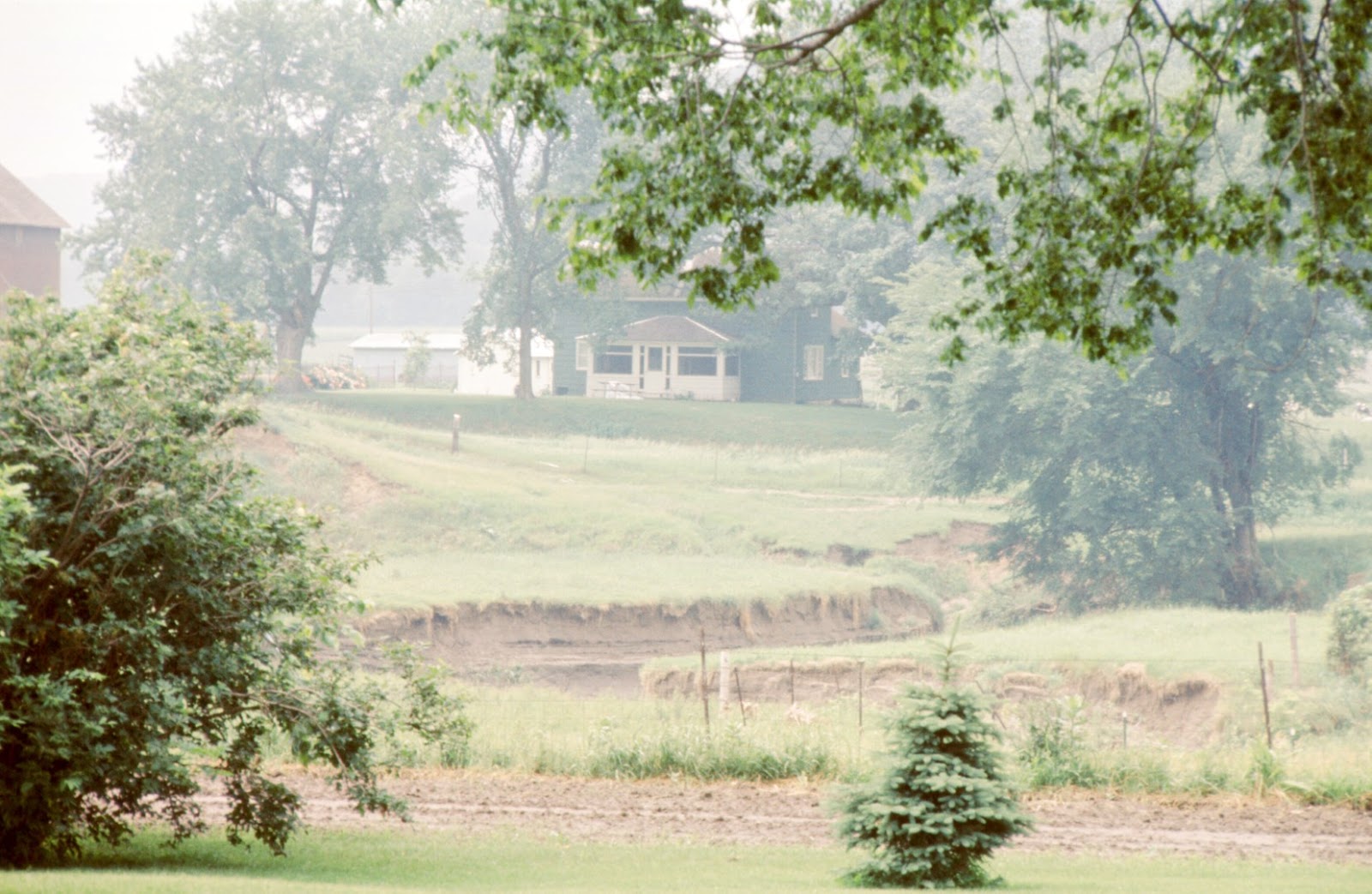
photo courtesy of Jerry Hoffman
It’s a subject that has long fascinated me and I have no idea why. Growing up the idea of class and status never entered my lexicon. Upon reflection, I think the reason I never felt different or out of place in my Highland Park neighborhood was simply because we had a house. Granted, I certainly understood there was no father around, we had no car, couldn’t afford summer vacations and I had to start working (on my paper route) in seventh grade.

I knew, in the back of my little pea-brain, that our family was different from my classmates. But those differences never seemed to matter much. I lived in a house on Randolph Avenue and that was all that mattered, especially to my mother. I guess we were solid, abet maybe a little lower than middle class. I never felt lacking for anything because there wasn’t much to want.

photo courtesy of Jerry Hoffman
For mobility, I had my 100 pound Huffy bicycle, public transportation and my own two feet. A paper route gave me some spending cash and comic books were only a dime at the corner drug store. So were the chocolate and cherry cokes. If there was another world outside of my bubble (and there certainly was) I wasn’t aware of it. Perhaps ‘clueless’ is a better description for my insulated world back then.

In the 1950’s, author Vance Packard delved into the phenomena of social classes in America in several books, primary his ‘The Status Seekers.’ It followed his unvarnished look at the practices of Madison Avenue to entice the American public to buy more called ‘The Hidden Persuaders.’

‘The Status Seekers’ sought to examine the beginnings and evolution of social class in America from the Revolutionary War on. From our very beginnings as a nation, we the people have sought to better ourselves and tear away the tyranny of ‘social classes in old England.’ For the most part, we have succeeded in creating a country of opportunities. As a capitalist society, we have embraced the accouterments of success.


This subtle yet persuasive message that newer is better and neighborhoods can spell out prestige in a silent yet clearly understood language is all around us. There is a subtle yet persuasive hint at ‘class’ in newer neighborhoods and we all know the ‘better’ neighborhoods in town. Yet housing by itself is no indication of the class of people who occupy that space.

Many of my novels have, as an underlying theme, this idea of class separation among groups. In ‘Love in the A Shau’ it is the stark difference between high-bred Colleen and rough-hewn Daniel. In ‘Debris’ it is the half-Mexican kid, Robert and business owner’s daughter, Miranda. In ‘Follow the Cobbler’ it is classy Katherine and Brian. Finally in my newest novel, ‘Playground for the Devil,’ it is the stark background differences between Brad and Laci, even though both are damaged individuals.

America has always pretended to be a classless society and yet has never been able to pull off that fantasy. Blame it on Horatio Alger Jr. or Tom Sawyer or Steve Jobs. We all want to believe that this is the country of opportunity for all and that if we work hard enough, success can be ours. While true at its core, there are still some among us who haven’t lifted a finger and yet hold tight to the golden ring. That’s life in America; before, now and probably into the future. Yet that in and of itself doesn’t define class.

Karl Marx came to power with his quest to eliminate the bourgeois ruling class in Russia. Joseph Stalin continued that social and class branding but also failed. Modern day Russia hasn’t done much better.

Farm collectives in Israel, like the Hippie communes of the 60s, tried to create a society of equals and also failed. The golden dream of Haight-Ashbury didn’t last long amid the free love collective mindset there. There will always be strivers and stragglers. Some will rise and others will fall.

Since the Revolutionary War, America has struggled to preserve the ideals of equality in the face of persistent tendencies for elites to develop and consolidate their power of prestige, power and wealth. The ‘Gilded Era’ presented the perfect clash between the needs of the masses for subsistence and the desire of the elites for a more distinguishable and tangible life style at the expense of the masses.

Many claim today that the ‘American Dream’ is dead. If not dead, it has certainly been challenged and tattered a bit by the unequal displacement of wealth. Yet opportunity still exists if even in a different form than yesterday.

But wealth and class are two different things. Again, I tried to explore this idea in ‘Love in the A Shau.’ Colleen’s boyfriend, Bradley, while on the cusp of financial greatness and stature in the New York social scene, has little if any class. He is a reflection of the fallacy that wealth equates class. Too often today, we equate wealth with class and automatically assume that if an individual or couple has money, then they must have class too. Nothing could be further from the truth.

More than anything else, class is a state of mind. It is an honest reflection on the dignity of another person. It is a respect for honesty, for self-respect and fairness. There are far too many examples of the moneyed masses that have no clue as to the simple lessons of life. Their only quest is the latest and greatest of material goods and above the fold headlines.

A person of class respects everyone but holds dear in his or her heart the selfless individual who works for the betterment of all. Now that is class.

Tuesday, February 26, 2019

Risin Above Your Raising


I first read the phrase in a biography about Hank Williams. He was raised in the back country of Alabama in the 1930s. Hank was raised poor, uneducated and in a caste system that understood its place in American society. He and his kind knew where they stood among the classes. Any inkling or hankering one might have about moving out of that socio-economic strait jacket was quickly dismissed by those around them.


Nothing much has changed since then. In small towns everywhere, the elders still grouse about ‘the cities’ as if that deep dark metropolis was some far off distant black hole where young people go to be swallowed up by the evils of modern day society. The hometown lament usually goes something like: “They go off to get an education then return thinking they’re ‘much better and smarter than the rest of us.”


That age-old lament doesn’t have to be open, flagrant, or oppressive. It can and often is a subtle reminder that there are those who have and then there are the rest of us. It’s understood that the twain shall never meet, cross or intermix. Dog whistles are cloaked in terms such as ‘sticking with your own kind, thinking you’re better than the rest of us, and who do you think you are?’

It belies the truth that in America as elsewhere around the world, we live in a class society. As much as people would like to pretend that there are no classes in this country, the fact remains that many people see themselves in one class of some sort; be it middle class, upper middle class or upper class. Any talk about moving up recognizes the challenge to this reality of our modern day society.


My own family background proves fertile to this point. It was rural, agrarian and steeped in the traditions of the Catholic Faith. My Mother, grandparents and relatives all held to the same dictum; that they were put on earth with a role to play and that role had been spelled out long before they came along. Their parents, grandparents and other elders of the tribe had followed the same pathway to adulthood. They were all expected to do the same. There was never any question about what role they would play in their small, sheltered existence here on earth.

Those few isolated examples of town folk who left for the ‘cities’ were seldom addressed unless they returned and sought refuge in the simpler way of life. Others who left and never returned were seldom if ever talked about. It was if they never existed in the first place. There was and still exists to some extent a fear among the elders that evolution among the younger set is their own abandonment. It’s as if those who never left home envy and fear those who ventured forth outside of their comfort zone. Thus the dismissive term: ‘Risin above your raising.’

The reality is that we all are building on the basic structure our elders imparted to us. We are standing on their accomplishments so that we might see even farther into the distance and discover things they were only able to imagine.


What the term masks is the exploration of potential. I tried to examine that principle in one of my first novels ‘Love in the A Shau.’ I continued that exploration of class mobility with my ‘Debris’ trilogy. It’s a message I try to impart on my grandchildren whenever I can.

Many of us find something we are reasonably good at where we can earn a living and we leave it at that. But that isn’t potential. That is simply today’s reality which doesn’t take us to the next level; whatever that might be. There is tremendous potential in all of us but we must first allow ourselves the freedom to try to find it even if it means failing all or most of the time. Nothing ventured seals the outcome even before you start. Continued effort raises the hopes that success is only another effort away.


Moving beyond what was expected of us as young people, no matter our present age, offers hope for reaching that potential and the satisfaction of knowing we did ‘rise above our raising.’

Tuesday, February 21, 2017

Working Class

Women's March Palm Springs, CA

I was at a women’s rally a couple of weeks ago, right after the inauguration. It reminded me of the rallies of the ‘60s to protest the Vietnam War. It was all a bit surreal and again I was there more to support my wife than anything else. But while standing in the shadows of the speakers I realized there’s another side to that equation. And it leaves me confused.

Much has been written about the under-served and long ignored White working class who propelled our new President into office. The media landscape has been covered with broad gray swatches of their concerns and complaints. We’re told they feel neglected and forgotten in today’s push for globalization, fair trade, equality for the races and justice for all.

I won’t venture into that minefield of conflicting emotions, exaggerated statements, and a plethora of false premises. Sufficient it to say, that group feels their concerns are justified and they’ve responded accordingly.


What fascinates me most about this vanilla tsunami is the fact that I came from that very same socioeconomic group. I was raised in that environment and yet I can’t relate to their shouts of injustice. While not disputing their claims of neglect I still can’t resign myself to sliding alongside their verbal marches. Guess I’ve always been more rainbow than strictly red or blue.


J.D. Vance gave a fascinating presentation on TED some time ago. It was a heartfelt examination of the challenges facing so many of his friends and neighbors and classmates in a small Southern Ohio town where he grew up. He gave a very convincing argument for their justified concerns that they felt weren’t being addressed by either party in government. Or perhaps society in general.


It could be argued that I was raised in another time and place. But the fact is that almost all of the people I’m familiar with who ‘made it’ have come from modest backgrounds. This in itself is more than a little ironic since I always saw them (back then) as more privileged, more supported and more loved than myself. I admired them and wanted to be like them. I have always been drawn to strong assertive women and driven men.

Yet upon reflection, gradual maturity, and recent conversations, it turns out those folks were all pretty much the same as me. We grew up in the fifties and sixties. We were either poor or lower middle class or balanced middle class. Yet most of us could make ‘something of ourselves’ through hard work, some luck and often with a supportive partner at our side.

Lucky; I guess. Focused and determined is more likely.


Only through education and a work ethic inherited from my mother was I able to move myself into another life cycle. Of course, we hate to talk about class in America, believing that if we don’t, we can all continue to pretend that it doesn’t exist.  I can’t speak for others nor would I pretend to know what drove me and yet doesn’t motivate others. It brought me to where I am today and, in the end, that’s all that matters.

I’ll go out on a limb here. There seems to be this collective agreement among those disenfranchised voters that government is too big and should be reduced substantially, yet there is this collective whining that government isn’t doing enough to give them jobs, health care, personal protection, and financial security in their old age.

They loath paying taxes but demand government/state/municipal services like snow-plowing, police and fire protection and city services be there for them twenty-four/seven. They want it all but don’t seem willing to accept responsibility for some of those actions that fall on their own collective shoulders.

It’s so easy to sit back and complain about things and then not do anything to reduce or alleviate the perceived problems. They want some government official to do it for them. Then they complain when they don’t get the outcome they think they deserve.

My wife has often chided me for a lack of compassion for the plight of the downtrodden masses. Yet it’s neither disrespect nor contempt that I feel, it is a deep seeded belief that the answer lies within all of us and will seldom be found in some book or lecture or government handout.

No one gave me a handout. Most (not all) but most of my luck was a lucky collision of hard work and determination intersecting with opportunity. I wish the same for all those folks who feel they’ve been left out of the equation.


My life has had its ups and downs but it’s been one heck of a ride thus far. It’s given me an opportunity to help, influence, advise, cajole and I hope set a good example for my kids and grandchildren. What a gift that has been.

Tuesday, June 17, 2014

An Elephant without Class


It’s like the elephant in the room that no one wants to acknowledge. We’d all like to believe that this is not jolly old England. We don’t have class in America. Yet over the decades we’ve managed to graph out class divisions through economic indicators such as a lower socio-economic demographic which 2008 helped exasperate, all those rich folks we love read about or watch on TV and a shrinking middle class. Of course over the years, even that equation is being challenged by roller coaster economics and other factors. Hedrick Smith did a great job of chronicling the Death of the middle Class in his book 'Who Stole the American Dream?'.

Social class in America has always been a controversial issue. We don’t want to admit that it’s there and yet we can’t help but judge ourselves by the fortunes or misfortunes of others. Secretly we wonder where we stand in the great social order of America? Where do we fit in the model of social class?

Strictly speaking, the simplest definition is the three class model that includes the rich, the middle class and the poor. But to muddy the waters even more, some sociologists have upped the ante with a class division made up of six distinct social classes; capitalist class, an upper middle class, a middle class, a lower middle class and so on.


But in all this wrangling to define social class and economic standing in America, I think they’re missing a more appropriate definition of the word. To be true, there are different economic dividers in this country. There always have been and probably always will be. But true class is not driven by economics.

The mistake here is not in the classification of folks based on their economic place in our society. Rather it’s the naïve assumption that rich folks have got all the class because they’ve got the money and the rest of us must somehow look up to them and their ‘Downton Abbey’ lifestyle.


Nothing could be farther from the truth. Class has nothing to do with accumulated wealth or inherited pedigree. It has everything to do with the way a person lives his or her life.

I’ve been fortunate to know a number of men and women who are some of the classiest folks around. They exude confidence and class seemingly without even trying.

And it has nothing…nothing to do with money or education or travel or life experiences. I know several women in particular. They are congenial and pleasant to everyone and I mean everyone they meet. They like most people and enjoy their company. They can make an old curmudgeon smile and a snob warm up. Their wit and intelligence can warm the coldest of hearts and break through most defensive facades. They exude class in their every action.

On the other side of the spectrum, I know a fellow who inherited his father’s business and is a pillar in his own little world of church and community and his profession. He is educated, rich, well-traveled and yet has less class than my three year old granddaughter. 


This fellow has mistakenly assumed that he hit a home-run and is a winner in the game of life. The fact of the matter is that he was born on third base and has never made an effort to do anything meaningful on his own. He has been coasting all of his life and will probably continue to do so for the rest of his life. He’s a nice enough fellow except for his mistaken assumption that he’s somehow better than the rest of his siblings and everyone else simply because of where Daddy’s money put him in life.

You can’t buy class. It doesn’t come from blue blood coursing through your veins or an Ivy League diploma on your wall. It isn’t defined by your bank account or your second or third home. It comes from within and you either have it or you don’t.

I made a point of examining these phenomena in “Love in the A Shau” because it’s a topic I find absolutely fascinating. In my novel, Colleen’s boyfriend Bradley is rich and successful and destined for great things in his old money east coast world. Colleen's old boyfriend Daniel comes from a broken home, has no money and is struggling to get an education.

Yet Colleen is able to recognize the focus and determination and self-reliance that is the essence of Daniel verses the easy soft lifestyle that defines her boyfriend. It is a clear and startling difference that causes Colleen to examine her own priorities in life.

You know class when you see it. It’s the candidate who loses the election but holds his or her head up high and perhaps tries again. It’s the team that loses but is quick to praise their opponents. I’ve seen wrestlers beat themselves up even though they knew they didn’t stand a chance of defeating their opponent. They did it for the team. It’s the author who collects rejections slips but keeps pounding away on the keyboard because that's what he or she ‘has’ to do.


If there’s one thing I want to teach my grandchildren; like there’s only one?...it would be to show class in everything they do. From school to work to interacting with others. Class is a mantra you want to acquire in life even if it isn’t always easily defined. I hope to do my best to help my grandkids become ‘classy’ little people.

Tuesday, June 18, 2013

Going Back into the A Shau


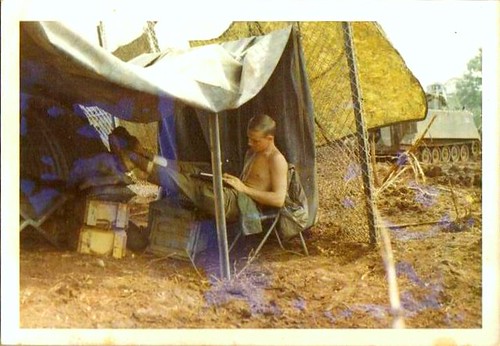
There are many ways to die in the A Shau (pronounced A-Shaw) Valley in South Vietnam. It could be a clean shot from a sniper, a slow painful death from a poison bunji stake or the instant flash and demise from a claymore mine. I survived a number of firefights and battles in the A Shau Valley but now it looks as if I may have to go back there one more time.


It wasn’t supposed to be that way… or so I thought. After writing “Love in the A Shau,” I assumed I had put that part of my fictional past behind me. I thought I was done falling in love freshman year, feeling the exhilaration and angst of that first romantic entanglement, harboring wonderful fantasies of our future together and ultimately experiencing the painful realization that it wasn’t meant to be.

I thought I was done reliving that long, monotonous bus ride from Minnesota down to boot camp at Fort Leonard Wood Missouri. A reflective ride in the middle of the night when my sweetheart and all my friends were safely ensconced in their beds, dreaming of a bright collegiate future ahead of them.


But much to my surprise and chagrin, my journey as author and protagonist wasn’t over yet. For reasons that gradually began build in my subconscious, I slowly came to realize that I had to return to the A Shau and rewrite the story there. My journey back in time wasn’t over yet. 

And I’m very grateful for that. 

With the advent of POD (print on demand) and the help of several very talented associates, I am now able to go back to change, edit, improve and hopefully enhance the story of Daniel and Colleen in “Love in the A Shau.”


It will be labeled as the second edition and I think the changes will be subtle enough as to not rob my first readers with any changes that resemble a different storyline. But it will resolve my desire to make improvements that bring final closure to this story.

Since the first publication of my novel “Love in the A Shau” last fall, the feedback I’ve received has been encouraging but also surprising at times. Overall, there seemed to be two consistent messages from all the comments I’ve received.

Readers loved the segments on Vietnam. This was especially surprising coming from my female readers. I worried that the graphic descriptions of war and the profanity of military talk would turn off my female readers.  I feared they might see it as just gratuitous profanity used for shock value. But the opposite was true. As one friend mentioned out to me, quite pointedly. “Oh, come on, Denis, give us credit. We’re much smarter than that. We understand the violence of war and the profanity-laced dialogue that comes with the territory. It just added to the flavor of the moment and painted a vivid picture of the profound changes your protagonist was going through.”

Since then, I’ve found even more relevant bits of dialogue and details I’d like to add to the Vietnam segments if I were to do a rewrite.

But it was the second message that gave me pause. Most of the reviewers found the storyline interesting and quite engaging…after a while. The red flag for me as a storyteller was the comment: “after a while.” 

They said the storyline was compelling…after the first section of the book which they found a bit slow. I was never able to pin-point exactly where the story began to pick up speed until a friend pointed out where she felt the story actually began to accelerate. So I finally had a roadmap for a rewrite. At that point, I decided that with the clear advantages of POD, I could, indeed, go back into the A Shau and correct those earlier writing flaws. 

There were also a couple of segments I had deleted from the first edition that in retrospect, I wanted to put back into the second edition. With POD, it was a simple exercise in rewriting those segments that needed work, adding those segments that had been left out, changing some font sizes and including a quote that struck me as timely and relevant.

“In war, there are no unwounded soldiers.”

It might be a tough trip back because I tend to get very vested into my characters. Yet it’s not often that I get to go back in time and revisit the bloody battlefield and detail the death and gore and dying all for the sake of adding realism to that moment in time.

Or to go back on campus and enumerate the enounces of campus life where most of the women
were virgins and manual dexterity with the boys didn’t refer to their working on cars. 


And re-examine a love lost amid the dissipation of fragmented moments and changing personalities. Proving once again that in fiction you really can go back to what once was and change it for the better. It’ll be an interesting journey back in time once again. But I think the journey will be well worth the effort if I can keep my fear of dying in battle and conflicting emotions of love in tack.

It’s all fiction anyway.

In the end, reality is a lot more realistic.

Just not as interesting.