Showing posts with label WTCI Television. Show all posts

Tuesday, May 29, 2018

Those Who Stayed


Some people are like homing pigeons. They find a comfortable niche and never want to leave it. The most noticeable example are folks raised in small towns who can’t wait to get out of Dodge then return to raise their families in the same environment they actually felt so fulfilling as children themselves. There is something intrinsic in their DNA that compels them to return to their roots.
Then there those who stay with a company or institution for the duration of their working career. It might be a comfortable situation, a pay grade they don’t want to give up, security, insecurity in the open marketplace or any other reason that keeps them tied to their desk and job title.
I’ve left a couple of great companies after several years of employment only because I found a slightly greener pasture across a different time zone. MCPB, The Maryland Center for Public Broadcasting was one of the best jobs I ever had. I absolutely loved it there but still the time came to move on. I guess there are just some of us who can’t sit still.
Old KTCA Building - Minneapolis/St. Paul
As the first public television station in the Twin Cities, KTCA seemed to have a grace period from roughly its inception in 1957 through the end of the Sixties. After that, management changes, staff departures and a shift in programming philosophy drained off the rough-hewn experimental, challenging directions we were going in. The station became a PBS affiliate and along with their wonderful new programming also came a uniformity and conformity that a lot of us early pioneers felt confining. So we left in drips and drabs and then we were gone.


WTCI; the public television station in Chattanooga, Tennessee was just a blip on my career ladder. What can I say; it was the Deep South in the early Seventies and as one crew member said to me: “We don’t cotton much to Yankees telling us what to do.” He meant it and that pretty much sealed the deal for me. We made some wonderful friends down there; many of whom we still exchange Christmas cards. But for the most part, they continued growing cotton and I headed north.

The Maryland Center for Public Broadcasting was probably one of my best jobs. Great institution, outstanding management, wonderful staff and crew, fulfilling job and the opportunity to explore much of the East Coast.
It was five years of firsts for me: First child born, first home purchased, first two novels written, first inkling to buy real estate and start my own business, my own program distribution business, first time I jogged three miles on a high school track and began forty-seven years of running. We lived the East Coast lifestyle and loved it.
The MCPB Facebook web site talks about that period as ‘Camelot’ and to a lot of us past staffers, that’s exactly what it was…for a period of time. Then over time budgetary issues, management changes and a distillation of some of the creative staff changed the culture and thus the heart of the institution. Many stayed on. I left to return home and gradually, I’m told, Camelot began to fade away. At least that was my perspective from afar.
There were a few other companies, some brief and others extended, after MCPB. They all seemed to begin with a bang and then gradually morph into a sad reminder of what they once had been. It might have been a graduated calcification of the creativity that attracted me to them in the first place. It might have been the laurel-resting after their first blush of success. In the end it wasn’t the same environment that nurtured my hunger. Others felt contentment there. I felt hollowness behind the façade of past congratulations for a job well done. So I left. They continued on. I grew. I don’t think they did.
Sometimes education, city government and politics all share the same evasive value of being great one moment and in transition, the next. This is not a value judgment but rather a reflection of the innate character of those institutions. Many staffers learn to live with the fluidity of their environment or accept the reliable, constant that their lives have become. I could tolerate neither and thus moved on.
Sharon and I have evolved, changed, morphed and switched color palates many times in our lives together and each transition seemed to fit us at the moment. Then opportunity or circumstance nudged us down yet a different road again.


Now in lieu of retirement Sharon is an artist and I am a writer. It nurtures us and gives reason for the sunrise each morning.
Enough said.

Tuesday, September 8, 2015

I Have Seen the Elephant, I Have Heard the Owl


The saying:  ‘I have seen the elephant, I have heard the owl’ is an American colloquial phrase that refers to gaining experience of the world at a significant cost. It was a popular expression in the mid-to-late 19th century throughout the United States beginning with the Mexican-American war and beyond.

Pioneers would speak about ‘seeing the elephant’ in their journeys west. James Michener in his novel ‘Centennial’ made it a key point in the life of one of his characters. For that young adventurer it was an experience that left him shaken to the core and uncertain about his future.

Over the years, the phrase has become immersed in western novels, war stories and more poignant storytelling such as Margaret Craven’s wonderful novel ‘I Heard the Owl Call My Name.’ It’s been referenced in many bible stories highlighting those watershed moments and end of life experiences some biblical characters have faced.


It’s been argued that you don’t really know who you are until faced with a catastrophe or a near-death experience. Some will say that our best life experiences come through affliction and challenges we never expected to encounter. It might be an athletic event that stretches your abilities to their absolute maximum. It could be a personal struggle with health issues, personal or social relationships or any number of personal challenges.

Now to take that argument one step further I might also suggest that for many people the act of planting ones feet on a stage could be akin to ‘seeing the elephant.’ Yet there are a number of octogenarians and their younger compatriots who have agreed to do just that in a new senior theater project in Rosemount, Minnesota.   

After two summers of trekking to an assisted living facility / nursing home in Wabasha I’ve seen firsthand how many of the elderly have chosen to live out the rest of their lives. Some are able to embrace or at least accept their final surroundings while others just sit in their rooms pining for the ‘good old days.’

So it was encouraging to see that there is another group of elders who are readily embracing change and challenges and new adventures in their lives. It’s not only refreshing it’s darn right encouraging. There is hope for aging baby boomers everywhere.


The RAAC senior theater project could be a potential proving ground for some of my theatrical production ideas. The RAAC was started in 2007 by four area residents who had been serving as advisors to the city about possible future use for a church that was closing in town. Their final recommendation was that the church be rededicated as a community arts center.

As the group was making its final recommendations they decided that the arts in Rosemount were about more than just a building in town. They felt there was need for an arts council that could spearhead activities and programming to bring the arts, all kinds of arts, to the people.
Now they have a new project called the Senior Theater.

Creating plays has always been part of my writing arsenal. The Coachella Valley in California has a plethora of theaters and theatrical groups I’d love to approach with some of my works. Now I hope to have even more opportunities for play-writing closer to my Minnesota roots.

Rosemount Area Arts Council Senior Theater Group


This latest project of RAAC’s follows on the heels of a growing trend in this country of theater groups for seniors. It’s a trend that continues to grow by leaps and bounds. In 1977, there were 79 such groups, now there are more than 800 spread out across the country.

Part of the inspiration for this trend came from the work of the late psychiatrist Dr. Gene Cohen who headed centers on aging at the National Institute of Mental Health and at George Washington University. Dr. Cohen’s research concluded that involvement in the arts provides seniors numerous benefits for mind and body.

'Barefoot' - Photo Credit - Keith Reed

'Barefoot' - Photo Credit - Keith Reed

Stuart Kandell who founded Stagebridge in Oakland, California in 1978, the oldest senior theater company in the U.S., has stated: “We all have a need for challenges. We have a need to keep learning. We have a need to feel like we’re giving back to other generations. We have a need for a social environment. Theater does all of that and more.” Then he adds: “The social element is huge, gigantic. The (theatrical) company for many people is an extended family.”

I could see and feel that very sentiment at our first meeting to introduce the public to the RAAC senior theater project. The room was filled with people who seemed energetic, enthused and ready to get involved. None seemed to be worried about their age or tired body parts. For some it was a second chance to do something they’ve always wanted to do in the theater. For others it’s a chance to keep going. For a few it’s just being a kid again. I’ve never wanted to grow up and start acting my age anyway. Why start now? Riding Shotgun with Peter Pan expresses my sentiments exactly on that matter.

At the first meeting there was the obligatory grumpy old man who was hard of hearing and had to be rude in pointing that out. There are always a few folks who are prisoners of their past and still afraid of their future. They’re caught in a limbo of contradictions, paralyzed by fear of trying something new and yet tortured by the realization that their time is running out. Fortunately he was the only one among the group. Those other attendees seemed to be more than willing to embrace their future no matter how terrifying the theater might seem to them.


My first experience with Community Theater started back in Tennessee in 1972. I had left public television in Minnesota to spread my wings in the Deep South.

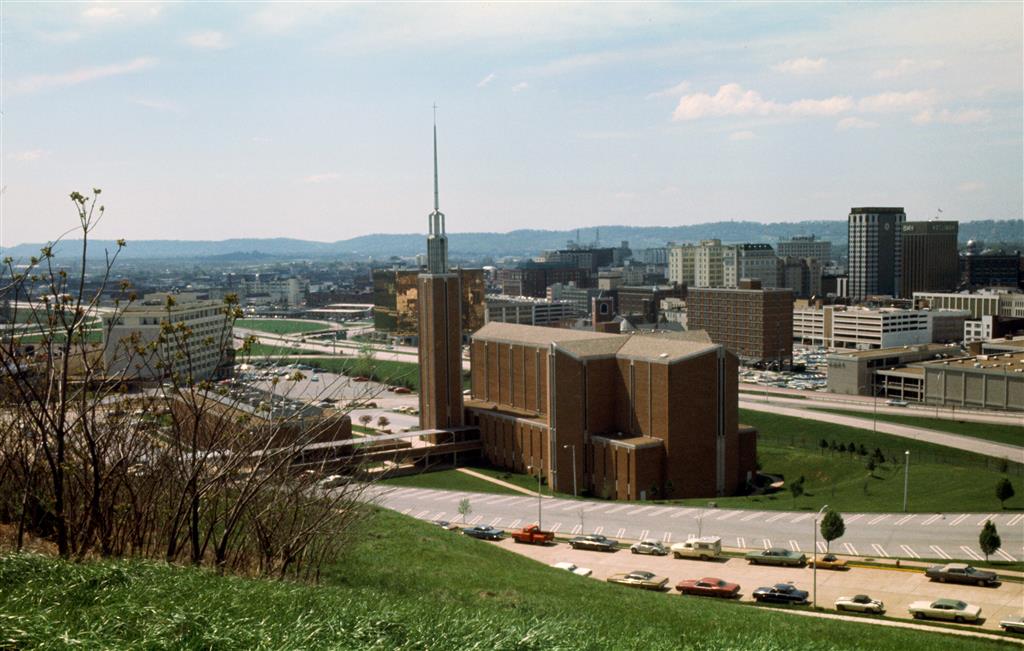
WTCI Television

Me at WTCI Television

It was a crazy time because I found myself labeled a damned Yankee in King Conservative’s Court. The southern attitudes and prejudices against the north were still very much alive when I arrived as the new production manager at a public television station in Chattanooga, Tennessee.


I loved the city itself, the people, the surrounding area, new friends we met and our weekend jaunts around the south. My work experience should have held me in respect among my peers. Unfortunately it was my northern linage that did me in. The stations production crew was as prejudiced and unwelcoming to northerners as anything I’d ever experienced.

Playbills


Fortunately the Chattanooga Little Theater became my refuge. It was a welcoming respite from the bigotry and ignorance I experienced at work. I crewed on the first play of the season and then acted in three more. Around the end of our fourth play I had been offered a new job in Maryland and my brief, ever exciting career as a thespian came to a sudden halt. But not without some interesting observations.

'How the Other Half Lives'

Cast of 'Catch 22'

I observed there’s a latent thespian in many of us. But some take it far more seriously than others. I was of the latter party. It was a challenge. I was and still am an introvert so the bright lights, grease paint and applause did little to sooth my nervousness and fright on stage.

I think a lot of those actors found their true selves on stage. Much like politicians whose only claim to fame is their small town title, these folks truly embraced their new pretend persona. It made them feel accomplished and whole and fulfilled. I never reached that level of self-satisfaction. I was always more interested in the story-telling aspect of the theater and not the acting part of it.

In this new incarnation as a playwright, I hope to be working with the RAAC Artistic Directors, programming chair and Senior Theater Development Chair. I hope it will be a collaborative effort in which we can create a wonderful experience for those seniors and a fun time for all who attend their first performance early next year.

Some of those seniors may ‘see the elephant’ while others might ‘hear the owl.’ But either way, vision or not, it will be a great experience for all of them. Not for the racing hearts or sweaty palms and memory-challenges but simply because when called upon they answered the call. They took a chance and risked the fear and trepidation for a chance to do something challenging, something exhilarating, something that many of their colleagues could only hope to accomplish. Not a bad legacy in one’s twilight years.

My Tabernacle


For me it’ll be just another jump-start to add to my work load back in Palm Springs and hopefully land a production there as well. Either way, produced or not, writing plays continues to be fodder for my over-active imagination and a wonderful excuse to keep body and mind active and moving.


And always on the lookout for the elephant and the owl.