Showing posts with label creativity. Show all posts

Tuesday, October 7, 2025

Going It Alone

Is group think a better way to create ideas, thoughts, images, patterns, songs and the written word?  Do artists create alone or by committee? Is Artificial Intelligence the answer? Does that special formula associated with creativity only call for isolated wanderings inside one’s head to find that image or thought. Then you pull, yank, cajole or force it out into the open in one of a bajillion forms or formats?

Is ‘creativity by consensus’ group think and/or ‘following the herd’ a real thing? I would argue it is not. I would suggest that creating in isolation, going inside one’s head, into the zone is the way most art is created. In my own songbook, the great musical collaborators were two artists work-ing together but still doing their own thing.


Several folks, whom I respect a lot, would strongly disagree. They argue that one must be open to ideas, suggestions, attitudes and ever popular trends if one is to succeed in telling their story. In the case of a script reading for a play, the creators of the work should be open to suggestions as long it is understood that the final say always rests with the playwright and director. Ultimately, it is up to the creator (whoever that may be) who gave birth to the project to have the last say.

The vast majority of creative works of art; be it novels, plays, movies, art, song, etc. have one creator, one visionary, one story-teller. A host of others may collaborate on the final product but its true birth mother or father is its true parent. That doesn’t ignore or denigrate the immense help that beta readers, editors, and other collaborators can add to the final product.


I read a fascinating book recently about the production of the Fleetwood Mac album ‘Rumours.’ The band consisted of four musically brilliant musicians, who together, melded their different approaches to rhythm and rhyme and cadence into each song and together created an award-winning album.

The magic here was in their individual ‘point of view’ approach to the music. For example, if you give ten directors a movie script, each will come up with a different movie in their mind. In the case of ‘Rumours,’ those four different points of view found a commonality or theme that the four musicians could agree upon. Each held to their own vision of the song but was willing to compromise for a fabulous final product.

It's simply another argument that in most cases there is one creator of a song, novel, play, movie. Certainly, collaboration is often a key here. But ultimately the core idea was (probably) the result of one person’s thought process, imagination, etc. AI can help or hinder here depending on how it is used or misused.


Bob Dylan is renowned for his original folk songs in the early 60s. The truth is that Dylan was a master at taking old 1700 and 1800 English, Scottish, and early Americana music and adapting it to his own particular style. The folk tradition is rife with examples of songs being adapted, changed, and revised for another artist.

Pablo Picasso is famously associated with the saying: “Good artists copy, great artists steal.”

The idea behind this line is that true creativity doesn’t come from simply imitating others, but from deeply absorbing influences, transforming them, and making them one’s own.

That said, there’s some nuance:

  • Picasso is often credited with this quote, but there’s debate about whether he actually said it.
  • Some scholars trace the phrase to earlier sources. For instance, the poet T.S. Eliot wrote in 1920:
    “Immature poets imitate; mature poets steal.”
  • Picasso did, however, speak openly about borrowing, transforming, and reimagining other artists’ work. He once said:
    “When there’s anything to steal, I steal.”

So, while the exact wording may be questionable, the sentiment—that great artists take inspiration and transform it into something uniquely theirs—is strongly tied to Picasso’s philosophy and practice.  (Thanks to ChatGPT for that clarification.)

So, by that standard, Bob Dylan is a master thief and brilliant at it. I should be so talented.


Malcolm Gladwell in both his books ‘Outliers’ and ‘The Tipping Point’ touches on some of the seemingly serendipitous side notes that make such a difference in the creative process. It’s the little things like practice and dedication and focus that separate the actors from the ushers. And there’s a phrase for that: ‘Hiding the brush strokes.’


It always looks so easy because the media wants us to believe it is. House flippers flip and make a fortune overnight. Writers pen the great American novel without breaking a sweat. Movie directors create a one of-a-kind film just as planned and songwriters simply pen a classic on a whim. We want to believe that a playwright’s magic on Broadway was a simple journey from pen to stage.

Few of us truly understand the panic, fear, exhilaration, heartbreak, and hope that goes into creating a work of art. We don’t want to hear about the years spent toiling in the graveyard of broken dreams, spent efforts and abject failures before something, if anything, ever happens from all that soul-crushing effort. It’s all made to look so easy.  We seldom, if ever, hear about the many miles traveled before success is reached. Instead, every artist is presented as an overnight success.

Ignoring the harsh reality that in real life there are no guarantees and nothing is owed. Those with grit get it. Those lacking that ‘something within’ keep dreaming and hoping then wonder why nothing ever happens. Without real effort and sacrifice and usually some failure nothing is accomplished.


George Lucas went through hell to get his first feature ‘THX 1138’ produced. When it crashed as a commercial failure, he wrote another movie initially called ‘Friday Night in Modesto’ and finally produced it as ‘American Graffiti.’ Even that success didn’t guarantee any support for his next feature about space ships and large furry sidekicks.


My art is the written word. My mediums are primarily novels, plays and movies. Each presents its own unique set of challenges and opportunities for story-telling. Through good fortune and lucky breaks, I’ve had three plays produced by the Second Act Players in Rosemount. Two more were produced in California. Each was a wonderful learning experience and another opportunity to express myself.


I teach in my workshop on ‘How to Get Started as a Writer’ that the key to writing is to write. I make the point right up front that there are no guarantees and no promises. I can only point the way for my audience. I remind them that there are three things needed to become a writer.

Desire…but they won’t know if they have it unless they give it a try.

Perseverance…they won’t know if they have it unless they try.

Talent…they won’t know if they have it unless they give it a try.

The key here is to write something every day, almost every day or whenever they can. If they do that, they will begin to feel a passion that gets them out of bed each morning. They will have begun traveling on that long road to becoming a writer. That’s called showing your brush strokes.


As with any kind of art, nothing is guaranteed or comes easy. That’s life. But what a gift it is to create something, anything, that’s been swirling around in your brain for oh so long. Let’s face it, there is no better way to live your life than to do whatever it is you love to do.

Isn’t that what life is all about?

Tuesday, April 29, 2025

Eye of the Artist

Photo Courtesy of Doris Loes

Artistic talent can come dancing out of anywhere. It might be paints, computer keys, string instruments, camera lenses, brass instruments, the visual eye, and a myriad of other creative tools. The glue that holds it all together is one’s imagination.

Photo courtesy of Sharon LaComb

How is a painter able to come up with such a wide variety of divergent and different kinds of images? It’s as if their creative mind is responding to impulses from the brain that then collectively captures those fleeting images on canvas. As the neurons go, so follow the paints. For those of us who aren’t painters, it seems like a miracle that such images can speak to so many in such a different visual languages.

Photo courtesy of Sharon LaComb

All of which begs the question beyond ‘how do they do that?’ to encompass a more probing inquiry about the mental composition of the artists themselves. One question not often addressed is about creativity and the mental workings of an artist. That is; is there a border/boundary between insanity and sanity? Or is it a marriage of equals instead?


In other words, do you have to be just a little bit crazy to be able to come up with the creative impulses that reveal themselves in art and word and song? Most folks would agree that great artists and even those of a lesser stature are different from you and I. For many, a normal existence (paint your own definition here) is beyond their comprehension. Theirs’s has never been a nine to five routine and the normal boundaries of style and sense and same just isn’t in the cards for them.


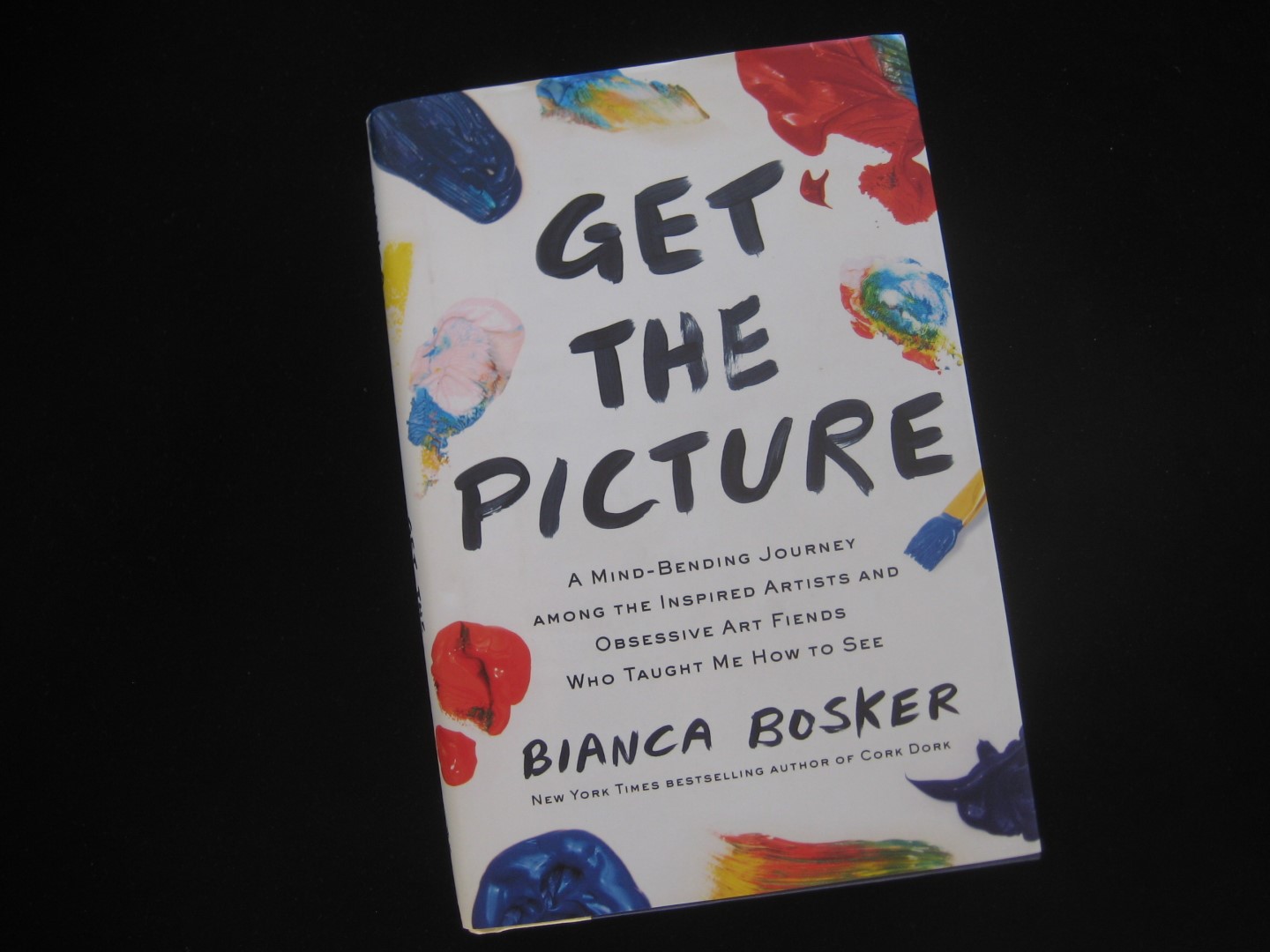
Bianca Bosker in her book ‘Get the Picture’ describes her dealings with artists and art gallery owners in New York city. She describes it as ‘a mind-bending journey among inspired artists and obsessed art fiends.’ It’s a world within another world of money and class status and façade-making. Image is everything and personal artistic flavors are often dictated by current trends, tastes and the economy.


I’ve never been comfortable with paint brush in hand. Mine is a more cerebral journey wrapped in vivid images, imaginative ramblings, and characters I can fall in love with even if it might be a love-hate relationship. The written word wrapped in the form of novels, plays and movies seems to fit my personality better. Children’s books like ‘Waleed’ and ‘Sweetpea and the Gang’ only came about because I found an artist to create what my mind had imagined. Storytelling is at the heart of every artistic venture I take. Even song-writing fits comfortably into that category.


But where does that kind of creativity come from? Two of my most inspiring artists; Bob Dylan and Leonard Cohen have both said “If I knew where those songs came from, I’d go back there again in a heartbeat.”


While practicing for my Q & A after the presentation of ‘Widow’s Waltz’ I was asked where my ideas come from. My initial ‘honest’ answer was that I don’t know. But my friend would have none of it. “No, Denis, you can’t say that even if it’s the truth,” He cajoled me. “You must give them something they can hold on to.” So, I decided I’d tell them that I’d done a lot of research about older single gay men and their struggles and found it good story-material. While that’s true, the idea was one that had been baking in my brain for a very long time. Why it rose and grew a crust at that time is anyone’s guess?


I truly have no idea where the images and ideas come from? Perusing my tablet each morning certainly doesn’t hurt in terms of filling my brain with a ton of tiny tidbits of silly, interesting, worthless, fascinating snippets of life from which to extract a story idea sometime in the future.


I guess I’ll continue operating that way down my road of story-telling and if that road ends sometime in the future, there are always off-road trails to trace. What can I say; that’s what I do, following trails and finding tales to tell.

Tuesday, March 25, 2025

A Moment in Time


I have a theory about creativity based on nothing more than casual observation, mild speculation, and curiosity. This whole idea of being able to create masterful works of art (in a myriad of different forms and genres) has always fascinated me since an early age. How did those artists, whom I admire so much, find that window of opportunity to create their art?

For each, there seemed to have been a ‘moment in time’ when they were at their most creative best. Granted, it’s a very personal observation but one that seems to repeat itself over and over again. Bob Dylan in the early 60s, the Beatles about the same time, CCR in the late 60’s and the list goes on and on.


Jazz begets Bo-Bop which led to ‘race music’ or early rock and roll. Do-Wop groups morphed into single pop artists or singing duos. Each seemed to have their small, brief time in the spotlight when their music shined brightly and captured the hearts and minds of millions like myself. But then as social norms and attitudes changed, the music moved on and became something else. Each seemed to have its own brief time in the sunlight (read spotlight) before something else took its place.


A closer examination in the book ‘The Song Machine’ revealed some of the time frames surrounding many top producing artists and/or organizations in my musical lexicon. Phil Spector with his famous wall of sound produced numerous hits until the end of 1966 when the failure of his masterpiece, Ike and Tina Turner’s ‘River Deep-Mountain High’ drove him to early retirement.

Motown, the ultimate hit factory out of Detroit, rolled out a string of hits until greed, envy and unbridled ambition ended its reign at roughly the same time Spector’s factory closed down. Closer to home, Sound Eighty recording studios in South Minneapolis burned brightly in the early eighties until digital technology and a clash of creative minds closed it down after only a dozen years.

So, the question is: do we each have our own time in the spotlight in whatever area of interest we nurture in our heart? On a more personal note, are I in the midst of my own creative period?


I’ve been tap-dancing around the arts since an early age. From rudimentary drawings of Hollywood inducted fantasies to an outline for a TV script for ‘Have Gun, Will Travel,’ I’ve dipped my mind into the other world of ‘what if?’ all of my life. Granted, it was always a side venture, never enough to sustain me financially or creatively until now.


Working in television and freelance gigs in cable augmented that interest in the arts with the occasional paying side hustle and other creative ventures. Two of my first westerns were written in our first home in Maryland in the evening hours after work. One year per book. Then nothing came of them until forty years later when they finally attained book form. After that, the flood gates seemed to open. I gave birth to more books then plays and finally movie scripts.


After that period, a comic strip was born alongside a skinny little hippo. Then song lyrics to accompany some of my plays began to drain out of my brain. Each became a new creative avenue to explore in another form of story-telling.


So the question begs to be answered. Is that it then? Is my creative window going to close anytime soon? In a strange turn of events, I seem to be getting more creative as I age. My interest in a myriad of things continues to grow and expand. Each is ripe material for story-telling. Song writing now holds the edge over other creative endeavors. It would seem that time and health are the two biggest factors affecting my hours logged on the computer or scratch pad.

Is this my time of the most creativity or is it just a blip in my life’s story? I really don’t know.

If it’s true that an active mind and body are two key elements to living longer, I would seem to be in good standing among the senior crowd. Or is it just a fleeting moment in time soon to be edged aside by older age, health issues or a visit by the grim reaper?

Hell, if I know. But until then, excuse me, I’ve got a story to tell.

Tuesday, August 27, 2024

Old Idea New Again

When it was written back in 2002, it caused quite a stir in the book world. Much like “Passages” written by Gayle Sheehy, “The Rise of the Creative Class” seemed to usher in a new insight into our working-class world. It was a new category of worker, their lifestyle, associated urban planning, and the future of the workplace.


Now, with the miles traveled in our rearview mirror, we can look back on the pronouncements, predictions, and analysis that Richard Florida gave us and see what he got right and what missteps he might have taken. Even before the disruptions of the pandemic, there definitely was a trend toward a more creative approach in the workforce. During the pandemic, with working at home becoming the norm, this new style of workforce endeavors had become solidified in America and abroad.


Overall, Mr. Florida got it right. Over the years, the creative class has been defined, redefined, analyzed and pronounced still-born. Yet, it’s still with us in one form or another. The COVID 19 pandemic did much to prove the validity of working from home, despite its many flaws, and the growth of creative endeavors that came out of it.


The author of this latest book I’ve read on creativity has an interesting perspective on the subject. He says: “Academics have tried to measure the links between intelligence and genius. But intelligence is not enough. After a considerable debate in the sixties, psychologists have reached the conclusion that creativity is not the same as intelligence. An individual can be far more creative than he or she is intelligent, or far more intelligent than creative.”

The bottom line is that creativity, in one form or another, is still a life force to be reckoned with for so many people. Young people have wisely embraced this new mantra of work much to the concern of some older more established high priests of business, commerce and politics. But creativity isn’t just reserved for the younger worker, it can be everywhere.

Creativity in our everyday life can be all around us. We just have to open our eyes to the possibilities. It can be in the arts, in seemingly mundane activities as well as productive enterprises of every form, function, and scope.


I have found it in my writing. Sharon has captured it in her art. Many of our friends have embraced activities such as woodworking, acting in plays and movies and a host of other creative endeavors.


Simple things too like creative cooking and gardening are also good examples. ‘Earthing,’ also known as grounding, involves direct skin contact with the Earth, such as walking barefoot. It’s one approach to adopting chemical-free, eco-friendly practices in maintaining soil health, biodiversity and eliminating toxin exposure to people and pets. Eating well is no different; same concept, different receptacle.


Over the years, I’ve explored different creative approaches to life including an exploration of the mind. Mindfulness, meditation, yoga and other forms of mental relaxation have helped me juice up the creative process inside my head. It didn’t hurt to relax the body at the same time.


Ultimately what we are talking about is living our lives creatively, grasping all the wonderful opportunities around us and building a more fulfilling lifestyle in which to grow as a person. It’s being true to ourselves, our wants and wishes; our own version of True North. True North is a standard against which all courses are measured. It is the best way for us to live and be honest with ourselves and to do it creatively.

Tuesday, January 24, 2023

A Most Mysterious Creature

One of the many web sites I often visit is called ‘The Marginalian.’ It’s an eclectic newsletter written by a woman named Maria Popova. The site covers a wide variety of topics but all are centered around creativity in one form or another. Examples are: ‘John Steinbeck on how to think better,’ ‘the fascinating science of mushrooms and music,’ and ‘Jack Kerouac’s love letter to November.’

Recently the site reprinted an interview with and comments from David Bowie. While I’ve never been a fan of nor understood the music of David Bowie, his words on creativity struck a chord of interest with me. Below are a few of the comments made by this musical explorer.


‘Every creator’s creations are their coping mechanism for life — for the loneliness of being, for the longing for connection, for the dazzling incomprehension of what it all means. What we call art is simply a gesture toward some authentic answer to these open questions, at once universal and intimately felt — questions aimed at the elemental truths of being alive, animated by a craving for beauty, haunted by the need to find a way of bearing our mortality. Without this elemental longing, without this authentic gesture, what is made is not art but something else — the kind of commodified craftsmanship Virginia Woolf indicted when she weighed creativity against catering.’

One of the points made by Bowie that really resonated with me had to do with following one’s own path and not that of others. From the beginning, I’ve never had a normal 9 to 5 job or lifestyle. What finally emerged from that cauldron of early life experiences was a mishmash of interests, aspirations, explorations, failures, successes and ultimately a deep satisfaction with the path I’ve followed all my life. Bowie seemed to hit the nail on the head with his comments.

In consonance with E.E. Cummings’s splendid insistence that “the Artist is no other than he who unlearns what he has learned, in order to know himself,” Bowie reflects:


Never play to the gallery… Always remember that the reason that you initially started working is that there was something inside yourself that you felt that if you could manifest in some way, you would understand more about yourself and how you coexist with the rest of society. I think it’s terribly dangerous for an artist to fulfill other people’s expectations — they generally produce their worst work when they do that.

If you feel safe in the area that you’re working in, you’re not working in the right area. Always go a little further into the water than you feel you’re capable of being in. Go a little bit out of your depth, and when you don’t feel that your feet are quite touching the bottom, you’re just about in the right place to do something exciting.”


Exactly what creativity is can be defined in a million different ways…as well as what it isn’t. To be clear, creativity is a separate journey for all who take it. I chose writing, Sharon has her art. Both are positive addictions in our lives.

And at this stage, it’s good to be moving and creating and enjoying whatever talent we might have.