Tuesday, July 2, 2019

Hidden Valley


There are any number of fine books about Palm Springs. One in particular, ‘Palm Springs Holiday’, does a good job of capturing that golden era for the town. A caption on the back of the book says it all:
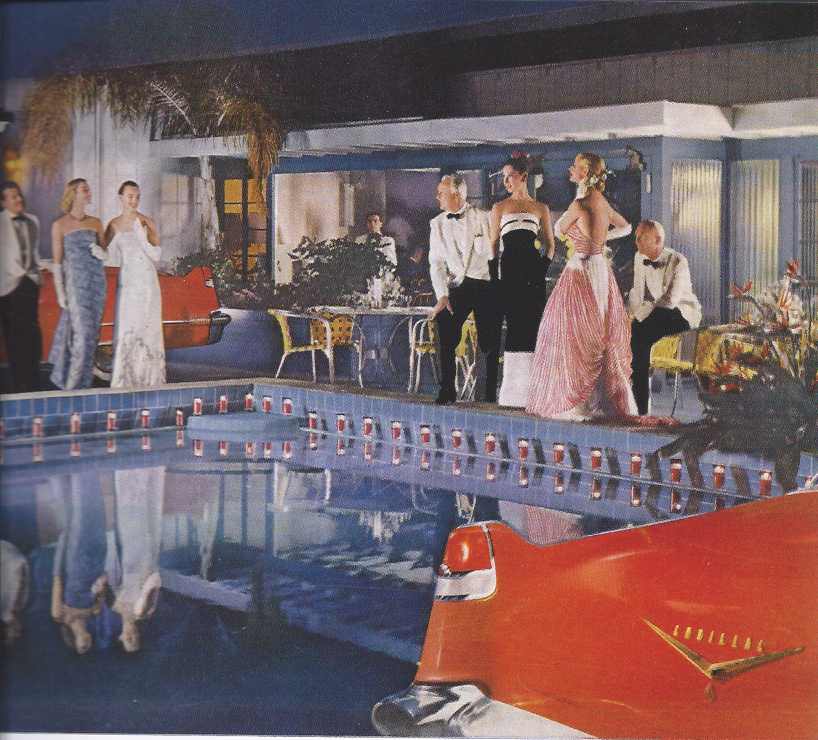

‘This is the story of Palm Springs in its golden years, a city that had it all, including fabulous fly-in hotels, marvelous mid-century Modern architecture, Hollywood stars and starlets and a swinging nightlife.’


All true, but with just one thing missing. There was another side of Palm Springs, open for anyone to see, but left for most to ignore. It was another slice of the glamor and intrigue identified the city and its environment. A world of speedos, bronze bodies and quick side glances. They called it Hidden Valley.


Hidden Valley was where all the gays and lesbians felt comfortable being themselves. It encompassed the nightclubs, neighborhoods and establishments where their sexual orientation didn’t cause heads to turn or whispers to erupt. It was their home away from work hidden behind the facade that most tourists believed to be ‘the real Palm Springs.’


Palm Springs, since the early thirties, had always attracted the creative Hollywood types. They weren’t like the rest of us. They were different in more way than anyone ever knew. With their arrival came yet another kind of lifestyle. It was led right out in the open but disguised as being just a little out of the norm. In Palm Springs, it was ’normal’ being abit out of the norm. Newspapers loved writing articles out those folks and readers ate up the titillating stories that came out of the Valley.


This is not surprising if you consider that historic civil rights issues weren’t addressed until the mid-sixties along with a seismic change of attitude toward women’s rights and the whole sexual revolution. Gay rights were slow to follow.


Back then, anti-Semitism, among other prejudices, was rampant throughout the Valley. It was an open secret seldom talked about but understood well by everyone involved. But this was no different than most other parts of America. Civil rights for blacks and browns was unheard of and Catholics had only recently shed their cloak of being ‘poor shanty Irish.’ Anything different was bad and immigrant cultures fared little better.


Our own golf course community, Indian Canyons, along with Tamarisk down valley, were built in the early sixties just to accommodate Jewish families who wished to live in the Valley but weren’t welcomed in most communities.

That all started to change on June 28th, 1969 with the police raid on New York City’s Stonewall Inn and the two days of rioting that followed. Before that landmark incident, homosexuality was an open secret for most of society to ignore. In 1947 the U.S. State Department began firing alleged homosexuals under the National Security Loyalty Program. Then in 1953, President Dwight D. Eisenhower issued an executive order barring the employment of homosexuals by the federal government. Even back then in Palm Springs, haven to those types, much was hidden beneath the surface and endured by brave souls who were forced to live two lives instead of their true self.


Rock Hudson proved to be the iconic figure of a tortured soul who had to endure the lies and façade that was gay Hollywood. Few people, outside of the business, were aware of this other side to the Valley. For years, Hollywood and Broadway were the creative cauldron for ‘those creative types’ that weren’t like the rest of the tinsel town. In the 40s and 50s, Palm Springs became the epicenter where ‘they’ could come and enjoy themselves without the Pavarotti and curious onlookers poking into their private lives.

While Stonewall was the first recognized breakthrough for equality for gays and lesbians, Palm Springs directly or inadvertently paved its own way of attracting that demographic. In the early Seventies, Palm Springs had grown stagnant in its growth of tourism. They decided to focus on DINKs, dual income couples with no kids. It proved more than fortuitous for the city’s future growth.


Gay couples began coming to the city for its arts and entertainment. What they found, in addition to a welcoming atmosphere, was a treasure trove of mid-century homes built in the late 50s and early 60s that were in desperate need of upgrading and remodeling. The homes were selling in the low One Hundreds but could be turned around and sold again in the high Four Hundreds after remodeling. The rush was on.

Like most movements, the first wave of visitors told the next and so forth. Gay and lesbian couples began buying second homes in the desert and Palm Springs came to recognize and embrace its growing reputation as an open-minded, liberal, welcoming community to all.


Now it’s the hipsters, millennials, and fans of Coachella that are flocking to this desert community. The world of Rock Hudson has long since disappeared in the Valley. In its place remain the majestic mountains, high desert, nearby coastal communities and welcoming vibe that is Southern California.

Some things never change.

Tuesday, June 25, 2019

Married to Whom


I know it sounds terribly self-serving - comparing the spouses, partners and significant others in other people’s lives. One could easily ask oneself: Who am I to compare, analyze or otherwise scrutinize the partners other people have chosen to live with for the rest of their lives.


I am a writer. I can and therefore I do. Besides it’s one of those age old questions that people often times ponder but seldom discuss in public. ‘How did those two end up together?’ and better yet, ‘what was the glue that kept them together for so long?’

I think many young girls when they’re growing up fantasize about the man they will eventually marry. One has to fast-forward any length of time to see if and how it worked out. For those who went the distance I’m always fascinated how and why. How did those two people end up together? Why did it work out?

I did well for myself although as I’ve confessed in another blog (Through no Fault of My Own) it was just luck on my part that my best friend of forty-seven years chose me and not someone else. There were plenty of other suiters attracted to that smart, witty, ambitious blond and yet she choose me. Perhaps the fact that she was so different from the other women I dated had something to do with it.


In high school and college, a lot of the girls I dated seemed enamored with strong men who had ‘to be in charge.’ They wanted the guy to tell them where they were going on a date, what they’d do afterwards with no discussion required. If those handsome young men expressed great insight into their own destiny and claimed to know exactly what their future held for them, the women practically felt their limbs go weak and heart start racing.

I could never resolve that conundrum with those women. On one hand they claimed equal rights for just about everything…which they should have. Then they turned around and their hearts would go all-a-flutter for those ‘father-like-figures’ who made it very clear who was in charge. I guess for those women it was easier to defer than to challenge.

I always thought it made more sense and was more respectful to let the woman decide on options for a date. Or at least to let the two of us decide on something mutually agreeable. A lot of those women back in my tender years seemed to see that approach as weak and compromising. But it was my approach so I never changed.

Conversely, I find it fascinating that so many men I know are very uncomfortable around strong women. It’s usually masked by bravado and a higher than normal volume of control. But behind the façade is a man who needs to be in charge and is not used to a woman challenging him on that role.


Long before the notion of women’s liberation bubbled into our consciousness and the #MeToo movement took shape, strong women caught my attention and imagination. As I’ve mentioned in past blogs I have always found independent women very attractive. The heroines that populate my novels and plays seem to have that same characteristic - brilliant, beautiful, and ballsy.

But I guess in the end it doesn’t matter who you marry as long as it works for the two of you. Others may try to figure out your chemistry but why bother.

On the surface, my own connection may not seem very obvious. It was a kaleidoscope of opposites attracting and subtle yet very real mutual goals. It is a collaboration of aspirations and agreements where it really matters.  It’s our own fabric of living together and yet independently that makes our partnership work.


All the rest is supposition and assumption.

Tuesday, June 18, 2019

Newest Club in Town


Fans of mid-century architecture are drawn to Palm Springs because of the plethora of original and redesigned mid-century homes here. It’s a ‘modernism’ mecca for design aficionados and those who want to return to the more simple times of the late 1940s and early 50s.

Since ‘Modernism Week’ began about ten years ago in Palm Springs, the legions of McM fans keeps growing and interest exploding. Yet there is a subtle truth lurking just below the surface of all of this excitement. The fact is that few can actually afford to live in one of those mid-century treasures…until now.


That real estate disparity is slowly changing with the refurbishing of an old trailer park, an extended land lease, and some imaginative architecture. Palm Canyon Mobile Club is a completely remodeled mobile home community with its newly-built ‘modern micro-homes in a not-so-tiny package.’ Homes start at around $115,000 for a one bedroom plus an average of $650 per month space rental. It’s one of the newest clubs in town for McM addicts.


I tell friends that there are three things to remember about real estate here in California. First, this is California real estate so it doesn’t have to make sense relative to the rest of the country. Secondly, this is Southern California real estate which means it can get even crazier than other parts of the state. Finally this is Palm Springs real estate which is a unique hybrid in itself. If you understand anything about the housing market, you could probably guess that California housing is an entirely different breed of animal.


In addition, studies have shown that the millennials’ demand for a new type of neighborhood has led to the emergence of ‘Urban Suburbs.’ Those are defined as high-density neighborhoods in suburban areas that share a number of urban qualities such as walkability and nearby amenities such as shopping, restaurants, etc. North Palm Springs is starting to attract this kind of development as well as other parts of the country too.

There is a new cluster of tiny homes being built outside of Atlanta. The Clarkston development will be the first neighborhood of homes under 500 square feet to be sold in Georgia. Other metro projects are to follow with 40 tiny homes being built in South Fulton and another in the Pinewood Forest in Fayetteville.


Creating new housing designs that complement the surroundings here is nothing new for Palm Springs. Beginning in the mid-40s, architects originated a design movement specific to the greater Palm Springs area. It became known as Desert Modern. Their buildings featured ground-breaking techniques such as post-and-beam supports, floor-to-ceiling glass walls and a wide array of colors to match the surrounding mountains and desert. These were homes meant for the very few who could afford them and their tony locations in the desert. Now one developer’s solution to that exclusivity lies in a century old model that’s been around for ages…the mobile home.


The Palm Canyon Mobile Club was originally built in the early 1960s. The location was ideal. It was close to shopping, restaurants & bars, and offered its residents some of the best mountains views around.  The park was one of the rare few to allow all ages, not just seniors.

In late 2016, the master lease for the park was purchased and the ground lease was extended 65 years, which provided security for the park's future. Now the developers are bringing a new vision to the Palm Springs Mobile Club with their own version of the tiny home.


The developer’s idea was to take your standard mobile home park and turn it into a desert enclave of tiny homes. They’ve taken the old reliable double-wide mobile home and turned one half of it into a tiny home. Of course, being Palm Springs it couldn’t be just any half of a double-wide. The developer and designers have used the cantilevered roofline as an architectural statement and designed amenities that both complement and enhance the main structure.


With nine foot ceilings throughout, plus clerestory windows and sliding glass doors, the homes are flooded with natural light. There are one and two bedroom homes, ranging in size from 600 to 900 feet. It’s single level living with full sized appliances and room for a washer and dryer. There are some private fenced yards, a lot of outdoor decks and select front porches.


The center of the community is "The Club," featuring a newly remodeled clubhouse; updated resort style pool area that includes an outdoor fire pit and lounge areas, plus barbecue area. A workout room, pool table, plus updated poolside bathrooms and sitting areas are part of the clubhouse features.


It may take some time to see if this new housing concept takes hold and portends more radical changes to mobile home parks throughout the Coachella Valley. Palm Springs has always had a wide variety of housing from single-family homes, duplexes, condominiums, cooperative housing, senior housing, mobile home parks, apartments, vacation rental properties, and VBROs.

Now tiny homes are edging their way into the marketplace. It will be interesting to see if they take hold and how price appreciation compares to other types of housing.

Only in Palm Springs.