Showing posts with label northeast minneapolis. Show all posts

Tuesday, November 8, 2022

Coming Full Circle


Thomas Merton said it best: “Art enables us to find ourselves and lose ourselves at the same time.” After several years of exploring her newfound passion for art, Sharon has found her way into a new life as an artist.


It’s been a remarkable journey with several detours along the way. For example, Sharon wasn’t able to pull off another art sale this summer. The last art display/sale she had in 2019 was an outstanding success. Unfortunately, logistics and scheduling conflicts curtailed another one for this summer. Undaunted, Sharon did one better and created a whole new collection of her paintings. She recently had a gallery showing, an artist’s reception, two more galleries asking to display her work and a return to the warmth of fellow artists. Sharon is back up and running full steam with her art and loving every minute of it.


About four years ago, Sharon began her artistic journey by creating metal art through welding various forms and shapes. Gradually those endeavors evolved into alcohol ink and acrylics. Then Sharon’s art became a full blown exploration and examination of various painting mediums, methods and techniques. In that process of experimentation, she began mixing and matching a plethora of textures, patterns and applications. She also learned the disciplines associated with the many different approaches to her art. Then two years ago Sharon felt it was time to display and perhaps sell some of her art.


The idea for an art sale started out simply enough. Sharon’s Apple Valley Rotary group wanted to do their yearly fund-raiser. In other years, the group had sold raffle tickets for a new car or staged other events to raise money. But because of COVID-19, they decided to just ask for money to feed the hungry in town.


Sharon thought she had a better idea. After two years as a practicing artist, she had amassed a sizeable collection of paintings, sketches, cards, etc. Why not sell those at a steep discount and donate all the proceeds toward the Apple Valley Rotary fundraiser. She could stage it in our backyard, have masks for everyone who attended and a no-pressure opportunity to perhaps buy nice art at a deep discount and benefit the local food shelf at the same time.


The show was a tremendous success. Sharon sold over 90 pieces of art out of 100 displayed. Then this summer, with the pandemic behind us, Sharon returned to her old haunts in Northeast Minneapolis for more art classes.


While growing up in Saint Paul, old Norde East could have been on the other side of the planet for all my wanderings around town. Even when I lived in a hovel near Dinky Town, Northeast Minneapolis was one part of town that held absolutely no allure for me. It was on the other side of East Hennepin Avenue and considered no man’s land to most of us seekers.


Fifty years after the West Bank of the University of Minnesota harbored the disenfranchised, the hippies and other malcontents of a similar ilk; their decedents have now migrated to the North-east part of Minneapolis. In an unplanned, almost organic metamorphosis of a cityscape, this unwashed morass of creativity has moved west leaving such hippie watering holes as the Triangle Bar behind.


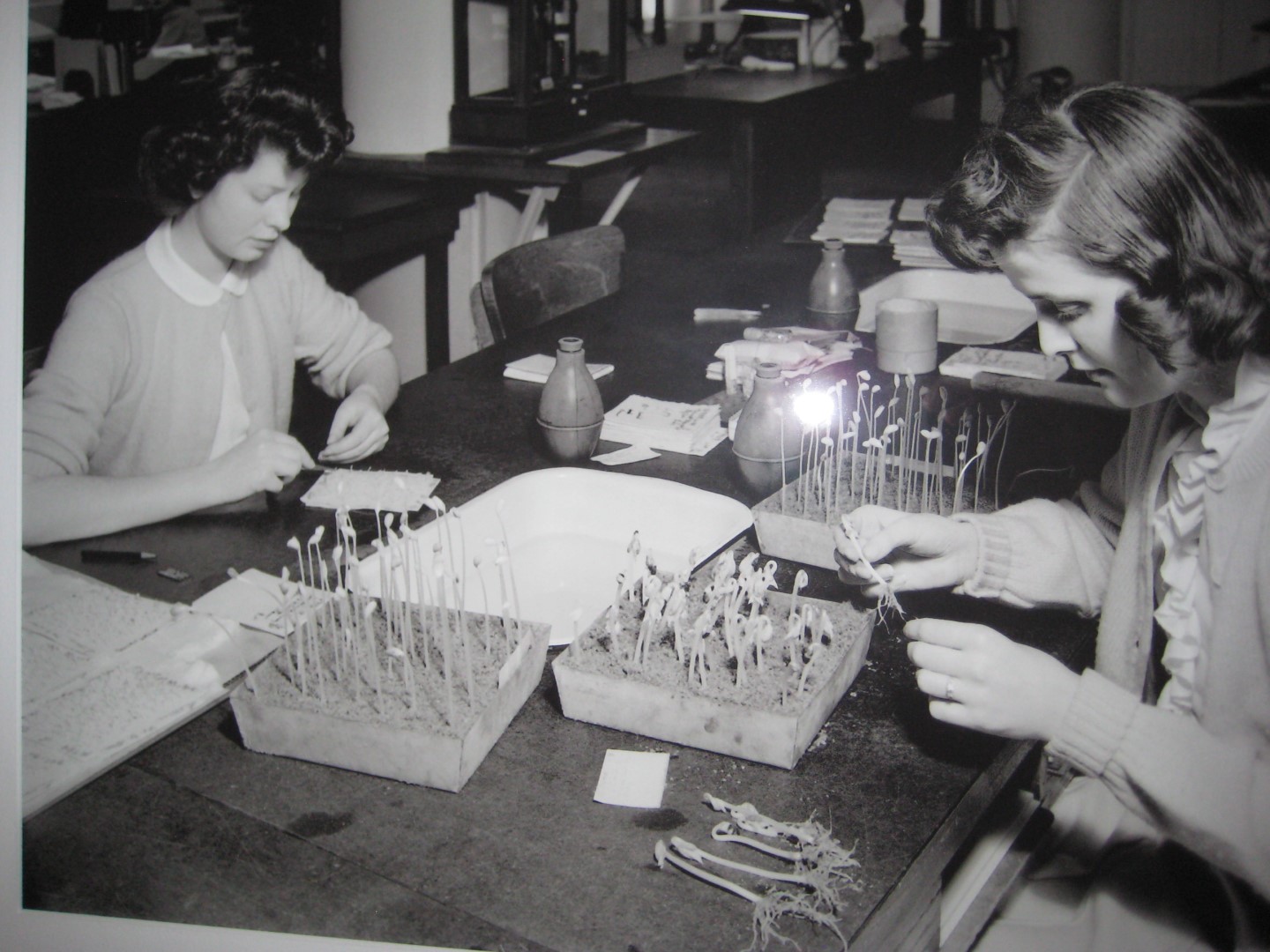
Back in twenties and thirties, Northrup King was one of the largest seed producers in the world. Time and changing economics changed the equation and the business went bust. Then a new generation of entrepreneurs discovered its solid foundation, huge windows, cheap rent and a blank canvas for change. Now artists like Sharon along with artisans, house flippers, yoga gurus, craft beer specialists, software developers and other creative types are flocking to the area.


The roughhewn, anti-fashion, individualistic, truth-seeking individuals whom I find so fascinating all hang out there. It’s not as compact as Dinky town but the atmosphere is the same. The haunts of past lives have come alive again in that charged arena. It’s almost as if inquiring minds once again scream for an exploration of life’s truths in that modern version of old Bohemia.


All of which takes us to her recent artist’s reception in Rosemount. The Rosemount Area Arts Council (RAAC) hosts artists in their gallery at the Steeple Center. Sharon was invited to display some of her collection and a reception was held in late September.


Well over eighty folks attended the event to view her art, enjoy the company of fellow artists and listen to Sharon’s story that began with a simple: “I could never do that” while admiring another artist’s work. Her artist-friend, Doris Loes, got her started on her first painting and it’s been a rapid uphill climb ever since.


Starting her education in a one-room school house to finally retiring as Vice President at a local college, Sharon’s journey into art has been a circuitous journey at best. But she’s now found her passion, her creative roots in creativity and a journey of discovery.

Tuesday, August 3, 2021

Homage to Glady

I guess she could best be described as this mirage I can’t get out of my head. But not really! And homage is probably a bit overblown for someone I hardly even knew. Nevertheless, Gladus (last name unknown) was one of those iconic figures that came into my life for a very brief period of time then disappeared just as quickly.

She was a woman far removed from my social-economic-educational background and career aspirations. Yet for some strange reason during those early cold months of March and April, we connected on a level quite different from my old romantic entanglements that I used to bench-mark as true love.

Even though she was ten years older than me, I found in Glady a kindred soul on a level I hadn’t experienced before with other women. The sad thing was that Glady had dried up and aged well beyond her years. Her eyes were a sometimes sad brown and there was a hint of early onset gray in her hair. It didn’t help that she favored thin cotton sweaters, even in the summertime, and thought of herself as long past a favorite with the boys.


It was spring of 1967. I had just returned from my short expat life in Europe. I was living in a depression era hovel on University Avenue, driving a used VW and had just started my first real job as a writer at the Minnesota Department of Public Health on the University of Minnesota Minneapolis campus.

Glady was the first woman who made me feel mature. She was attractive even for a middle-aged matron and we could talk easily about almost anything and everything. The problem was that in our office setting it was always awkward for casual chats under the constant radar of our boss, the notorious Dr. Marie Ford. Dr. Ford, was always on the lookout for fraternization among the troops.


On the University campus, Marie Ford had a storied history as the wife of a renowned college professor. She would occasionally talk about their life, living in Prospect Park, attending University functions and traveling with only the most accomplished of other college couples. It was after the war and the University was a buzz with ex-service men anxious to get a good education and ready to absorb all the information her husband could throw at them.

Marie had a stellar career in public health and held her own prominent place within their circle of intellectual health professionals. She and her husband were one of the post-war golden couples at the University.

Sadly, by the time I arrived on scene in early 1968, Marie’s husband had long since passed away. Marie had become an old, tired, chain-smoking relic of an era long since passed. She seemed to regret its passing and, almost like Glady, she had seen her future slowly come into focus. Both knew what the next decade held instore for them. An enthusiastic, energetic young man suddenly in their midst didn’t help when thinking about the future.

The fact that Glady was ten years older than me didn’t seem to matter to either one of us but our background did. Glady had grown up in a world totally different from mine. I was from tony Highland Park. She was from Northeast Minneapolis.


Around the turn of the century, the community of Northeast Minneapolis began to grow as an ethnic enclave supplying workers for the factories that lined Central Avenue and batched them in clusters throughout the neighborhood. There was a strong Eastern European influence in religion, social standing in the community and family obligations.


I knew little about Glady’s background growing up other than she had graduated from high school in NE Minneapolis and gone to work immediately. Like almost all of the young women her age, Glady still lived at home with her mother and would eventually became her mother’s primary care giver. There was never any thought as to her moving out and living on her own.


Her Eastern European roots and upbringing meant she was locked into a lifestyle she couldn’t break away from, even if she wanted to. It was understood that she would never leave home until both her parents had passed.

And I thought to myself: what then with little education and marginal secretarial skills? Glady was probably destined to spending the rest of her life in the secretarial pool at one University department or another.

In retrospect after reflecting on our casual verbal encounters, I think perhaps Glady was living her life vicariously through my many inane, sometimes sophomoric antics with fellow hippies, college dropouts and wandering young adults still unsure of themselves and their future endeavors. I remember she asked me a lot questions about living in Europe, my time in the service, who I was dating and other general ‘get to know you’ probes. She seemed to really care and that just fed my expanding ego.


One Monday, Glady told me in confidence that she had gone to the Triangle Bar and thought she might run into me there because I had talked about it so often. It never occurred to me that her venturing so far from her comfort level was anything other than a bar visit. What were her real intentions, if any, I have no idea?


I only lasted about a year and a half at the Health Department before getting my dream job at KTCA and ‘getting out of Dodge.’ I never saw Glady again. Her image and memory slowly faded away until some fifty years later when Sharon began taking art classes in Northeast Minneapolis. Once again I found myself in the neighborhood where Glady used to live.

But this time it was different than in 1968. Fifty years after the West Bank of the University of Minnesota harbored the disenfranchised, the hippies and other malcontents of a similar ilk; their decedents had now migrated to the Northeast part of Minneapolis. In an unplanned, almost organic metamorphosis of a cityscape, this unwashed morass of creativity had moved west. Old Nordeast, an eclectic enclave of blue-collar Eastern European nationalities, has become the new West Bank. It felt like Deja-vu all over again.


As I once again drove past those tired old dilapidated houses in a neighborhood with a church on every corner, I thought about Glady and whatever had become of her. It wouldn’t be much of a stretch to assume she continued on as a secretary at the University and eventually retired to her mother’s home in NE.  Perhaps she became the classic ‘church’ lady or ‘cat’ lady and lived out the rest of her life as her heritage had dictated.

There’s a part of me that would love to believe that she finally found someone, after her mother passed, and she created a new life for herself outside of the drab, dreary lifestyle handed down to her by past generations. I guess I’ll never know. But I can imagine.


Of course, I’ve already outlined a story about Glady. It could be a play, a novel or a short story. It involves a man much younger than her. They fall in love but things don’t turn out as they had planned. The story is, at once, happy and sad, poignant yet realistic. A slice of life that might have occurred in a tired old building on the University of Minnesota campus between two lost souls; each seeking clarity in their patchwork lives.


Tuesday, November 1, 2016

Norde East


“Art enables us to find ourselves and lose ourselves at the same time”
                                                                                    Thomas Merton

I guess it’s a generational thing. An old steel and brick icon of prosperity in an ethnically tight community gradually succumbs to the ravages of time only to be reborn years later as the cradle of artistic and entrepreneurial endeavors. The NKB; that ancient Northrup King Building in Northeast Minneapolis is now buzzing with life. The age of antiquities is alive again.

While growing up in Saint Paul I was never aware of old Norde East. It could have been on the other side of the planet for all my wanderings around town. Even when I lived in a hovel near Dinky Town, Northeast was one part of town that held absolutely no allure for me. It was on the other side of East Hennepin Avenue and considered no man’s land to most of us seekers.

Old Northrup King Building with trains in front

Northeast Minneapolis began as an ethnic enclave supplying workers for the factories that lined Central Avenue and batched them in clusters throughout the neighborhood. My only vague connection back then was a secretary who worked in our office at the Minnesota Department of Public Health. I remember she commented once that she lived in Norde East.  It never registered with me where or what it was.

Fifty years after the West Bank of the University of Minnesota harbored the disenfranchised, the hippies and other malcontents of a similar ilk; their decedents have now migrated to the North-east part of Minneapolis. In an unplanned, almost organic metamorphosis of a cityscape, this unwashed morass of creativity has moved west. Old Nordeast, an eclectic enclave of blue-collar Eastern European nationalities, has become the new West Bank.


This stumble back in time hit me a couple of weeks ago after I dropped my wife off at her art class in the NKB. I ended up meandering the old hallways and vacant caverns that once housed huge stores of seeds. I began perusing the framed photographs that lined the entrance halls. The old seed factory has now become an artist’s enclave encompassing five stories of concrete and brick. It reeks of artistic ventures, bold colors, creative design and old world charm in an ancient brick building now repurposed for the creative at heart. I feel like I’d come home again.


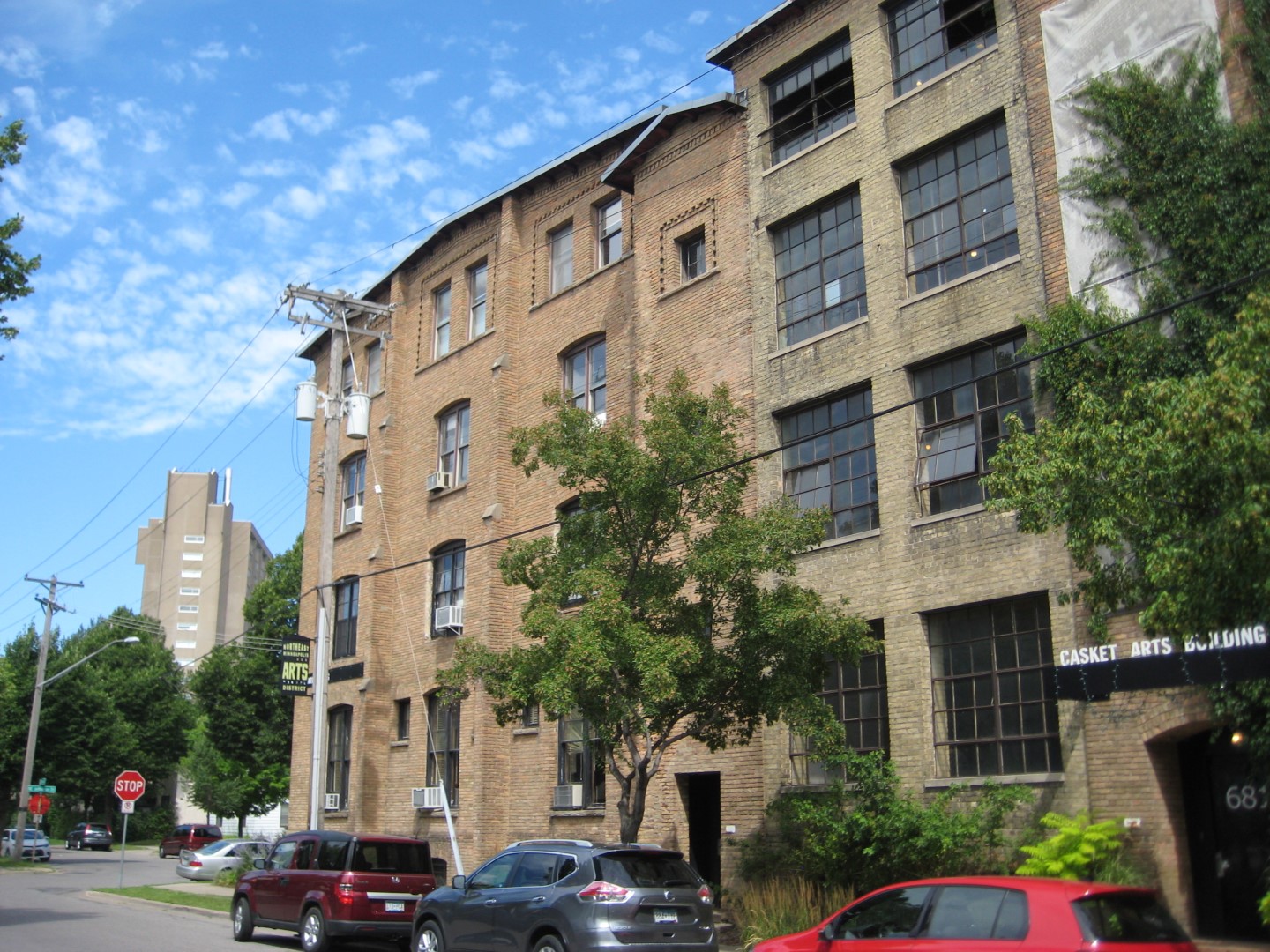
Most of Norde East is like an old graveyard of senior buildings brought back to life by creative resuscitation. Vesper College is located in the Casket Arts Building. Originally built as the Northwestern Casket Company building in 1887, caskets were still being made there until 2005. Now the five-story building houses over 100 artists and businesses such as Vesper.

Other notable nests of creativity are the Architectural Antiques Building, originally a coffee roasting plant. Of course, the Northrup King Building, originally a seed distributor for the world. The Waterbury Building, manufacturers of boilers and multiple buildings that were part of the Grain Belt Brewing complex.


Back in twenties and thirties Northrup King was one of the largest seed producers in the world. Time and changing economics changed the equation and the business went bust. The building lay dormant and empty for many years, inhabited only by vagrants, dopers and rats. Then a new generation of entrepreneurs discovered its solid foundation, huge windows, cheap rent and a blank canvas for change.

Now instead of hippies, artists, artisans, house flippers, yoga gurus, craft beer specialists, software developers and other creative types are flocking to the area. A new variety of business has also sprung up whose main purpose is to breathe life into the arts for a whole new generation, young and not so young. These include art classes of every type, including metal sculpting.


The roughhewn, anti-fashion, individualistic, truth-seeking individuals whom I find so fascinating all hang out there. It’s not as compact as Dinky town but the atmosphere is the same. The haunts of past lives have come alive again in that charged arena. It’s almost as if inquiring minds once again scream for an exploration of life’s truths in that modern version of old Bohemia.


Alcohol Ink piece by Sharon LaComb


Sharon has found an outlet for her creative expression. That, in turn, has brought me back to that other part of my old world. I’d like to contribute even if my Bob Dylan days are over…for whatever they were worth. Inspiration comes in all kinds of strange packages even in a seed shop in the middle of a confused dreamland called eternal youth.

Acrylic on Paper by Sharon LaComb

Leaf Embossing with Acrylic on paper by Sharon LaComb


So while I’m there, I want to haunt the halls and soak up the atmosphere. Perhaps I can build a nest someplace while my wife is in class where I can just write to my heart’s content. It seems like a good place to explore the recesses of one’s mind, mining whatever thoughts and ideas might be lingering there. I’ve got a lot of hard miles on that gray matter of mine. Time to go exploring again.

Leaf Composition by Sharon LaComb


Sharon is exploring a lot of different techniques with her alcohol ink and acrylic paintings. When her class is over, we’ll go home and practice some more. She with her alcohol ink and me with my keyboard.

Same kind of ventures; just different finger strokes.