Showing posts with label St. Paul Auditorium. Show all posts

Tuesday, April 4, 2023

Strange California Connections

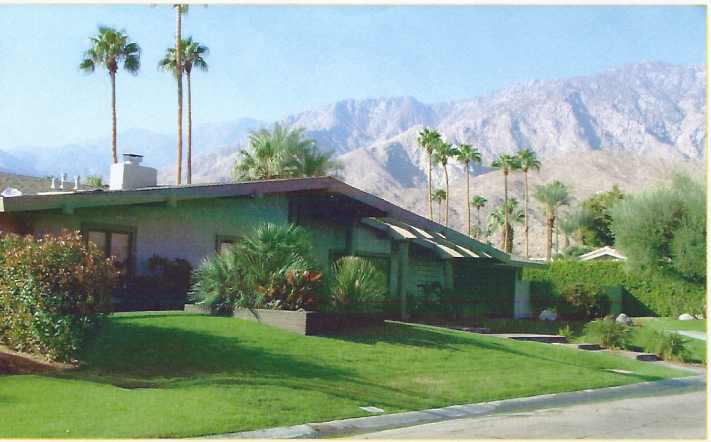
Around 1968, Paul Whiteman, a well-known big band leader from the 20s and 30s, built his west coast home in a new California development called Canyon Country Club Estates.

Canyon Country Club Estates had been carved out of the barren desert just south of downtown Palm Springs. It was meant to be a welcoming enclave for Jewish families who in the past had been denied membership in the other country clubs around the Coachella Valley. It turns out, this was just the first of a number of strange California connections for me.


Back up some forty-plus years and this same Big Band Leader and composer was performing in a midwestern auditorium as part of his nationwide tour for that season. A young adventurous woman named Hildegarde Noll was in the audience along with her girlfriends. They were all experiencing the big cities of Minneapolis and Saint Paul for the first times in their lives. Hildegarde had moved down from Sterns County. She was one of eight children raised in a strict German Catholic farming family. She and her friends all worked as maids for well-to-do notables along Summit Avenue.

Hildegarde’s California connections run shallow and deep at the same time. She moved out west with several girlfriends and all secured jobs as maids for the monied elite who lived on Seventeen Mile Drive in Carmel. Her job allowed her to move from one millionaire’s home to the next, serving Hollywood stars and East Coast Industrialists.


As the kids and I drove along 17- mile drive by Carmel-by-the-Sea a couple of weeks ago, I couldn’t help but think about what it must have been like almost one hundred years earlier for my mother. She would have been in that same neighborhood, going into Monterey for household supplies and doing sundry chores. She probably walked the same wharf and along Cannery Row years earlier. It was as if we were both breathing in the same salt air. Sadly, all of that ended when her father got sick back on the farm and Hildegarde returned to Minnesota to care for him.


Fast forward a number of years later on and my mother, now separated from her husband (my father), was solicited for household help once again on the West Coast. Upon arrival, the job around Santa Barbara had unexpectedly disappeared. Hildegarde was left almost penniless with two toddlers in hand and no new job prospects. After spending less than a month there, she was forced to return to Minnesota once again.


As the kids and I drove around Monterey, Carmel-by-the-sea, Big Sur then down to Santa Barbara, I couldn’t help but reflect on what might have happened if my mom had gotten that job and stayed in California. Is it unreasonable to think that if she had stayed there, I might have found myself living an entirely different lifestyle rather than the one I had in St. Paul? I guess I’ll never know.

There is one thing I am sure of. Paul Whiteman only stayed in Canyon Country Club Estates for less than five years. He missed his old bandmates back east and returned to New Hampshire where he passed away shortly thereafter.
His home went through a series of owners until the mid-2000s when, once again, a Minnesota connection reappeared. Long-since enamored with California, this couple, a writer, and an artist, bought the house without knowing it’s past owner. My recent jaunt with the kids along the PCH only reinforced an over-active imagination that wondered: ‘What if?’

Mom, I’m back in California once again. Sure do miss you here.

Tuesday, May 19, 2020

My House is a Very Fine House


Paul Whiteman was an American bandleader, composer, orchestral director, and violinist. As leader of one of the most popular dance bands in the United States during the 1920s and early 1930s, Paul Whiteman was often referred to as the ‘King of jazz.’ Whiteman led an unusually large ensemble and explored many styles of music, such as blending symphonic music and jazz. Unbeknownst to me, it turns out that I’ve been living in Paul’s shadow.


“Born on the eve of America’s ragtime era, Whiteman developed into an astute musician and an inspirational conductor. He adapted syncopated jazz to a large scale and presented it to a growing public. The idea was not only new but also revolutionary. The country was eager to receive it. In turn, mass entertainment developed to spread it around the world.”  *


Whiteman’s orchestra used some of the most technically skilled musicians of the era in a versatile show that included everything from pop tunes and waltzes to semi-classical works and jazz. He understood and capitalized on product placement long before Coca Cola used it on TV in the Sixties. It’s been reported that during the 1930’s, Paul Whiteman was earning a million dollars a year. That’s where our first connection began.


Whiteman’s popularity faded in the swing music era of the mid-1930s and by the 1940s he was semi-retired from music. Then in the 1950s, he experienced a revival and had a comeback with his own network television series. That’s where our connection picked up again for a second time.


About the same time that Paul Whiteman was reaching the zenith of his career, Hildegarde Noll, a semi-literate yet adventurous young woman just off the farm, had moved from St. Martin, Minnesota to the big cities of Minneapolis and Saint Paul. She ended up working as a maid on Summit Avenue, cleaning houses for the rich and famous of the capital cities elite. She had little money to spend after sending much her pay check back home to support her parents. Dancing was her passion and there were plenty of dance halls to satisfy her need for swing. Polka dancing and big band music became her primary sources of weekend entertainment.


Photo Credit: 'Lost Twin Cities' by Larry Millett
During this period, the Paul Whiteman orchestra played the bejeweled Saint Paul Auditorium on several occasions and it’s safe to assume that Hilde was in the audience with her posse of like-minded girlfriends to enjoy the show.


Whiteman worked with black musicians as much as was feasible during an era of racial segregation. His bands included many of the era’s most esteemed white and black musicians, and his groups handled jazz admirably as part of a larger repertoire. Paul Whiteman and Louie Armstrong both carried the titles of the kings of Jazz. Whiteman was into product endorsement way ahead of his time.


In the 1940’s, Paul’s orchestra traveled the country playing large venues like Radio City Musical Hall and the Albert Hall in London. He cut many records for Capitol Records, the most famous of which was his rendition of George Gershwin’s ‘Rhapsody in Blue.’ Another famous recording was Whiteman’s repertoire of ‘Grand Canyon Suite’ by Ferde Grofe. By this time, Whiteman’s career was on a downhill slide until years later when television gave it an unexpected lift.


In the late 1950’s, as Whiteman’s career started to fade away, Hildegarde’s son was going to school in St. Paul and totally engrossed in his own musical world. Rock and Roll, DooWop, Country Western and pop music filled his ears each morning and afternoon on his paper route. Jazz and big band music was not even a foreign blip on his musical window at the time.

After a brief revival of interest in Whiteman’s music on television, the band leader gradually eased himself into semi-retirement. By the early 60’s, Paul had moved west to Las Vegas and then California on a seasonal basis. Hilde’s son graduated from high school in 1961 and a couple of years later would himself become a resident of California curtsey of his Uncle Sam.


Whiteman tried to re-energize his career in Las Vegas and Southern California. He followed a lot of other celebrities to Palm Springs.  In 1962, he built two homes in the Canyon Country Club Estates development in South Palm Springs. One was for his family and the other had his name on the deed too but never indicated who resided there. Paul kept those two homes until 1967 when he moved back to Pennsylvania and passed away later on that same year.


His first home in South Palm Springs went through a number of changes during those early years. New additions were built on both ends of the house. A swimming pool was added in the late sixties. During the ensuing years, various owners continued with current and timely changes to the structure inside and out.


The original landscaping was changed after that and new painting and outside accoutrements added later on.


Sharon and I settled escrow on Paul’s old house in 2008 and didn’t find out whom the first owner was until just recently. During closing, our realtor had hinted that he thought our home was once owned by a famous Big Band conductor. But we’d heard it all before. Realtors in that neighborhood were always hinting that the house for sale had once been own by some famous movie star or celebrity. It was just part of their collective lexicon.

It’s interesting to note that neither of the two homes Paul owned in Palm Springs is mentioned in his biography, on Wikipedia, or in the several books written about him. However, his name is on the deeds for both homes and registered with both Riverside County and the City of Palm Springs. Whether these two homes were vacation properties, a place to sequester his ‘special guests’ or a get-a-way for himself has never been established.

But who cares? Along with a myriad of other musicians, celebrities and movie stars, Paul had a presence in the Valley and especially Palm Springs. Now his old home in the desert is our new home.


Perhaps that explains the soft melodic strings I sometimes hear late at night over the 15th fairway or the tapestry of wind and stars and inky black sky that sometimes wraps itself around my head.

I imagine Paul, lounging there in his spotless tuxedo, reflecting back on the twilight of a long and illustrious lifetime of music just as Hilde’s son is savoring his own dawn of a new and exciting career in writing.

It’s just the three of us staring up at the stars - Paul and me and Hilde in the audience.

·       *‘Paul Whiteman, King of Jazz’ by Thomas A. DeLong. New Century Publishers, Inc.