Showing posts with label Self-Help. Show all posts

Tuesday, February 7, 2023

DIY

Years ago, in another time and space, it used to be that I could change the oil in my car. Touch-up work and small mechanical projects were within range of my pioneering mechanical talent. My 1959 Plymouth was the easiest project for me to tackle but even later on my Pinto easily came in second. But time and automotive advancements slowly brought an end to most of my automotive mechanics. After that, cars got a lot more complicated and harder to work on. By the mid-eighties with my two back-to-back minivans, I was out of the auto self-servicing business altogether.

Concurrently, during that period, many products in many different categories grew more complicated. For example, sewing, quilting and crochet all seemed to fade away and were replaced by inexpensive garments from Kmart, JC Penny’s, etc.


Overseas manufacturing flooded the US market with a cascading wall of items built cheaper overseas than could ever be made here back in the US. The whole cottage industry of making one’s own clothes, drinks, etc. slowly gave way to mass marketing and the demise of individual creative design.

That is, until now. As I’ve told my younger compatriots, there is an advantage to having one’s toes in the sand long enough to see history repeat itself all over again.


A classic example, of course, is the movie industry. It has always been at its core a ‘business.’ Despite the glitz and glamor of tinsel town, almost every action taken there was really focused on the bottom line. In the beginning, the studios dominated the landscape with their entrenched way of doing business. In the late 40s and 50s television became a growing threat to their iron-fist dominance. Studios responded with ‘blockbuster’ movie events and CinemaScope. But it wasn’t enough to stop the ‘little box in every living room’ from capturing market share and eyeballs.


More viewer choices grew with the introduction of VHS tapes and viewing habits gradually morphed from the downtown theaters to one’s living room. Cable quickly followed and captured an even bigger share of the market.  Gradually streaming services radically changed the playing field. Now I can watch almost anything from movies to games to news events on my iPad or Tablet, at my leisure, anytime I want to.

This movie scenario is a good analogy for how the whole idea of DIY ‘doing it yourself’ has gradually gained momentum. Certainly, YouTube videos and Pinterest are good examples of showing the way to individual creativity.

Comics and comic books were at one time the sole domain of large newspaper chains and select national magazines. Now the internet is home to hundreds, if not thousands, of comic strips and comic books written by individuals without the anchor of newspaper publishers holding them back.


Prohibition forced the major brewing companies to close. Out of that mistaken public policy grew a thriving industry of moonshiners and illegal brewing operations. The end of prohibition quickly strangled that cottage industry and the major brewers came back in force. Fast forward fifty years and we now have a thriving industry of individual brewing operations. The next logical step was the advent of ‘designer’ cocktails and specialty hard liquor drinks.

Etsy is another example of the internet as a vehicle for individual creative artists to show their wares.


As a self-published author, I am not beholden to the publishing industry anymore. In the past, if I didn’t have an agent or publisher, my only option was to go the ‘vanity’ route and find a publisher who would publish my novel for a fee and guarantee of hundreds of books that I had to have printed (and usually ended up in my garage or basement.) Vanity publishers seldom if ever did any marketing for the neophyte author.


Major publishers might conduct some kind of marketing campaign but their royalties usually hovered around 10 to 15 percent….and only after the gross expenses of the publisher had been returned. Now as a self-published author and using ‘print on demand’ I can determine how many copies of my product that I want to print at any one time. I am responsible for my own marketing campaign but I also enjoy a ROI of 70 and 85 percent royalties on my works that sell. In short, I am in control of my own publishing and marketing future. Another example of DIY at its finest.


This list goes on. If I want to conduct my workshop on ‘How to Get Started Writing’ I can do so by taping my own how-to course and put it on the YouTube Channel. If I want to start my own comic strip, I can place it on the internet. If I want to create music videos with my very talented granddaughter, I can place her songs on the YouTube Channel. It’s all there. It’s all up to me. Unshackled and unbridled, future endeavors are in my hands now. Like I said, given enough time some things eventually come around again.

Tuesday, April 28, 2020

Brian, Ziggy, and Me


In the 1980s, self-help and attaining individual success was in full bloom and a very viable business model. Its disciples included such luminaries as Zig Ziglar, Brian Tracy, and a host of other straight, middle aged, white Christian men whose background seemed to come straight out of a turn-of-the-century Horatio Alger novel.


Horatio Alger, Jr. was an American writer of young adult novels about impoverished boys and their rise from humble backgrounds to leading lives of middle-class security and comfort through hard work, determination, courage and honesty. Following up on this trend, Napoleon Hill, Orison Swett Marden and Samuel Smiles all had enormous success with their self-help books during the late 19th and early 20th centuries.


About this same time, Dale Carnegie was teaching business education courses in New York City. Carnegie was convinced by a rep from Simon & Schuster to take his 14-week course and turn it into a book. ‘How to Win Friends and Influence People’ became one of the first self-help and personal development books ever written. Over 15 million copies have been sold and in 2011, it was ranked number 19 on Time Magazine’s list of the 100 most influential books ever written.


Napoleon Hill with his classic ‘Think and Grow Rich’ has run a close second. Both these classics predated the Amway, Shaklee and Mary Kay era. Those companies stressed their own ‘build your own success formulas’ and, were in turn, a more refined and strategic multi-level marketing approach that began with the early Tupper Ware parties of the 1950s.

This return to the era of ‘yes, you can do it all!’ came to mind a while back as I was perusing through my Amazon tablet and its Prime Video folder. The Prime Video folder has literally hundreds of films to download and watch or purchase. It was there that I came across a documentary on Brian Tracy, one of the stalwart purveyors of the self-help movement. It brought back a plethora of memories of that time in my life.

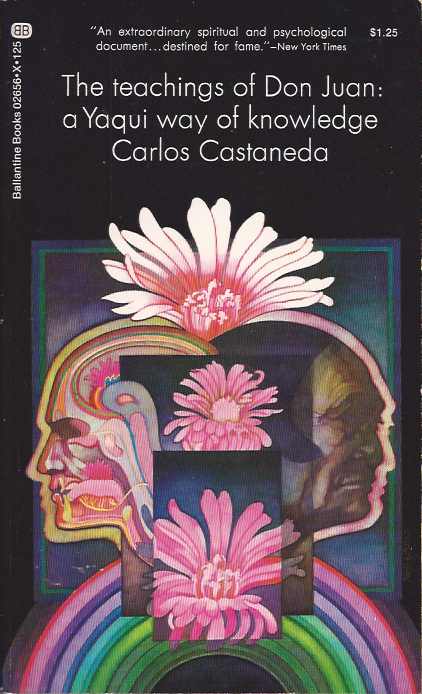
Back in the day, I was following a different form of teaching and learning in my personal life. It was my pseudo-hippie way of thinking. It was a more deeply personal and analytical approach that resonated with me at the time. Three authors struck a chord with me.


Neither of these authors or poets offered an easy answer to the timeless questions pondered by many young men. There were no sure fire formulas or easy fixes. While on one hand, I would soon be peddling my own self-help materials, these books offered a different and more challenging approach to life, liberty and the pursuit of happiness.

In 1980, I had just started my own company Sharden Productions, with my first video series under my belt. It was an eight-part speed-reading course entitled ‘Flexible Reading,’


I was on the hunt for more video series to produce or lease. Flexible Reading had been a substantial investment of my own money plus a bank loan to get it started. By acquiring the rights to other video series, I could cut down on my production costs and focus on marketing those products without incurring more debt.

My next series to acquire and distribute was entitled Personal Time Management, a course developed by a professor from the University of Minnesota. That was followed up pretty quickly by Stress Management and more self-help series. As the business grew and prospered, I produced my own one-hour golf special on Bobby Jones, a twelve-part jazz series and an eclectic variety of other video programming. Nevertheless, always in the back of my mind was the prospect of acquiring more self-help material from the real professionals like Brian Tracy and Zig Ziglar.

Nightingale Conant was the largest distributor of self-help material at the time. They were churning out seminars, audio tapes, books, and a wide array of material in that discipline. They were kings of the mountain and not about to relinquish their throne to a small time producer/distributor from the Midwest.

So I joined the Minnesota Speakers Association but found out very quickly that the organization was only interested in professional speakers who made a lot of money. The rest of us were just dues-paying members with no benefits from the organization. I expanded my portfolio of products but could never bust through that distribution wall that Brian and Ziggy had built up around themselves.


Eventually my self-help and personal development series ran their course and I branched out into other forms of risk-taking. Real estate had always hovered on the sidelines as a potentially lucrative side venture. Even there, the self-help gurus of land and buildings were plowing the fertile grounds with their ideas of ‘getting rich quickly’ with very little effort.


A poor cousin and flip side to the ‘Think and Grow Rich’ movement was/is the ‘Get Rich Quick’ approach to almost anything but especially real estate. Before the great recession in 2008, there were a plethora of real estate investment schemes being aired on television and in seminars around the country. Their message was always the same. A person could get rich by investing in real estate without any experience, money, knowledge, or clue as to what real estate really entailed. In fact, the only requirement from those purveyors of ‘great pastures of plenty’ for their lambs was the ability to breathe and have cash on-hand.


Much like the great truths of the self-help movement and personal development field, real estate investments call for a lot of hard work and a dollop of common sense. There are no short cuts to success in real estate and those heralded stories of success on infomercial television are cleverly packaged with good editing and a keen sense of ‘what sounds good.’ It is often far from reality and the truth.


In the end, Self-help is nothing more than common sense packaged with interesting stories, promises of great fortunes and eternal happiness. The key here is that for anyone willing to ‘do the work’; it’s a story that can come true.


The secret ingredient, seldom talked about, is for ‘anyone willing to do the work.’ And herein lies the reason so many folks love to read the books and watch the TV shows but seldom get off their couch at the end of the day. Like anything else in life, it takes work, a lot of hard work, to accomplish your goals.

Nothing much has changed since those street urchins plied the railroad yards for scattered pelts of coal to heat their tenement shacks. Hard work, sacrifice, determination, and overcoming failure are all the secret ingredients to ‘getting rich slowly.’ It’s what our grandparents have been telling us all along.

Life is kind of funny that way.