Showing posts with label Playboy Magazine. Show all posts

Tuesday, July 9, 2024

What is Cool Anyway?

As a young man growing up, there was one status symbol I never achieved. That was to be cool. Even today, I know ‘what I wasn’t’ but still can’t grasp what it was that I thought ‘I wanted to be.’

Back in the day, there seemed to be one sure guideline to follow on the pathway to ‘coolness.’ Since appearances meant everything for an impressionable young boy, Playbook Magazine seemed to have it down to a tee. The slick glossy tabloid to all things hip covered the whole spectrum of ‘cool’ things, places, people and attitudes.


Playboy told me that this coolness was reflected in the arts, architecture, music, film, and dozens of other esoteric cerebral ventures of commerce. It was all images and icons for hungry eyes like mine to take in. Playboy became ‘the’ major purveyor of that message when a young editor, operating out of old Cow Town, started up his own journal to herald and embellish this new scene for the cool set.


That illusion of something special was embellished, relished, and enriched by the monthly unfolding of Playbook centerfolds, cool cars, hot bachelor pads, and jazz. On the musical front, I never understood that among the hip crowd, jazz spoke a language only they understood. I was more of a folkie type.


Outside of that fantasy world of bunnies, bachelor pads and cool cars, there existed the ordinary mundane life I was living. In that world of teenage angst, lust, confusion and pipe dreams, a plethora of quirky and colorful characters defined their lives and occupied ours by their dress, style, mannerisms and diction. It was a world of first images that held tight behind a façade of individuality, which, of course, it never really was. The birth of this grand illusion began about the same time I entered the world. It morphed, grew more sophisticated and finally presented itself at the most opportune time….the late Forties and early Fifties.


After World War Two, there was a migration of artist types to the West Coast, primarily California. Coupled with a burgeoning economy, thriving new industries and glorious weather, the West Coast became a mecca for the average Joe as well as his beatnik cousins. I caught wind of this seismic shift in American culture through an art exhibit at a California Art Museum several years later. The museum recreated their exhibit in a coffee table book which I bought.


‘Birth of the Cool: California Art, Design, and Culture of Midcentury’ was one of the most ambitious exhibitions ever organized on this seminal period, encompassing the painting, architecture, furniture design, decorative and graphic arts, film, and music that launched mid-century modernism in the United States and established Los Angeles as a major American cultural center.


This was before the late Fifties and early Sixties swept me into the teen world of class and cult and sexual misinformation. There were the hard guys with their slick hairstyles and choppers and hot rods. The jocks with their letter jackets. The Brains hid out in the library with their books and slide rulers. And every school had its cache of rich bitches (male and female) with their parent’s money and cars. These cool kids had it all in one form or another. They were all ‘with it’, except maybe the Brains. Everybody envied the Brains because they were going to be our bosses sometime in the future.


In high school and even college, the rest of us were merely background distractions for those crowds of easily identifiable clichés. We were simply invisible fill-in wallpaper to their exciting fun-filled lives.


I came of age (but never broken through) back in the Sixties when all the cool music, cool chicks and cool cars were emanating from Southern California. It was a mecca for immature, wonder-ing wandering minds like mine. The Beach Boys painted musical pictures that wetted my appetite for sand under foot and bikinis in sight.  Annette Funachello and Franky Avalon showed me what beachcomber life was all about, Hollywood style.


As cool as it is to think that one is cool, the concept can be a slippery slope, easy to feel but tough to grasp. It’s evolution in midcentury America now seems but a series of willful misunderstandings. It started out as black style but became white style. It was a response to alienation but became a mark of belonging. It came from the language of outsiders, but it became associated with very old ideas of about aristocracy and good taste.

After a lifetime of never being cool and accepting my fate as just average, I think I’ve stumbled upon the true meaning of cool. And from my own kin no less.

In retrospect, I think my granddaughters have shown me the new way of cool. Maya, age 17, Samantha, age 15 and Charlotte, age 12, have all embraced the style of mixing and matching vintage clothing with something new and modern. They’re cool because they’ve become masters of their own fashion sense.

Perhaps, doing your own thing is the ‘real’ cool thing to do. Follow no one else but let your heart and desire lead you on.  It means doing your own thing and ignoring the masses or cult favorites or TikTok glimmers of the silly and insane.


Past symbols of ‘cool’ are now old enough that they’re coming back in a strange amalgamation of form and style. The younger set sees them as new and trendy. Veterans of the movement see a resurgence of a colorful past. Me, I see form and function but little else.

Sadly, even now that I have an idea of what cool is, I don’t think I’m there yet and probably never will be. I’m just going to continue doing what I want to do. So, if doing your own thing is now the cool thing to do, maybe I’ve finally made the grade.

TBA

Tuesday, March 31, 2020

Historical Docs Laced with Skin


I’m neither an archivist nor a researcher. I don’t save collectibles or search the internet for the latest trendy thing to put on my back or in a shelf. I do, however, have an insatiable interest in the late 50s and the decade of the 60s. In past blogs, I’ve described the 60’s as my ‘lost years.’ Nearly ten years wandering and wondering through a turbulent period of growth amid this country’s many changes.


Growing up during that period, Playboy magazine was the ‘dirty magazine’ hidden behind drug store counters. Retailers dared not display it on the regular magazine racks unless the magazine came with its standardized strip of modesty covering up her bottom. Of course, that only ignited a young boy’s imagination up another dozen notches.


Back then, the cliché went: I was supposed to claim that I read Playboy for the articles, not the pictures. Actually I did neither. I can’t remember if it was the cost that was prohibitive or where to stash it that hindered my ever purchasing one. It could also have been the fact that I was too embarrassed to actually drop a Playboy on the counter in front of an adult and buy it.


That all changed recently. With the power of E-Bay, I now have a very limited collection of Playboy magazines from 1968 and 1969 with a few extra months thrown in. It’s been an absolutely fascinating journey back in time and I’m not talking about the centerfolds. Nowadays I can honestly say I read my old Playboys for the articles instead of perusing the pictures.

Taken within the context of their time, I think the articles accurately reflect the mindset, morals and mores of that (my) generation. Back then, each monthly column seemed to raise a different group of concerns but all of them relevant to the times.


The Playboy Advisor seemed to focus on dating advice, job advancement, personal hygiene and the like. The Playboy Forum covered the topics of homosexuality, pornography, premarital sex and sex education. The Playboy Philosophy column was Hugh Hefner’s private platform to rail against the prudish old society standards of morality. He challenged the hypocrisy of our social, civic and political leaders against the changing times.

While seeming to cover different topics of interest, the columns all backed a solid philosophy that reflected Hugh Hefner’s take on present-day issues facing Americans in the late fifties and early sixties. What struck me was the sincerity and honest probing of moral standards handed down through the generations that were now being challenged by magazines like Playboy, comedians like Lenny Bruce and young college students no longer willing to quietly embrace the status quo their parents had readily accepted after the war.

The older generation, alarmed by the subtle yet pervasive changes bubbling up among the younger set, voiced their opposition to anything that challenged their well-established way of life. There was, among other things, a genuine alarm about the growth of sex education classes in schools. Their old familiar fear of a ‘communist plot’ against the moral thread of American society was raised. In their mind, challenges to authority were not to be tolerated if this country was to survive, they argued. Hippies and other radicals were labeled subversive because they seemed intent on overthrowing the government. Rock and rollers, especially those in the psychedelic movement, were among the worst offenders. Adding to this growing alarm at new thoughts and ideas was a burgeoning concern for the ‘negro cause,’ rights for the ‘homosexual’, ‘women’s liberation’ and the legalization of marijuana.


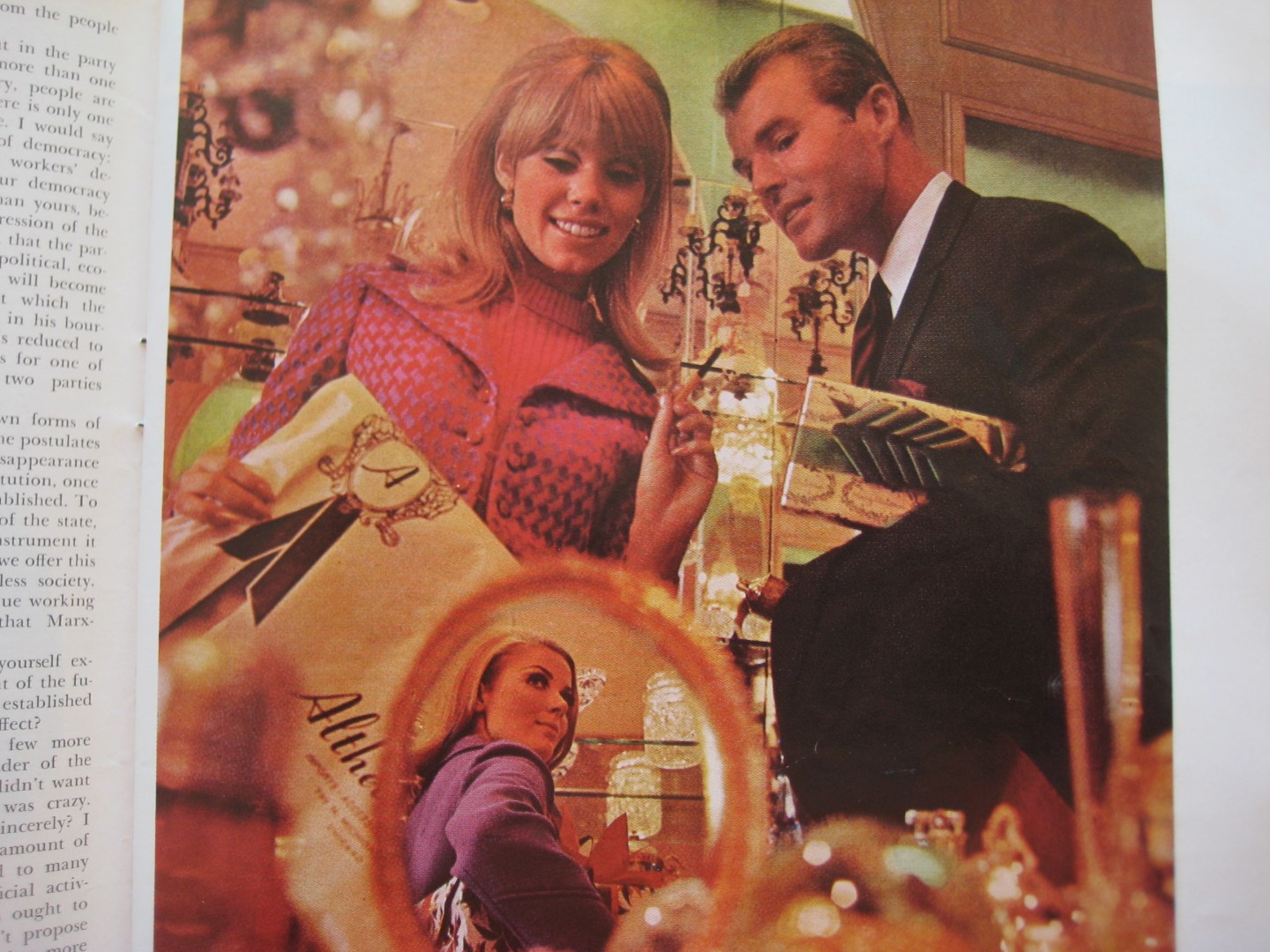
But along with the sometimes amusing, always serious concerns of the day came an onslaught of old familiar advertising that I hadn’t seen in many years. The advertising, as much as the various columns, truly painted an accurate picture of life in America in the sixties. Only this time I was able to peruse and enjoy the images and copy lines with a little more miles and maturity under my belt.


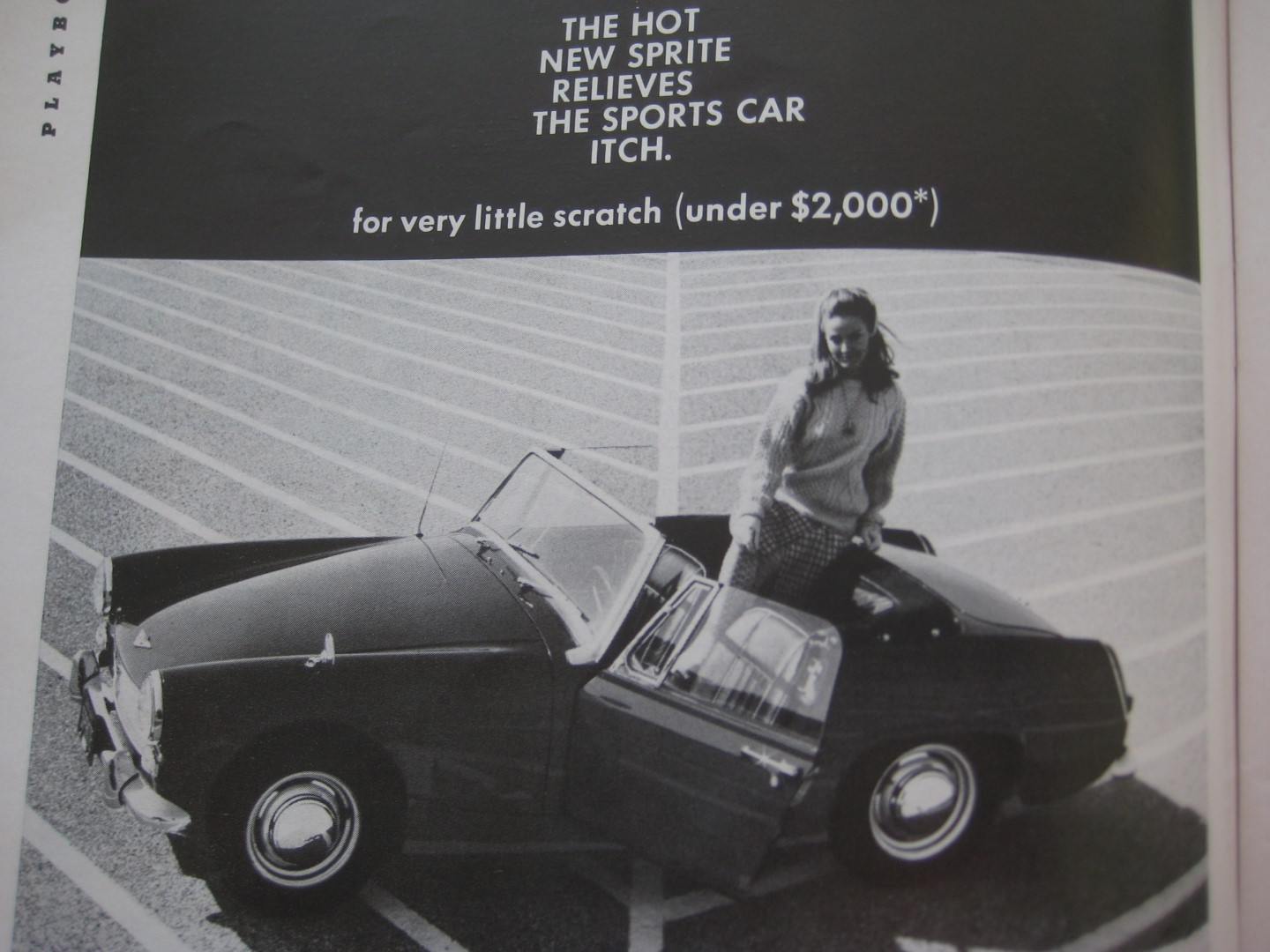
The advertising images came rushing back, primarily from cigarette, car and beer ads. In an era when smoking was still thought to be cool and not harmful, cigarette makers all vied for a place in front of cool hip young men. Among the relics of that era were ads for Pall Mall Gold, Camel, Lark, Winston, Tareyton, Tiparillo LP, Silva Thin, and Chesterfield.


Beer ads were just as prominent with Colt 45 Malt Liquor, Schlitz, Michelob and Heineken. For world travelers TWA and Braniff painted colorful pictures of foreign travel, always with a beautiful blond in the seat next-door. The Triumph Spitfire ($2199) and Compact Dodge Dart were offered up as affordable means of transportation with sex appeal.


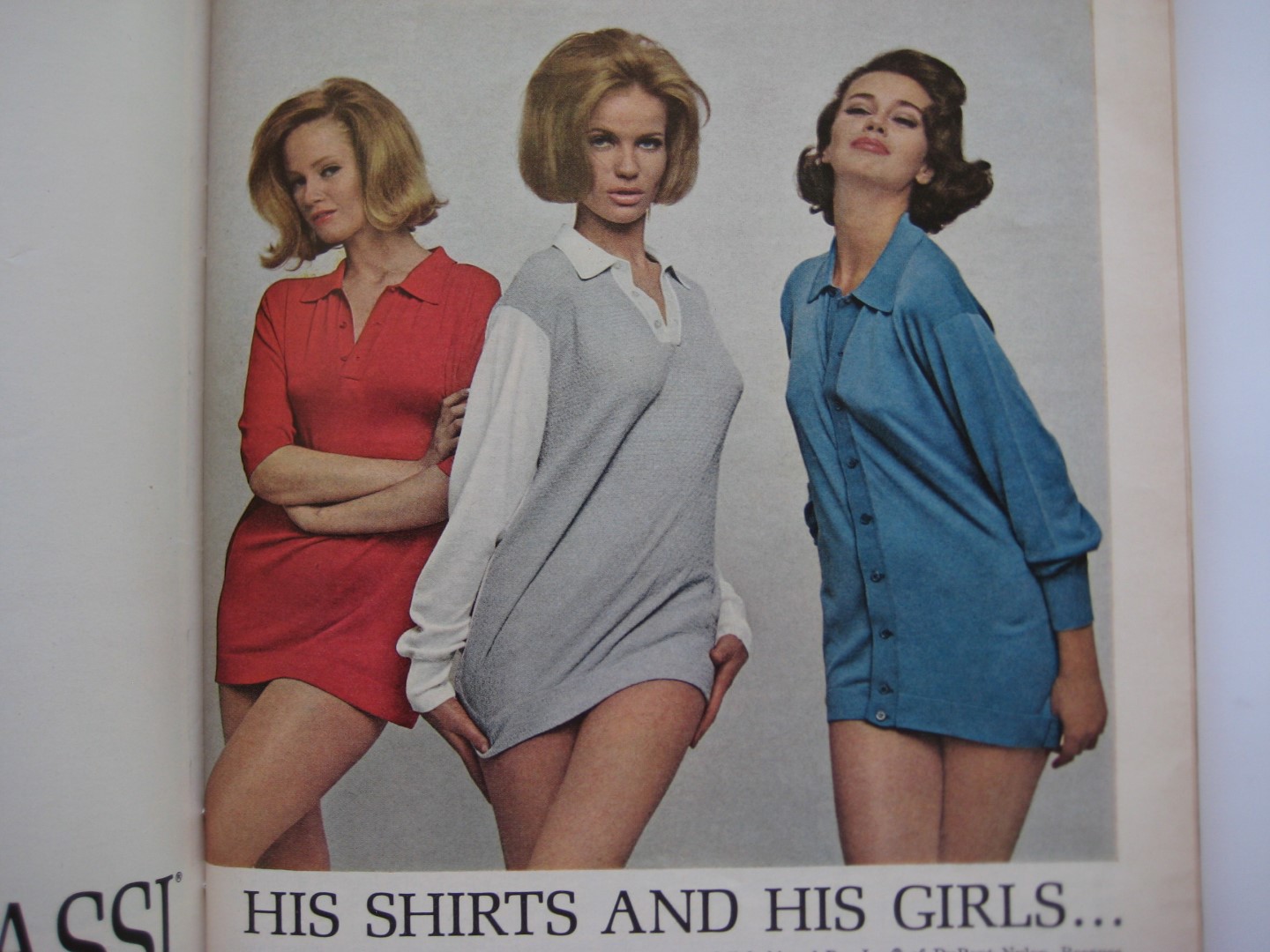
Cricketeer, h.i.s. , Wembley, Jaymar slacks and Botany 500 were aimed at the college crowd while London Fog, Hathaway (the eye patch guy) and Hart Schaffner & Marx were aimed at those with more discretionary tastes in clothing. Both demographics were exposed to the Columbia Stereo tape club, the Encyclopedia Britannica and who can forget a library full of Great Books. Of course, no date would be ready to go without a liberal sprinkling of Old Spice and/or English Leather cologne.

Some of those advertising lines have been cemented in advertising history.  ‘I’d walk a mile for a Camel.’ ‘Come to where the flavor is. Come to Marlboro Country.’ and  ‘Real gusto in a great light beer (Schlitz)’ have all stood the test of time.


There were several recurring segments including solid business advice by J. Paul Getty, image-making by LeRoy Neiman with his ‘Man at his Leisure’ series of paintings and sketches and, of course, a history of celluloid sex.


But the best advertisement that summarized the whole playboy philosophy was their monthly ad entitled ‘Who reads Playboy magazine.’ It never showed a horny eighteen year old boy; their real target reader. Instead it displayed a thirty year old male model draped in the latest fashion duds with a girl (never a woman) wrapped around his arm.

By the early 70s, reaction to the feminist movement was raising its ever curious and alarmed head. It seemed to be the militant feminists who were causing the greatest concerns among the stanch old guard who felt threatened by the daughters of the ‘little woman’ back home. The unwillingness of these brave young women to not accept the status quo of the last twenty years of Playboy brought the magazine to its zenith and then inevitable decline.


With the strength of time, I can see now that ‘if’ the Playboy centerfold was supposed to be the girl next door, as Hef used to exclaim, then that explains my confusion at reality. Unfortunately that magazine as well as many others continued that exploitation of women until just recently. Playboy may have started it all but nowadays their centerfolds are far less exploitative than something you might see in any one of a dozen fashion magazines, the internet, the cinema or cable television.

Social, sexual, and political differences aside, these magazines provide an insightful journey back in time with their advice columns and Playboy Philosophy sections that plum the most definitive explanations of the country’s mindset and political and moral forces fighting against the myriad of changes during that time period.

As much as the federal government, most southern states, neighborhood moral harbingers of faith and local politicians wanted to turn back the tide of change, they couldn’t. Playboy in its editorial themes, personality interviews and revealing pictorials represented those changes sweeping the country. It wasn’t just the sexual revolution or civil rights or distrust of the war in Vietnam, it was an awakening of the youth that they didn’t have to follow in the footsteps of their parents… and they probably wouldn’t go to hell if they didn’t.


These old magazines are a time capsule of my political, social, sexual, and cultural wallpaper back in the Sixties. Those ‘real world’ anthropological studies reflected many of our country’s morals, hang-ups, misconceptions, prejudices, assumptions and naivete most of which have all been washed away by time and fact.


What is both insightful and pathetic at the same time was their advertising campaign bolstering the Playboy image. It was that imaginative facade of the cool sophisticated male in his Playboy penthouse, driving fast cars, going on exotic vacations and having nightly rendezvous at some dark, smoky jazz club where ‘lucky’ was the constant number, that propelled this multi-million dollar industry. Carefully crafted, it was all part of the mystic, lore, stories, lies, wet dreams and rampant imagination that Hefner had his readers connect with. With a monthly circulation of just under three million and at .60 cents a pop, the man/publisher/image-maker was clearly on to something.

Studied at length the magazines paint a primitive yet persuasive picture of the typical ‘man about town.’ It was a wonderful caricature imagined in the mind of Hugh Hefner and visualized in photographs, paintings, suggestive cartoons and the ever-present ‘girl next door’ sans her clothing. Unfortunately, I bought into Hef’s dream - hook, line and sinker, especially the sinker part.


The most impactful of these delusions about the Playboy image occurred in the fall of 1964 when I was stationed at the Presidio of San Francisco. While lounging in the enlisted men’s rec. room, I happened upon the Fall Campus Edition of Playboy. There, spread out before my envious eyes, were beautiful coeds, Mustang convertibles and fashion-conscious jocks lounging about the quad in their latest duds and school flags. It was a world that seemed a million miles away and a lifetime out of reach. It made me sad, envious, and just a little bit lecherous looking at those beautiful girls.


As I learned over time, the girls or really the carefully crafted manikins’ of the same persuasion were wonderful dangling carrots to dream about as I carved out an existence while serving Uncle Sam. Upon my discharge, the illusions disappeared and reality with all of its warts, dreams and reality-bites took its place. As we used to say: ‘Welcome back to the real world.’ Then I would add with a grin ‘but thanks for the dreams along the way.’


The dreams have long since faded and reality has painted a much more honest, realistic portrait of those turbulent years. Now with a pillow of time to rest on, I can go back with an open mind and comfort-with-self to look with amusement at the pictorials, advertisements, philosophies, and righteous stands on morality and ask ‘what has changed?’

The moral indignities of some will always confuse and amuse others. The quest for freedom will never end. Hopefully we’ve learned to be kinder to others, more accepting and willing to stand up to the myriad of challenges we still face. As the quote goes: ‘That was another time and place.’ While its fun to look over the fast cars, inhale the soft skin and seductive smile, reality is a much better way to live in the end.


For to live any other way is not to live…and who wants to exist that way.

Tuesday, May 15, 2018

Centerfold of My Dreams


It takes a special kind of woman to buy her husband a collection of old Playboy Magazines (circ. 1963) at an estate sale. Sharon did just that while I was out of town conducting a workshop. It was a pleasant surprise when I came home and for all the right reasons.


Perusing old centerfolds was fascinating because it took me back to a time and place that no longer exists for this country. The old magazines were a time capsule of our, some of us at least, lives. They proved to be a political, social, sexual and cultural study of America back in the Sixties. Nineteen Sixty-Three - more specifically, exactly fifty-five years ago.


This ‘real life’ anthropological study reflected many of our country’s mores, morals, hang-ups, misconceptions, prejudices, assumptions and naiveté most of which have all been washed away by time and fact.


I spaced out my collection to one magazine per sunset. Reclining on my lounge chair, I let my imagination and keen eyes savor those old tired, mainly black and white pages, of an era that existed primarily in the imagination of the publisher and his readers.

This time around I spent more time on the articles than the centerfolds. In fact, advertising today shows more eye-popping flesh than most of the centerfolds did back then. I actually read a lot of the articles unlike before when I just lied about that.


Even with a quick glance at those women with their eye-popping assets, one can see they must have been artificially induced. Appendages just don’t grow like that in real life. However, Playboy was never about ‘real life.’


But that imaginative image of the cool sophisticated male along with the Playboy penthouse, fast cars, exotic vacations and nightly rendezvous at some dark, smoky jazz club where ‘lucky’ was the constant number, was all part of the mystic, lore, stories, lies, wet dreams and rampant imagination that Hefner had connected with. With a monthly circulation of just under three million and at .60 cents a pop, the man/publisher/image-maker was clearly on to something.


Studied at length the magazines paint a primitive yet persuasive picture of the typical ‘man about town.’ It was a wonderful caricature imagined in the mind of Hugh Hefner and visualized in photographs, paintings, suggestive cartoons and the every-present ‘girl next door’ sans her clothing. I especially liked studying the Playboy Philosophy for Hugh’s take on sexual freedom, the ‘Who Reads Playboy’ ads for their subtle hint at materialism as the ultimate goal and especially anything centering on the collegiate experience.

Back in 1963, I was in my second year at the College of St. Thomas, quickly running out of money to pay the tuition and falling for the girl next campus. It was a whirlwind of confusing emotions and envy at ‘those guys’ on the quad who seemed to have the clothes, the cars and of course, the girls. I had gotten sucked up into the fantasy that was ‘Playboy on campus,’ a subtle yet powerful advertising mechanism to sell product and illusion to malleable young minds.

Those fading, mainly black and white, magazines brought back all those old memories of yearning for I didn’t know what, jealousy at the guys who got the girls, and envy for their perceived lifestyle.


The ads were wonderfully effective in their subtle yet persuasive manner of painting a picture of things I didn’t know I wanted or needed. The Playboy life style painted a façade of sophistication, education, money and women then somehow implied it was for all of us to attain.


The most impactful of these delusions occurred in the fall of 1964 when I was stationed at the Presidio of San Francisco. While lounging in the enlisted men’s rec. room I happened upon the Fall Campus Edition of Playboy. There, spread out before my envious eyes, were beautiful coeds, Mustang convertibles and fashion-conscious jocks lounging about the quad in their latest duds and school flags. It was a world that seemed a million or more miles away and a lifetime out of reach. Looking at those beautiful girls made me sad, envious, and just a little bit lecherous.

As I learned over time, the girls or really the carefully crafted manikins’ of the same persuasion, were wonderful dangling carrots to dream about as I carved out an existence and make good use of my time while serving Uncle Sam. Upon my discharge, the illusions disappeared and reality with all of its warts, dreams and reality-bites took its place. As we used to say: ‘Welcome back to the real world.’

Then I would add with a grin, ‘but thanks for the dreams along the way.’