Tuesday, March 22, 2022

Living Inside a Hologram

One thing a lot of my past heroes and icons have in common is that they weren’t real. What I was exposed to, learned about, believed in and accepted, was in fact, an image that had been carefully nurtured, groomed and manipulated for maximum effect. He or she or it was really just an avatar.

Truth be told, I was looking through a hologram at an image cleverly presented in the best interest (and most of the time) in the only interest of the presenter. Any connection to reality was a side benefit, (again) only if it was in the best interest of the presenter.


I recently watched a fascinating documentary by Ken Burns on Ernest Hemingway. It reminded me of a slew of notable personalities in the world of literature, music, the theater, etc. - all of whom have created their own persona for their own personal gains.


The list is a veritable who’s who of personalities in the arts. Ernest Hemingway, Bob Dylan, Marilyn Monroe, Rock Hudson, Prince, Lady Gaga, Madonna and many more myth-makers.

As the documentary pointed out, the trouble with creating a new persona or image of oneself means that one has to live up to that illusion. In most cases, eventually the avatar will turn around and consume you. Living inside a hologram eventually wears thin as the real person starts to emerge.

Over the past seven or eight years, I have probably written more than six hundred plus blogs. Looking through the thin veil at my past life, I’ve tried to be honest about my experiences and the associated feelings but the temptation is always there to exaggerate just a little bit. I guess the only difference between myself and the masters like Hemingway and Dylan is that my story isn’t nearly as interesting as theirs.


The experiences I’ve written about include a plethora of real-world adventures. Like my time in the Service, living in Europe, trying to hitch hike to the South of France, trudging through the Amazon rain forest, hanging my boots over a cliff at Machu Picchu, and time spent in Palm Springs. They are all as real today as the day they happened. Those experiences can still conger up images in my mind; perhaps a little distorted but still there.


The experiences were real and did happen. My reaction to them, my memories and my recall have probably been a bit slanted and grayed on the edges over time. I guess the only difference is that I’m not as good as my heroes are at painting a more exciting picture of past events. But then again, I don’t have an image to worry about or a public to satisfy. It’s just me, old and gray and worn a bit around the edges, still telling my story and not minding if anyone is listening or not.

They are still my stories to tell and pretty damn close to the truth as I can truthfully remember them.

Tuesday, March 15, 2022

Once in a Great City

Like any living, breathing organism, cities grow and thrive and then begin to fade over time. It’s an evolutionary process that can take decades or just a couple of years. Rebirth can come in many forms and functions. Then the rebuilding process begins all over again, completing the life cycle of a city.

I read a fascinating book on the city of Detroit recently. It was a snapshot of a period from roughly fall of 1962 to spring of 1964. The author claims that period was probably the high point, the zenith of most everything we associate with that once great city. Automobiles, Motown, etc. were all destined to be reshaped, revised and reimagined in coming years.


It got me to thinking about the past twenty years when I started out as a sometimes visitor to Palm Springs and eventually evolved into a part-time resident. Palm Springs has also gone through its own metamorphosis and evolution as time gradually erased most vestiges of old Hollywood, welcomed a much larger gay population and then invited in the cool hipster set from the coast.


In its heyday, L.A. had its Sunset Strip, Chicago, its miracle mile and Detroit, its automobiles and Motown. Now Palm Springs has done them one better with its own small-town village atmosphere cloaked as a 21st century hotspot. Throw in a summer splash party or two and it’s become a poor man’s version of ‘Caligula’ for the masses…as long as they’re preferably under thirty years of age.


Back in its glory days, Palm Springs was a classic example of heightened expectations clashing with the reality of desert star gazing. In reality it was only the well-heeled or coastal-connected that got to hang out with the stars. For the average visitor, Palm Canyon Drive was just a welcome respite from the normalcy back home even while it harbored high hopes for seeing one of their favorite stars passing by on the sidewalk. Over the last several years, even before Covid, Palm Springs had slowly begun to regain its panache.

Palm Springs is now fast becoming just about the hippest hot spot this side of Brooklyn, Silver Lake and West Hollywood. West Coast hipsters, designers, remodelers, artists, musicians and actors are all rediscovering what their forefathers knew all along. They’re finding that wrapping those warm blue pools with a healthy shot of alcohol can bring out a hedonistic nature in the best of us.


There is still something magical about the surrounding mountains, desert scape, warm winter months and hip happenings all over town. Palm Springs is now a virtual cornucopia of cultural, artistic, sensual, musical and intellectual stirrings for just about everyone from the art culture types to the more modest of minds. It all seems to be happening here.


It’s a new era for Palm Springs and I’m lucky enough to be ‘cruising along’ in the middle of it.


Old Saint Paul also went through a similar shift in population, commerce and direction. During the late fifties and early sixties, the outlying suburbs became more defined and easy to label. Highways and roadways paved easy access to more land, cheaper housing and became a mecca for younger families.


The beltway surrounding both cities used to be the demarcation line between city neighborhoods and the suburbs. Now second, third and even fourth tiered communities spread out in a fan around both core cities.


Then in the late eighties, a gradual shift in population began from the suburbs back to the cities. The golden horizon, that was once the suburbs, had become too distant for many and commuters tired of their daily grind into the city. At that point, older long time neighborhoods began to grow a sheen of their own and began to attract young couples eager to raise their kids in the cities.


This was partnered with a growing interest on the part of younger generations to embrace what their parents and grandparents had left behind. Whether it meant easy access to transportation, commerce, jobs, education, and other amenities, they found it nearby instead of over the horizon.


Closer to home, Apple Valley has also grown up and out over the years. The initial concept of mini town centers changed to a central core of businesses and amenities surrounded by new as well as original neighborhoods.


Apple Valley is a third ring suburb that has matured and slowed its growth just as its neighbors to the east, Rosemount, and the south, Lakeville; continue their expansion because of available land for development.

While Sharon and I weren’t here at its inception, we’ve been a part of the Apple Valley scene since 1977. That was less than ten years after it was incorporated from Lebanon Hills Township to the city of Apple Valley. We witnessed the transformation of farm fields to housing, an old airport to a Super Target, city hall moving twice, a gravel pit into a Regional County Government Center and too many other civic metamorphosis to count.


In a very real sense, we are the second generation following the pioneers who farmed the crops and sold their farms to the developers. Like my old Saint Paul neighborhood and Sharon’s farm down in Wabasha, we left our birthplace behind for the horizon ahead and never looked back. Along the way, it’s been an education watching our hometowns and the world change and evolve around us.

Tuesday, March 8, 2022

The Early Years

Today the fancy word is ‘start up.’ It’s that crazy, chaotic period when time and talent and money are on the line to begin a new venture. Each new generation thinks it’s discovered the holy grail of venture-taking for the first time. Only later, do they discover that established companies, organizations and some individuals all went through this initial period of growth, and for some, their demise.

The early years are usually meant to describe that period when ventures first begin with a clear or at least rudimentary idea of what they want to accomplish. As time passes, reality sets in and the goals and objectives may change or be adjusted or adapted to changing times. It’s during those first baby steps toward establishment that mistakes are made, failures pile up and lessons are learned. From that comes success to some and failure to many others.


This weeding out process can be applied to groups, institutions or individuals equally. If they can get past those first timid steps toward something concrete, an established entity may finally form and only then slowly begin to grow into something much bigger.


I’ve been lucky enough to have experienced two distinct early periods in the evolution of non-commercial television. Twin Cities Public Television and the Maryland Center for Public Broadcasting were both evolving and morphing into something greater when I climbed onboard for that proverbial ride of a lifetime.

There are a lot of other examples of those ‘early years’ for organizations and individuals that have been of great interest to me.


Motown, from its beginning until roughly 1964, was a musical cauldron of immense talent and lyrical exploration.  As author David Maraniss wrote in his book about Detroit, ‘Once Upon a Great City.’ “Roughly 1962 to 1964 were the last days of Motown’s magical early period, before the debilitating addictions of success and envy and ambition took hold and things and people began to fall apart.”

MTV (Music Television) in its outstanding series: ‘Behind the Music’ documented many rock bands who struggled for many years, forming a cohesive sound and creating great work, before success ultimately led to their demise or breakup.


The same can be said for individuals and groups from Bob Dylan to the Beatles.


Dinky town, The Ten O’clock scholar, and Café Extempore were all local performance venues for Bob Dylan back in the early 60s. This was before he headed for New York City and his breakthrough recordings with Columbia records. By 1965, he had gone electric and his early years were truly over.


The Beatles started their climb to fame in The Cavern Club, a Liverpool cellar club then graduated to nightclubs in Hamburg, Germany before hooking up Brian Epstein as their manager. Their arrival in 1964, on that Pam Am flight, bound for the Ed Sullivan show officially ended their early years.


Twin Cities Public Television, from roughly 1966 through 1972, was evolving from an educational/instructional television station to becoming an affiliate of the Public Broadcasting System. But that was really its second phase of those ‘early years.’

There was another incubation period from its beginning in 1957 in Quonset huts on the University of Minnesota, St. Paul Campus, until its move to its own building on Como Avenue. During that time, it was almost strictly a broadcasting arm of local schools and colleges with few of their own productions.


When I joined the station as a studio volunteer in the winter of 1967, it was nearing the tail end of its life as an instructional television station. I was fortunate enough to watch and experience the evolution of its own line-up of programming outside of the realm of education and instruction. Entertainment became a seldom talked about but often whispered ingredient we wanted to put in our shows.


I’ve tried to capture that excitement and my own experiences in one of my plays entitled: PTV. It’s an honest, abet a bit exaggerated account, of the craziness of a television station filled with dope-smoking crew members, amorous young women, ambitious young men and the old guard trying hard to hold back the evolution of this new communications medium that was crying out for more… of everything.


After leaving KTCA in the spring of 1972, I went to Chattanooga, Tennessee for eleven months as Production Manager at an educational station down there. Then I was offered a brand new kind of job at a fledgling station up North in Maryland.


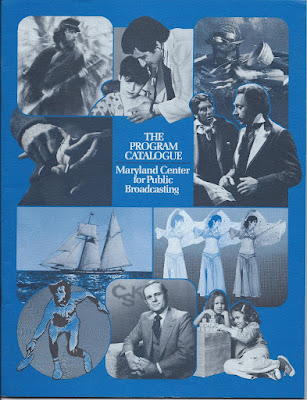
That new job was with the Maryland Center for Public Broadcasting. Formed in 1969 in downtown Baltimore, MCPB was the state’s first venture into public television. The first fledgling station was located in an outlying suburb called Owings Mills. In its first five years, the station had begun to gain a nationwide reputation for outstanding and innovative programing on a local and national scale.


I was hired as one of the first persons to take the station in an entirely new direction; commercial sales of its television products and services. That early period, from roughly 1969 through most of the 70s, has come to be known affectionately by us old-timers as that Camelot period.


Farewell Party

It was a time of venturing out in new directions with an attitude of ‘we can’t fail.’ We had a brilliant leader by the name of Dr. Rick Breitenfeld. Through his initiative and imagination, the station branched out in dozens of new directions and areas. I found myself negotiating with HBO and other brand new cable systems for sales of our programs. Our program catalog was distributed nationwide and enjoyed sales in most of the fifty states. It was pretty heady stuff.

Those early years are gone now. Both stations have along since matured into solid reliable purveyors of outstanding television programming. I’ve also moved on, but every once in a while, I catch myself thinking back to those early years when we were all young and dumb and full of adventures. I’m very lucky. That’s a nice legacy to fall back upon.