Tuesday, November 20, 2018

Another Name for Vision Quest


As I’ve written in past blogs, climbing mountains has become my version of a vision quest. I say that with a deep respect to Native American folklore. Down through the centuries, Indian culture has always held their mountains in great respect. The first ancients to walk this country left their mark around and on those granite sentinels.


In the Palm Springs area, the Cahilla Indians of the Coachella Valley have long spun folk tales centered on the San Jacinto and San Bernardino Mountain chains. Early settlers, explorers, hikers and long distance travelers have often reported feeling the presence of others while alone on the trail. There is a special reverence most of us desert rats feel on those mountain trails.


When I first started hiking in the Coachella Valley I found a trail close to home and a fun Saturday morning endeavor. It’s called the South Lykken Trail and is part of the North and South Lykken Trail that stretches for nine miles. It takes about five hours of moderate hiking to traverse the entire trial. The elevation gain is only about 800 feet and it’s considered a moderate hike by local standards.


Then last season, another trail caught and captured my attention. This one is called the Garstin Trail. That old goat path climbs up over two miles that switch back and forth and practically stumble over themselves in the process. Elevation rises from roughly 700 feet to 1500 feet up Smoke Tree Mountain. The trail rises to a plateau connecting up with the Shannon, Berns, Wild Horse and Eagle Canyon Trails. Even for the most ardent, experienced hiker it can be a gut-sucking, deep breathing endeavor.


Last winter on my last hike of the season, I came upon a granite plateau similar to the one I have often talked about on the Lykken Trail. This new tablet of stone offers up spectacular views up and down the broad expanse of Palm Springs. From this summit near the top of the Garstin Trail one gets a panoramic view of my neighborhood, Indian Canyon, the San Jacinto and Little San Bernardino Mountains, the depth of Palm Canyon and the broad expanse of the community of Palm Springs. To the east, one can see the entire eastern Coachella Valley.


Something magical, almost spiritual, can happen during a mountain hike. It’s a physical as well as a mental challenge. At face value, it can be a day of hiking, climbing or finger-probing the rough crags and fissures of the mountain face. On a more spiritual level, it’s an assent into the vaulted realm of oxygen deprivation, aching muscles, sweat-drenched clothing and overall mental exhilaration…all to put your head in the right place. Call it mindfulness, meditation; the moniker doesn’t matter, the results do.
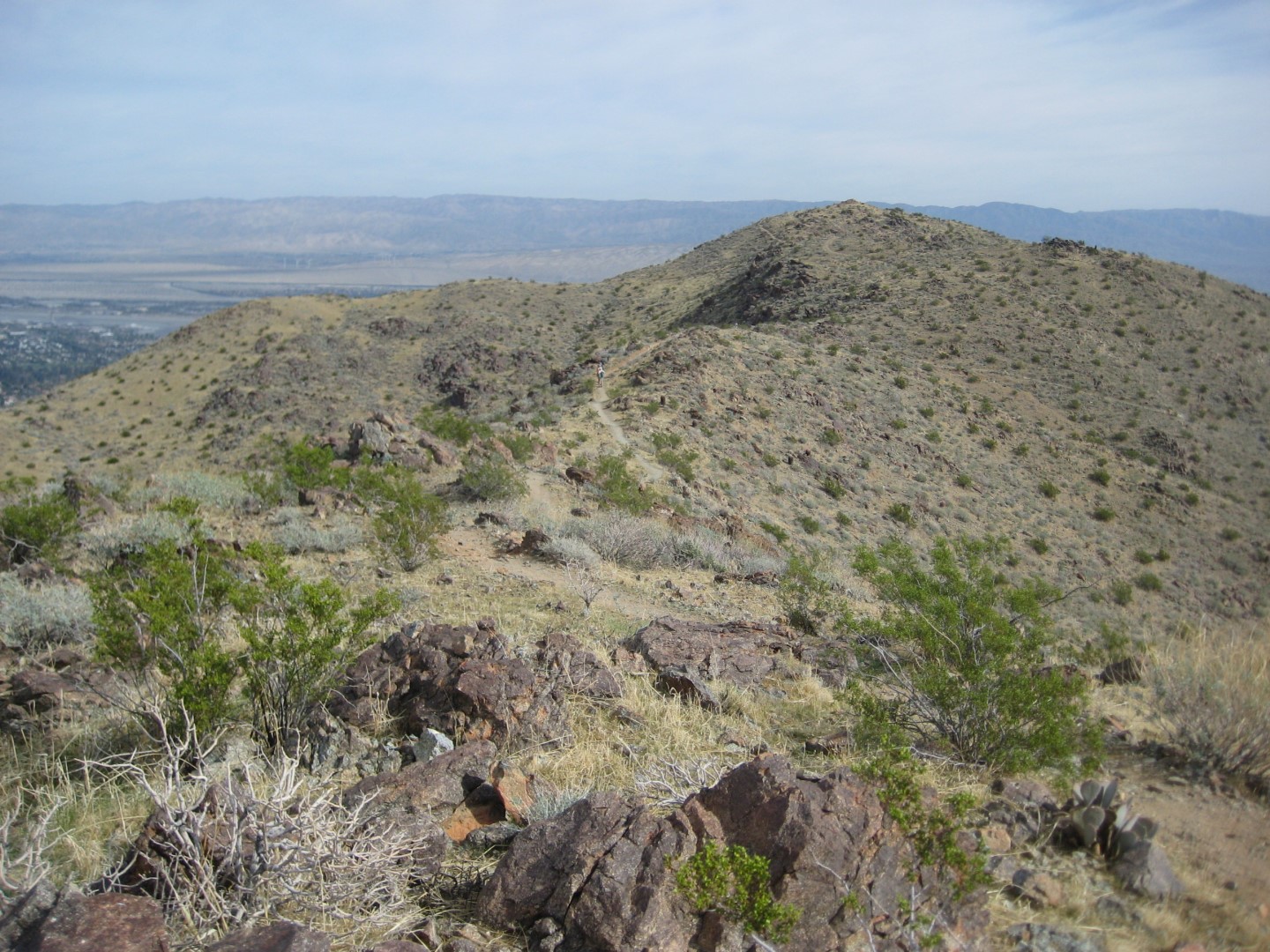

Another challenging climb is called Murray Peak. Although it’s called a ‘hill’ at 2200 feet on most maps, Murray Peak is, in fact, the highest peak in the vicinity of Palm Springs. It’s been labeled a moderate to strenuous hike with a total distance of almost seven miles and a vertical gain of over 2200 feet. It takes an average of five hours for completion with only a few rest stops along the way. For the seasoned hiker it’s a refreshing walk up the mountain. For us less conditioned souls, it can be a gut-buster and taxiing on the lungs. In other words, a worthy challenge and goal for a seasonal visitor like myself.


The mother lode of all trails in the Valley is one called ‘The Skyline Trail’ or for those in the know ‘C2C’, which means Cactus to Clouds. It’s a ten hour (minimum) mountain climb that travels ten miles uphill for an elevation gain of over 8000 feet. It traverses three eco-zones and can be a killer for the uninitiated, especially in the summer months. Four hikers have died on the trail over the last dozen years from heat exhaustion. No wonder my kids just roll their eyes when I mention a desire to make that climb. ‘No way!’ is all my better half will say.


There’s a culture here among a small group of old goats who work and hike these mountains year round.  They care for the trails as an elder does the tribe. They endure scorching summer heat and windy overcast winter days. Most are rail-thin. Their skin looks like weathered copper or dried up old parchment. Most of them are lithe as an antelope. They’re the desert rats of the higher altitudes.


If I do Murray Peak this season, I intend to seek out yet another tabernacle. Not just any mountain plateau but another sanctuary of solitude and comfort similar to the one I found on the Lykken Trail years ago. It’ll be my granite respite for reflection and contemplation. A slab of rock that warms my bottom as well as my soul. An escape for quiet soul-searching amid the shadows of Indian lore and homes of the rich and invisible.

I’ve tried yoga, marathons, and long trail runs. Collectively they can punish the body all the while soothing the soul. My tabernacle is no different. It just takes a longer climb to get there.

Tuesday, November 13, 2018

River with Two Faces


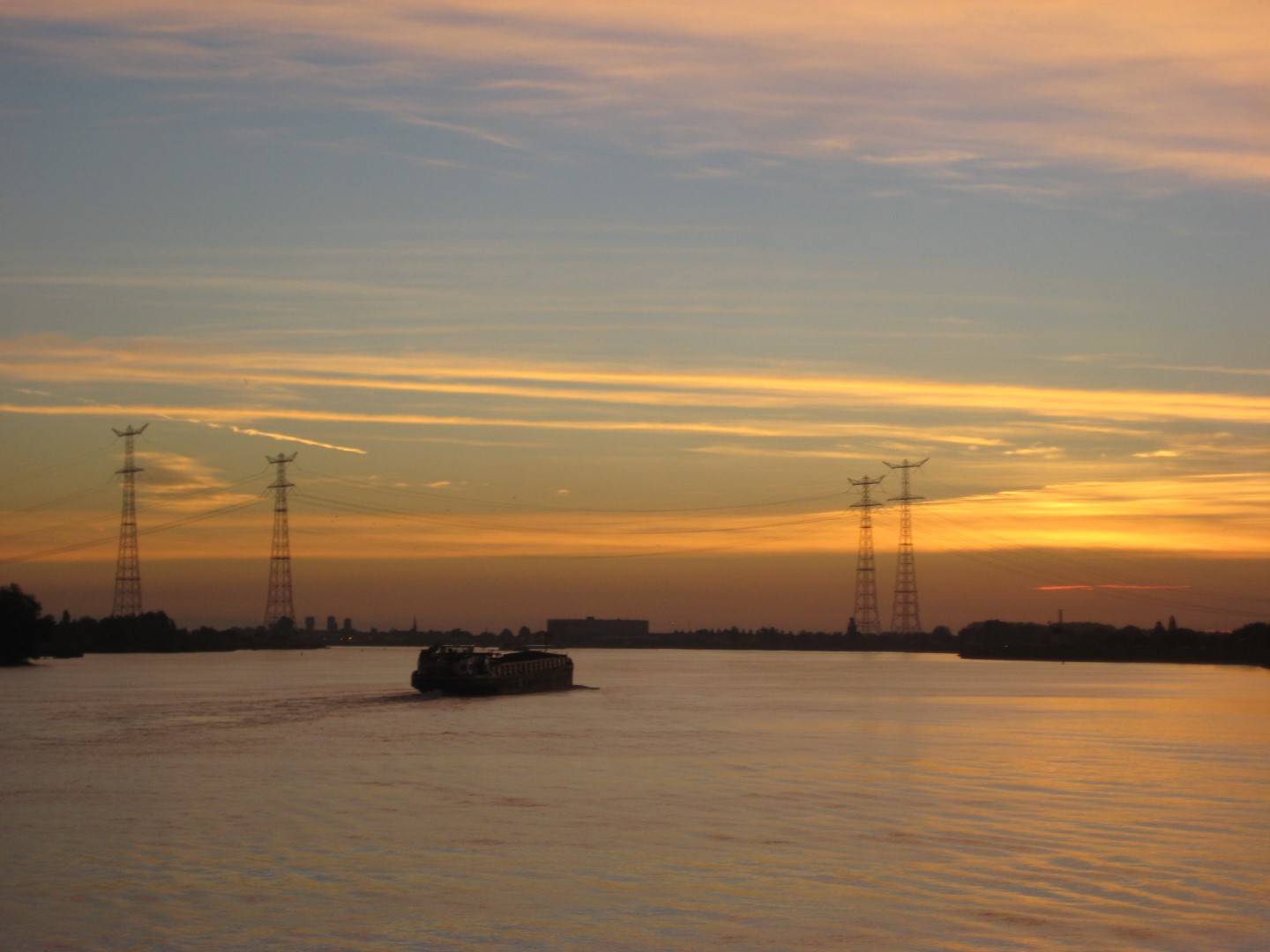
There’s a reason one is called Father Rhine and the other Mother Mosel. Two rivers, each harboring different personalities, yet both are life vessels to their pass-through countries. Recently I traveled some distance on both rivers. It was fascinating, awe-inspiring and a trip back in time.

Beyond the bucolic landscapes dotted with fairy-tale castles, terraced vineyards and rust-covered maritime facilities, the Rhine and the Mosel provide a glimpse into their respective history of the region. As economic engines, both rivers continue to provide a wealth of economic infusion into the local communities hugging their banks.


Once the most efficient and fashionable means of travel throughout Europe, river cruising continues to be an ideal way to discover the culture, cuisine and unique characteristics of the many countries traveled through. Yet for all their similarities, the Rhine and Mosel wear two very different masks.


Father Rhine, as it is called by the locals, has for over 2000 years been Europe’s most important commercial waterway. Its scenic beauty has inspired countless myths and legends. By introduc-ing vines to the region, the Romans paved the way for the excellent vintages that are a further source of the Rhine’s international reputation.

The Rhine River rises in southeast Switzerland and reaches the North Sea after a journey of over 1230 km. While industrialization has left its mark on some parts of the river, most of the waterway provides an idealistic pass-through of towns and villages that have existed there for over hundreds of years.


Mother Mosel wears a very different moniker. Since the days of the first Romans, over 2000 years ago, the most exquisite asset of the Mosel countryside has remained its wine production. Generations upon generations have nurtured, embellished and refined a giant open-air amphitheater to the honor of Bacchus, the God of Wine. The towering slate cliffs store the day’s warmth for the cool evenings that follow while the grapes ripen at just the right angle to the sun.


Our river journey began in Basel, Switzerland. The city is Switzerland’s second largest and carries a split personality. On one hand, giant modern chemical research and pharmaceutical companies dominate the city’s skyline. On the other hand, an ancient network of narrow alleys weaves together the city’s medieval architectural heritage.


Leaving Basel, our ship followed what seemed like a meandering path along both the Rhine and Mosel Rivers. It was one river seemingly indistinguishable from the other. It was a daily tapestry of colors, images, sights and sounds that captured our attention and imagination. Walking tours included the obligatory market plazas, cathedrals, historical sites, and opportunities for shopping.


For me the best part of the trip were the periods of cruising the waterways. Ensconced in a lounge chair on top of our ship, I was surrounded by an IMAX presentation of surround sounds and slowly moving images. It became a place for me to get lost inside my head and let my imagination flourish. It was a time to reflect, appreciate, assess, and plan for the future.


It became another version of my ‘quiet time’ which is so important to restart stalled batteries and rekindle ideas for the future. Different surroundings but same results. A near-silent pass through time as history slipped by and my thoughts turned toward the future.

Tuesday, November 6, 2018

My Back Pages


Southern California speaks to me. Sharon and I have been going there for more than eighteen years now. In my senior years, I’ve grown soft on snow and cold and anything that even hints of winter. I like to swim in January, hike the mountains in season, toe the Pacific, and go bouldering in the high desert when I can. If I could, I’d be a Frankie Avalon-Annette Funicello style surf bum circ.1965 if only in my imagination.


Southern California suits me in more ways than one. I like the crazy, creative, eccentric, unapologetic far-out types that seem to inhabit a lot of my regular haunts there. Sharon has found a cadre of fellow artists willing to try new painting techniques and share both their success and failures with her. It is her ‘new thing’ and it suits her to a T in the desert.


Yet for all that California has to offer, it still isn’t Minnesota. A lot of folks have a special place in their hearts for where they were born. My affiliation runs deeper than that. It was born of an early morning below-zero paper route, a high school steeped in military tradition and a lake that mimicked the ocean if only in my imagination. It was hard times and healthy living. It was the first tinge of make-believe romance and the emotional rollercoaster that tender love gone south entails. It was growing up in a world shaped by basic values and an appreciation for hard work. It was dreamed-about opportunities limited only by the extent of one’s imagination.


Minnesota was where I found stability and a healthy foundation upon which to lay down my roots. It was where we raised our children and now watch some of our grandchildren grow. It was a hundred million other impressions that nudged and pricked and scratched and broke through my memory bank. That was then. This is now. California has captured a large part of that creative environment that I need to exist in now.


About a decade ago, I started my new career as a writer. Minnesota became the birthplace for that effort. It was four focused years that produced four novels, four plays, four screenplays and dozens upon dozens of treatments. It was home for my first two produced plays. Soon to be my fourth.

On the flip side of that success, Southern California has become a great playground where I can ignore creeping age and continue doing fun things snow-bound seniors can’t do back home. It is warm winter nights that nurture creative thoughts and ideas bursting on paper. It is ocean and mountains and out of the way places that Minnesota can’t offer a soul still unearthing a fractured imagination. It is a playground for those of us still in total denial of life’s fading curtain.

Yet for as much as I love California’s fast pace and changing emotional scenery, it is still Minnesota that brings me back to reality. Both places offer Sharon and I wonderful friendships, a boatload of memories and creative ventures. But Minnesota also offers us something else. History that is all good.


I was born of the tundra. And though I avoid the snow and cold as much as I can, it is still in my blood. I don’t know where I’ll write my final draft whether it be in the surf or in the snow. But it doesn’t matter. There really is no contest.

Minnesota is a good place to be from and a good place to be.