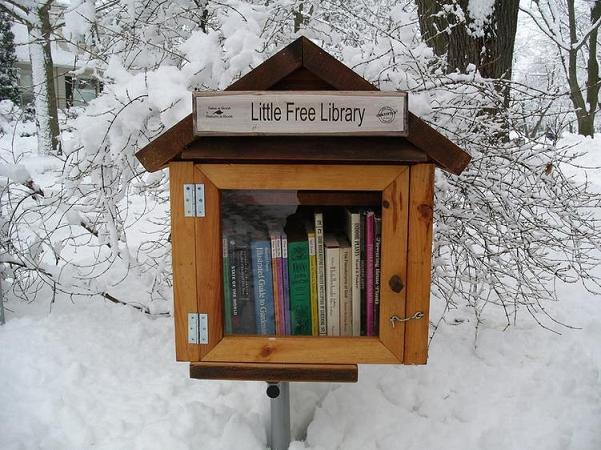
It seems for every right, there is a wrong. For every left turn, someone wants to swing right. For every change made, some folks cling to the status quo. I read an article recently about some neighbors who were complaining about those little free libraries that have popped up around the country. One old goat was quoted as saying: “They’re a distraction when I’m driving by and who knows what kind of riff-raff they bring into our neighborhood.” It’s NIMBY at its most ridiculous.
Now the contrarians have hit the world of writing. Actually they’ve been trying to upset the apple cart for some time now. Back in the Sixties, they waged the censorship war and lost.
Leading the charge against censorship, publishing entities such as Grove Press and Evergreen Review began to question our collective take on the issue of morals. These literary first-offenders opened a frontal assault with books such as ‘tropic of Cancer,’ ‘Naked Lunch,’ ‘Story of O’ and ‘Lady Chatterley’s Lover.’ While none would be considered great works of literature, they were testing the freedom of expression in this country and abroad. ‘Howl’ by Allen Ginsberg and ‘On the Road’ by Jack Kerouac took readers in directions they had never gone before. It was the 60’s and politics and culture and new views of American society were being offered up to the American reading public.

Now Indie publishing has upset that apple cart once again. Struggling to nurture and master the craft of writing is like trudging through a jungle full of hidden perils and challenges. There are more than enough financial hindrances and distractions along the way. Now some gnat has decided (for the sake of selling magazines, I assume) to challenge the notion of what it means to be an author. But he certainly isn’t the first.
Back in the 80’s there was a protracted battle going on over the legitimacy of ‘Star Wars’ and ‘Star Trek.’ There were those writers who didn’t think this new take on space adventure fit into the science fiction genre. Then another argument arose over whether fantasy was even a legitimate genre. Most agreed that ‘slipstream fantasy’ (the kind of story where you can’t tell if the fantasy is something that really happened to the character or something that he misinterpreted) was legitimate. But the rest of the genre was left up to debate.
But it got even sillier as time progressed. Some female writers of romance novels hated the idea that a man would dare write in the romance genre. One well-known male writer in the mystery field said that women shouldn’t be writing mystery novels at all. Then there were those mystery writers who held in distain others who wrote ‘cozies’ (like the stuff Agatha Christie wrote) and even other authors who felt that hard-boiled writers such as Raymond Chandler were destroying the genre with their gore and unnecessary violence.
This gnat in question recently published an article about writing and publishing. His essay asked the question about who gets to claim the title of author in this brand new world of self-publish-ing. It was an article obviously meant to generate discussion among the New York literary elite as well as Ivy League coffee house patrons as to what really constitutes the auspicious title of author.
According to this small-minded elitist, there is a ‘stark contrast between being a writer and being a professional author.’ The problem with his argument is that most of my colleagues who write and publish don’t pretend to be professional authors. We want to make money with our writing but that isn’t our main goal. Instead we share the pure joy of story-telling.
That author in question would like to ‘see the process simplified, in which you are either a writer or a professional author. If you earn your living from our writing, you are a professional author; anyone else is just a plain old writer.’ He’s even come up with a financial threshold of one thousand dollars as an entrance fee.
The main problem with his lame argument harkens back to the question of who gets to bestow the title upon whom.
If a student in high school or post-graduate studies makes a film, is he or she a film-maker? Or do they have to wait until they’ve sold their film to Hollywood to earn their title. If a person paints a picture do they have to sell their work before they’re considered a painter? If I speak at toastmasters, am I not a speaker even if I didn’t get paid for my presentation? If I take a picture with my camera, do I have to sell that photo to be considered a photographer? If I write and publish a novel do I have to wait for a certain amount of sales before I get to call myself an author?
It’s my observation that the majority of these silly disputes are really about change. The problem arises when new writers, fresh to the field, start to believe these arguments and are indoctrinated with all kinds of ‘shoulds’ and rules and guidelines created by other writers to guide their own vision of any particular genre. In short, it’s a failed attempt by some of the elders to control the creativity of the newbies.
In the past, traditional publishing exercised almost total control over the creative process and kept the doors locked to anyone who didn’t conform to their own vision/version of publishing and creativity. But now Indie publishing is allowing the creatives to break out of that artificial world and to explore a brand new world of writing and publishing on ‘their own terms.’ The gate-keepers of old have been pushed aside and they’re fighting back.
That gnat seems to take the moniker ‘professional’ as the only righteous title one can carry if one wants to write, paint, sing, act, make films or do practically anything else of an artistic nature. There are enough come-ons, book shepherds, advice traps and money-pits that a novice in this jungle has to avoid without having to think about one’s proper title in the process.

To quote from an article I recently read (with apologies to its author who remains unknown and thus can’t be given him/her credit.)
‘Writing isn’t about doing what everyone else tells you to do. Writing is about doing what your creative voice wants you to do.’
Amen to that.