Showing posts with label vietnam. Show all posts

Tuesday, May 10, 2022

When Daddy Came Home


There is a universal truth that you can’t go home again. First coined as a phrase ‘How are you going to keep them down on the farm once they’ve seen Pariee?’ It conveyed the changes young service men in World War One experienced once being exposed to this foreign city or living such a life in Paris.


Those changes for servicemen in World War One, World War Two and all the ensuing military conflicts transported primarily young men to another world and life they’d never experienced before. It could also describe similar feelings one experiences upon returning home after a long period of time.


One of the first pieces of advice I got in basic training was to ‘never go home’ during leave. The logical was simple enough. It was simply too painful to leave again after being home for any extended period of time. “Best to leave the past behind,” I was told and pick up again when you’re discharged and back to civilian life.

I didn’t follow that advice after basic training. Expecting a warm welcome at home, I was instead greeted by a note from my Mom saying she was out dancing, my girlfriend had returned to Southern Minnesota for spring break and wasn’t around, my friends were busy and I was stuck at home, alone and forgotten on a Friday night.


In a sad version of teenage angst, I tore off my uniform, put on a pair of tattered jeans, dropped my convertible top and cruised University Avenue from the U of M to the state capitol, wondering where the hell my life was heading. A week later I couldn’t wait to get out of Dodge and head for San Francisco where I was to be stationed.

After eight wonderful months in the ‘country club’ of the Army, I was transferred to Fort Polk, Louisiana. Once again, I returned home and this time was enlisted to drive my girlfriend to the Union Depot where she was going off to a Notre Dame Football Weekend. That was the last time I came home while in the service.


Instead of returning home during subsequent leaves, I enjoyed two weeks exploring Mexico City and Acapulco, holed up weekends in Beaumont, Texas just to get off base. Christmas was spent with a new ‘friend’ in Pittsburgh and most weekends experiencing Washington, D.C. (again) just to get off base.


These thoughts of ‘time lost and never recovered’ came to mind when I read a new book from BWB (Better World Books.) entitled: When Daddy Came Home. It’s a fascinating account of the sometimes bitter sweet experiences of many British soldiers, airmen and sailors returning home from World War Two.

What was now known to be PTSD (Post Traumatic Stress Disorder) was little understood back then. The Hollywood portrait of servicemen returning to their wives open arms and welcoming children wasn’t always the case. The absence of time spent between the servicemen and their families revealed itself in children who didn’t know their fathers, indiscretion on the part of some wives, a life ‘back home’ that hadn’t stopped for the  war and a need to move on past the horrors of past conflicts. The problem was that many military men and women couldn’t ‘let go’ of their past and ‘just move on.’

Hollywood nailed that experience in a film entitled ‘The Best Years of our Lives.’ It’s one of my all-time favorites. Wikipedia describes it as:

‘The film is about three United States service men re-adjusting to societal changes and civilian life after coming home from World War II. The three men come from different services and different class backgrounds which do not correspond with their class standing.

The film was a critical and commercial success. It won seven Academy Awards.  It was the highest-grossing film in both the United States and United Kingdom since the release of Gone with the Wind and is the sixth most-attended film of all time in the United Kingdom, with over 20 million tickets sold.

In 1989, The Best Years of Our Lives was one of the first 25 films selected by the Library of Congress for preservation in the United States National Film Registry for being "culturally, historically, or aesthetically significant".’

I’ve only experienced this phenomena a couple of times. Yet each time, the associated emotions were the same.


Living in Europe was a different experience yet on many levels much the same as being in the service. Before I left I had severed most ties with my life in the Twin Cities. I had finally gotten a college degree but had no real job prospects; no girlfriend or romantic entanglements and most of my friends had either begun their new lives as working stiffs or were heading down the matrimonial aisle. There was, literally, nothing to keep me there anymore. Moving to Europe and living there seemed like a logical next step.

After my hiatus in Europe, I returned to a clean slate, devoid of job prospects, romance, living accommodations and earned income. I knew I had to start all over again but at least I didn’t have the vacuum of lost time hanging over my head.


In the subsequent years, I have left the Twin Cities for extending periods of time on a film shoot in Costa Rica, travels in the Amazon rainforest with my son, a business trip to Ireland, an Asian Rotary trip, and numerous travels through Europe. Each trip meant time away from the home front and usually a different perspective upon my return.


The time we spend in Palm Springs is no different. We’ve been here for almost seven months now. That’s a lot of winter to miss but also meaningful time spent with friends and neighbors. Often the absence of time and presence can erode friendships and acquaintances. I guess that’s part and parcel of being a mobile society.


When we return in May, I plan to reignite my ‘Coffee and Chat’ sessions with old friends. It’ll be interesting to see if that gap of seven months has made a difference. I certainly hope not.

Tuesday, April 13, 2021

Tall Tales from the Coast

When you’re in the middle of it (another stage in your life), you don’t pay much attention to all the goings-on around you. Only years later, upon reflection, do you realize what a crazy world it really was. So it was during my time spent at the Presidio of San Francisco from late 1964 through early 1965. “Ripley’s Believe it or Not’ had nothing on me back then. Or as the cliché goes: ‘you can’t make this stuff up!’

I’ve reflected on these phenomena in a recent blog: ‘Phases and stages,’    It’s the idea that we live our lives in stages whether we’re aware of it or not. It’s often a forced, fixed or contrived environment, often times not of our own making, that we live through until something, someone, or that proverbial ‘fourth wall’ forces us into something else. Then it’s off to the races all over again.
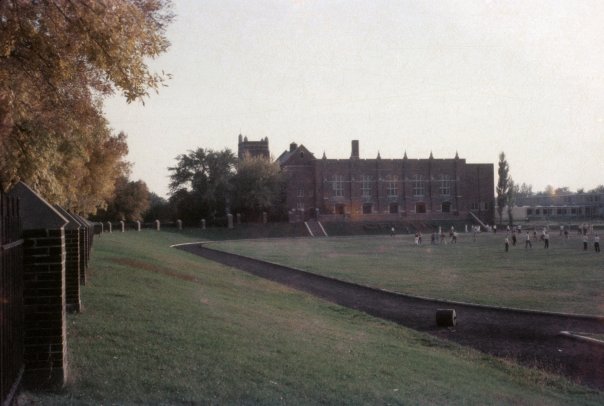

The Presidio of San Francisco was headquarters for the Sixth Army Command.  While Fort Polk, Louisiana was considered the ‘derriere’ of the Army, the Presidio was considered by all to be the ‘country club’ of the Army. It was the absolute prize for anyone seeking a great place to be stationed while in the service.


I went directly there from boot camp at Fort Leonard Wood, Missouri. It was the first time I had traveled out of state. Like a virgin among playboys, I was naïve beyond my years and just taking mental notes on the hip, Avant guard, outrageous and some times illegal behavior going on all around me.   


During my short tenure at the Presidio, I was living a life of privilege. My service pay was $80.00 a month (which I saved) and I earned over $100.00 a month from my job as an usher at an art theater downtown. I had a library of paperback books, a large .45 record collection and a Vespa motor scooter to scoot about town.


The first story I was greeted with upon arrival was about the Commanding General’s yacht. The story went that there were two enlisted men who worked on the general’s yacht each day over in Sausalito across the bay. Each morning, they would get a car from the motor pool and drive across the Golden Gate Bridge to do maintenance, cleaning, inspection and upkeep on the large boat. It had to be ready to sail at a moment’s notice.

In Army lingo, the two enlisted men were ‘golden.’ They had no supervisor, no set hours, could do whatever they wanted to as long as the ship was ready to sail at any time. In fact, I was told they would regularly take it out ‘for a spin’ in San Francisco Bay. The story had enough tentacles that I think it was true.


Another ‘hard to believe but true’ story concerned an enlisted man who worked the night shift in the telecommunications center in the headquarters building. His angle was buying KP (Kitchen Patrol) duty from other soldiers. The going rate was $25.00 per shift. I saw him in action many times and by my estimation he was clearing at least one hundred dollars (cash) a week.

This pots and pans entrepreneur seemed to be the only one allowed to pull this stunt and he had been double-shifting for months on end. Over the years, I’ve come to the conclusion that the sergeant in charge of the kitchen must have been getting a kickback to allow him to do that day after day.


Another under-the-radar entrepreneur was a GI in the barracks building next to mine. He was a Mexican kid who was always working on some kind of angle. The Larkin (Art) Theater where I worked was located on the edge of Chinatown. One night after work I was walking home and saw him on a street corner. He excitedly waved me over.

“Would I be interested in going out with one of his girlfriends?” he asked me. Turns out, he had three ‘girlfriends’ working that evening and for $25 to $50 each I could go on a date with one of them. We chatted a bit before I demurred his splendid offer.

Most weekends, he had a stable for three to five girls working his strip of street corner real estate. He got a cut of the action and was the main provider of ‘sensual entertainment’ for the GIs at the Presidio. It was a dangerous business since if he was busted by the cops; he would be automatically court-marshalled and booted out of the Army. But the money was good, the girls reliable and the base provided a steady flow of customers.


There was a rundown part of town not far from the Presidio. One of my buddies had a girlfriend who lived there in an old Victorian mansion with six other girls. He used to brag about going there on weekends and getting ‘stoned.’ It was a wild circus of confused, amorous young women, great Mexican Gold, cheap wine and beer and mind-blowing psychedelic music. I just went there one time with him. It was a truly memorable experience.

The scene was overwhelmingly stimulating with its artistic freedom, intellectual fisticuffs, hard-core music, and booze that it was almost too much to ingest. Unfortunately, it brought back poignant memories of ‘the girl back home’ and the freedom I once had before the draft changed my life forever. Being there was a cold cruel contrast to my other life on base. It was a reminder of the rigid conformity of the military life that I lived during the week. My memories won out and I never ventured back to Haight-Ashbury again.


In fact, one of about a half dozen book treatments I’ve written thus far, touches on this very subject. It’s called ‘Presidio Adieu.’ A fictional account of a young service man stationed at the Presidio of San Francisco during the sixties. Whether it ever gets written is anyone’s guess.


Enlisted men on base had their own building. It had a pool room, a large slot-car set up, a lounge with magazines and a TV room. It was a great hangout space for newbies on base until they tasted the delights of the city just outside our gates.

There was also an enlisted men’s garage where service men could tinker with their cars. It was fully equipped with all the tools one could need. I worked on my Vespa motor scooter there several times.


In the barracks next door, I met a black guy who desperately wanted to be a novelist. He and I had great conversations about authors, writing and how to get a job as a writer. He was a real doer while I was still in the talking stages.

I heard later on that he got into an argument with another soldier and he pulled a knife on him. Nothing happened because other soldiers intervened but he disappeared from the base shortly afterwards.


One of my first interests in real estate occurred around a small table in our sleeping quarters. Two guys were running numbers on purchasing one of the old Victorian row houses that were the predominant housing stock of the city.

They were convinced that if they could purchase one of these homes at a reasonable price, they knew just how to remodel it and turn around and sell it for a nice profit. Today we call that ‘flipping.’ Back then it was just this wild idea that you could buy a house, touch it up and then as quickly resell it for a nice profit. Crazy idea most of us agreed, but the two persisted and about the time they got discharged, they had purchased several houses this way. They even invited me to join them in their venture. But I was being transferred, and besides, I was too smart to get suckered into that crazy scheme of theirs. I dare not think about what they are worth now if they continued buying and selling real estate in San Francisco.


My dream job, passed on by another GI being transferred, was working at the Larkin Theater. The Larkin was an old Art Theater that had been showing foreign films since they were invented by the French before the turn of the century. I ushered, cleaned seats, answered the phone and did other odd jobs. It paid well and I got to see all of the latest foreign films shown in the city.


There were two teenage girls selling tickets and we struck up a nice friendship. They were young and immature and full of wonder at life after high school. We were on two very different educational tracks but they were sincere and fun to work with.


Another one of the movers and shakers in our barracks had a girlfriend who lived in a hip part of town. He spent every weekend with her and had a big party when he got discharged. I never heard if he left town or stayed with his girlfriend. I’m guessing he went home and left her behind.


If ever I were to play the ‘whatever happened to’ game, it would be with a slight, wistful young woman named Mara. She appeared one day in our post newspaper office, about a month before I was transferred south. She had enlisted in the WACs because she wanted to get away from home. The scene back there was very bad she told me. I sensed, even with my own heightened sense in immaturity, that bad things had happened to her and she wanted to escape her family.

She was a Marilyn Monroe lookalike, vulnerable, and had a sexual edge about her that moved men in strange ways. All of my barracks buddies talked about ‘dating’ her but no one had the guts to ask her out. She and I talked a lot and I think she found me a lamb among the wolves. On my last day of work before shipping out, she asked if I wanted to meet her back at the office, after hours, to ‘say good-bye.’ I could have, I certainly want to, but common sense prevailed and I didn’t.

About a month after I had left, I got a letter from a buddy back at the post newspaper office. He mentioned that Mara had gone off on a ‘official post business’ with one of the colonels in the office. That made me very sad because I knew the colonel’s intent wasn’t dictation and Mara probably saw in him a father figure she never had back home. She was still a ‘little girl lost.’


From the Presidio, I transferred down to Folk Polk, Louisiana with a whole new cast of characters and strange events taking place there. Phrases and stages, phrases and stages. But that’s another blog entirely.

Tuesday, February 23, 2021

Five Years in the Wilderness


Whether we were aware of it or not, many of us had our lives mapped out pretty clearly from the beginning. Growing up, most of us followed a pattern of education, social engagement, romantic venturing and finally settling down into a routine called married life. It’s all very conforming, comfortable for the most part and expected…..for most folks but not all of us.


When my buddies and I were young and dumb, the world was a rainbow landscape full of wonderful adventures and opportunities. Each of us set out to become whatever we thought we could/should/would become at the time. The world was our oyster and we meant to have it all…and we did. One a doctor, one a writer, and one a priest.

Fast forward five or so years and a great number of my high school classmates were gett-ing married, having kids and settling down into a lifetime of work and routine. Not me.  I was still ruminating over career choices that involved creativity and was about as far from a 9-to-5 existence as I could possibly imagine. Unlike a lot of my friends, it took me about five years wandering and wondering until my focus became clear…that is, what I wanted to do with the rest of my life.


My five years wandering in that proverbial wilderness (1966-1971) began right after the service, continued while living in Europe and culminated in circling around life choices that began as avocations and ended up becoming my career. Along the way, there were plenty of stumbles, detours, hurt feelings, high expectations, false hopes, and blind ambitions to fill each day.


One thing that fortified me on this journey were the friendships, abet seldom lasting, that I made along the way. These were fellow wanderers who were as confused yet hopeful as I was. It was an exciting time to be working in public television, hanging out at the Triangle Bar and tasting the silliness that only bachelorhood can provide.


A lucky encounter one evening at work signaled the beginning of the end to my wandering.

Ernest Hemingway is quoted as saying that life is like a bank account. How you use it is solely your determination. You can withdraw it in a hurry and live a very short life. Or you can be diligent with your withdrawals and live, hopefully, much longer.


It’s been forty or fifty years since many of us turned twenty-one and shed our cloak of anonymity to adorn ourselves with the costume of adulthood. Now we’re at a point in our lives where reflection is more than a glass of chardonnay framed within a sunset or a cold brew among high school buddies.

We’ve let life’s ebb and flow (call it our gypsy muse) guide us in this rhythm of life. For most of us, the process was organic and without a lot of thought. Life investments were made, squandered, lost, accumulated, divested and set aside. Some things worked out and some things didn’t. Now we have the residue of our wisdom or luck or mistakes to live with for the rest of our lives. And most of those life steps are now just a memory.


One regret is that my bank account of friends isn’t the greatest. A reluctance to make an effort back then has left me lacking in that area. Yet what I do have in the vault is now priceless. One of my aspirations is to mine those rich veins of past friendships to see if I might unearth more nuggets there. Occasionally I’ll strike gold and rekindle a long lost almost forgotten friendship from the dusty archives of my past. It’s a blast. And immensely satisfying.


Those random discoveries got me thinking about other friendships; past and future, strong and vapid, present and omnipresent. I thought about the friends I’ve had over the years. Some of them shared isolated points in my life; high school, college and work. Some were but fleeting incisions in the tenderness of my youth. Others were shared experiences like the military: isolated, vacuous, and destined to crash with each discharge celebration where inane behavior in the barracks seemed to make perfect sense back then.


The cliché that you can never have too many friends dissolves over the pages of Facebook where collecting friends can be a cyber-game for some folks, devoid of meaningful contact and concern. Having friends on Facebook isn’t the same as having real friends who care and share and actually want to be somebody in your life. Big difference there!


I am in a good place in my life now. I don’t have to prove anything to anyone anymore! As an artist, I love creating stories in many different genres and I intend to continue writing until my pen dries up or I go blind. I’d like to take folks along this discovery of self and life and whatever else comes my way just as it began during those five years in the wilderness.

Tuesday, December 11, 2018

Cretin High School Class of 1961

Photo courtesy of Jerry Hoffman


I used to think it a bit gauche to brag about one’s high school. But not anymore. I think it’s OK to reflect back on those building blocks that one takes, absent of conscious thought, that end up making a major impact on future decisions and choices. Pulling back my curtain of past lives, I realize now that I was fortunate enough to attend one of the best high schools in Saint Paul back in the late fifties. Turns out it was a brief window of opportunity, unseen and unappreciated back then but relished now. I hope my friends feel the same way, no matter what school they attended. It’s a nice moniker to hold on to.

I have a friend who went to Saint Joseph Academy for Girls at about the same time. She once told me she thought her school was secondary to OLP (Our Lady of Peace). Funny, I never felt that way. The girls from Saint Joe’s were always more accessible and real to me. They were like us.

My sister went to Our Lady of Peace. Now they seemed to be a little more aloof. While not as status-conscious as Visitation, Derham Hall, or Villa Maria, there was still an aire about those girls. Of course, they probably would have said the same thing about those jocks and military boys from Cretin.

Then there’s an old acquaintance of mine who went to Monroe High School. They called themselves the Green Wave. He takes great pride in his school even from the warm confines of his Florida retirement home.

Another friend went to Highland Senior High his freshman year, then transferred to Cretin his sophomore year. Nevertheless, he still sees himself as a Cretin grad, four years running.

What each of these folks share is a deep respect for and love of their old alma mater. It was for them the very best school around and they were proud to be a part of it.

For many of us, high school proved to be a pivotal point in our lives. Even more than college, it was where the stumbles of youth were corrected by the realities of our teenage years and finally solidified into the more mature footsteps that carried us through our collegiate and/or skill building future.


Reflecting back on that time period in Minnesota history and my own historical tracks, I realize now that attending Cretin High School back in the late 50’s and early 60’s was a unique experience. Of course, I never realized that until our fifty-year class reunion made it bubble up to the surface of my consciousness.

Photo courtesy of Jerry Hoffman

In retrospect, it was also a turning point in the history of our country. The beginning of the end of that idyllic plain vanilla existence our parents loved so much and wanted us to emulate. The old neighborhood was morphing through all kinds of changes just as we were. It was end of Doris Day and her’ Doggie in the Window.’ It was Frank Sinatra and his version of cool slowly turning cold. It was hot rods and tail fins and poodle skirts that only hinted of secrets underneath. The Cold War was inescapable but it hardly permeated our existence the same way Rock and Roll and the first warm feelings of affection for the opposite sex did.

Photo courtesy of Jerry Hoffman

 Cretin High School was a different kind of school but those of us attending it really weren’t any different from our friends at other schools. We came from all walks of life but for the most part were solidly middle class. Back in the late fifties, Cretin’s tentacles spread out across the Twin Cities in one last grasp at prospects before newer Catholic High Schools in the suburbs started to pick from the litter.


There were two military schools in town back then. Now there is only one and it isn’t Cretin. The program was called Junior ROTC (Reserved Officers Training Corp.) But for most of us it wasn’t a career choice, just a curriculum that followed the thinking of the day. A boy’s military school taught by the Christian Brothers, mostly male teachers and gruff RA (regular Army) sergeants. Their motto was: Teach them discipline and academic success will follow. It was a regimen that worked very well for most of us.


Taken down to the basics, it meant woolen uniforms that stunk when they got wet and were sweltering straightjackets in the springtime sun. Crack drill marches and drill review didn’t help the sweat glands either. It was simply part of the package that one accepted when attending a military school back then.

But for all the pomp and ceremony beneath that military cap of muted brown, there was a long-standing tradition of respect, discipline, and expectations from our leaders and ourselves. Even with our young malleable minds, we knew we were different. Chain of Command be damned, we were among the best. Even if we weren’t entirely sure just what ‘the best’ meant to anyone else but ourselves.


Without fanfare or published categories, freshmen were segmented into academic tracks based on their entrance exams and elementary school records. A large portion of the class was slotted into the pre-college track. Among the graduating seniors were 25 National Honor Society members, 26 Four-year Merit Medal winners, and seven National Merit Scholarship winners.

For the rest of the class of 1961, the administration saw our future in a secure government job, a skilled trade, or the military. There were only a few of us who clawed our way through the classroom trenches, scrambled over the academic barriers and slipped into college anyway.


Photo courtesy of Jerry Hoffman

School dances were a necessary evil tolerated by the Christian Brothers and predominantly male teachers. I don’t think they really wanted to encourage the mixing of male hormones with the virginity of the visiting opposite sex. Most of the dances were awkward cardboard rituals where the boys lined the gymnasium floor like wallpaper while the girls circled them and whispered in each other’s ears about the hottest dudes in the room.

Formal dances for the junior and senior military officers were dressed up affairs with shiny brass buttons, sheathed swords, and formal gowns. A sterile playground with everyone trying their best to be very cool and polite at the same time.


Unbeknownst to us at the time, our secure insulated world was on the cusp of major changes in 1961. Old Saint Paul was dying and a new city wouldn’t appear for many years to come. The country was expanding with the growth of the suburbs and hollowing out of the core cities.

Cretin was a molder of men, a change maker, and a foundation upon which to build one’s own values, aspirations, judgements, and creative hunger. Like ‘Bob Dylan’s Dream,’ my rag-tag group of Cretin friends have scattered with the winds of time. There are only a couple of guys left that I’ve managed to string together with a loose fitting web of memories that we can cling to.

It was the best of times…most of the time. Now in retrospect, it seems even better than that.